The first NVIDIA RTX Spark benchmarks have surfaced in the Geekbench 7 database, revealing 20-core and 18-core N1X engineering samples running Windows 11 on Arm. The leaked submissions provide an early look at CPU performance, clock speeds, unified memory, and two possible configurations of NVIDIA’s upcoming Arm-based PC platform.
The results remain preliminary. They were recorded on preproduction hardware, and the original Geekbench submissions have since been removed. Nevertheless, the figures offer an interesting preview of how NVIDIA’s 20-core Grace CPU could compete with upcoming AMD and Intel mobile processors when RTX Spark systems arrive in fall 2026.
Previously associated with the N1X name, RTX Spark was developed through a collaboration between NVIDIA and MediaTek. NVIDIA formally introduced the platform during Computex 2026 as the foundation for a new generation of Windows PCs designed for local AI, content creation, and accelerated graphics workloads.
NVIDIA RTX Spark Benchmark Results
The leaked Geekbench 7 data shows two RTX Spark configurations. The flagship version contains the complete 20-core CPU and a Blackwell GPU with 6,144 CUDA cores. A second configuration reduces the CPU to 18 cores and the GPU to 5,120 CUDA cores.
| Processor | CPU Cores | GPU | Geekbench 7 Single-Core | Geekbench 7 Multi-Core |
|---|---|---|---|---|
| NVIDIA RTX Spark N1X | 20 | 6,144 CUDA cores | 2,570 | 23,126 |
| NVIDIA RTX Spark N1X | 18 | 5,120 CUDA cores | 2,541 | 21,776 |
| AMD Ryzen AI Max+ 395 | 16 | Radeon 8060S | 2,429 | 20,609 |
| Intel Core Ultra X9 388H | 16 | Arc B390 | 2,767 | 19,304 |
| Apple M5 Max | 18 | Up to 40 GPU cores | 3,766 | 35,527 |
Sources: leaked Geekbench 7 submissions reported by VideoCardz and Tom’s Hardware. Comparison scores may represent different numbers of public submissions and should not be treated as controlled laboratory results.
20-Core and 18-Core Configurations Explained
The complete RTX Spark configuration combines 10 Arm Cortex-X925 performance cores with 10 Cortex-A725 efficiency cores. Geekbench listed a 4.0 GHz frequency for this engineering sample, which achieved 2,570 points in the single-core test and 23,126 points in the multi-core test.
The second configuration retains all 10 performance cores but reduces the efficiency-core count from 10 to eight. Geekbench listed this model at 3.9 GHz. It scored 2,541 points in single-core performance and 21,776 points in multi-core performance.
Single-core performance differs by only around 1.1% between the two versions. The 18-core model is approximately 6.2% slower in multi-core performance, closely reflecting its 10% reduction in total CPU cores.
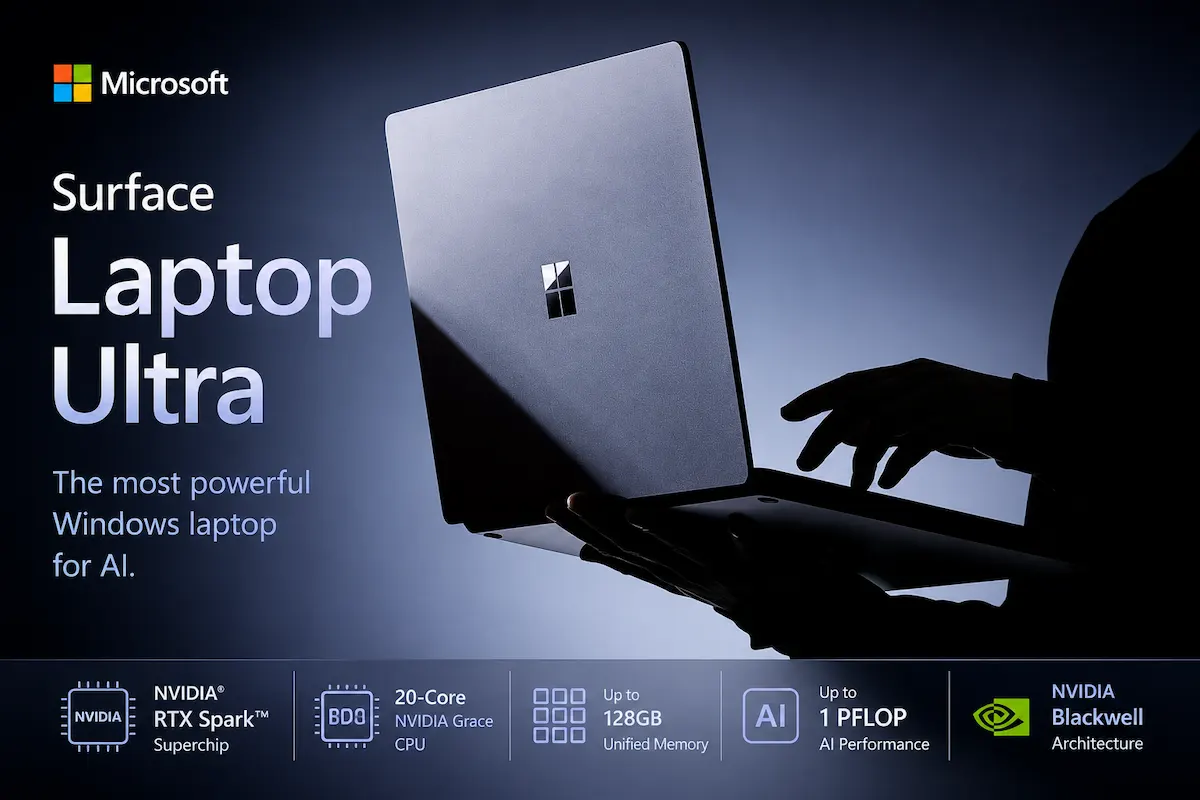
The submissions also showed 64GB of unified memory in both test systems. Retail RTX Spark products will support different memory configurations, with NVIDIA advertising up to 128GB of unified memory for the platform.
Why the 18-Core RTX Spark Variant Matters
The 18-core submission suggests NVIDIA and its hardware partners may be preparing more than one RTX Spark performance tier. The cut-down configuration could allow manufacturers to offer systems at different prices or optimize products for different cooling and power requirements.
It may also represent conventional semiconductor binning, in which partially enabled chips are sold as lower-tier models. However, neither NVIDIA nor its partners have confirmed the commercial name, intended power range, or market position of the 18-core configuration.
Until retail specifications are announced, the safest conclusion is that NVIDIA is validating at least two RTX Spark configurations. The Geekbench entries alone cannot confirm whether both versions will reach consumers.
Grace CPU Meets Blackwell Graphics
RTX Spark combines a high-performance NVIDIA Grace CPU with an integrated Blackwell RTX GPU. NVIDIA connects the CPU and GPU through its NVLink-C2C chip-to-chip interconnect, allowing the processors to operate with a large pool of unified system memory.
The flagship GPU configuration contains 6,144 CUDA cores and fifth-generation Tensor Cores with FP4 support. NVIDIA claims RTX Spark can deliver up to one petaflop of FP4 AI compute, positioning the platform for local language models, generative media, content creation, and other accelerated workloads.
This CPU and GPU integration is one of the platform’s most important features. Traditional laptops divide system memory and dedicated graphics memory into separate pools. RTX Spark instead offers a unified-memory design that can provide demanding AI applications with access to substantially more memory than a conventional laptop GPU.
How RTX Spark Compares With AMD, Intel, and Apple
According to the reported Geekbench 7 comparisons, the 20-core RTX Spark sample scored approximately 6% higher in single-core performance and 12% higher in multi-core performance than the available Ryzen AI Max+ 395 average.
Against Intel’s Core Ultra X9 388H, the picture is more nuanced. The Intel processor led RTX Spark by roughly 7% in single-core performance, while the 20-core NVIDIA chip held an approximately 20% multi-core advantage. However, the Intel comparison was based on a limited number of public results rather than an established average.
Apple’s M5 Max remained significantly ahead in both categories. The reported average placed the 20-core RTX Spark sample approximately 32% behind Apple in single-core performance and 35% behind it in multi-core performance.
These figures make RTX Spark look competitive with high-end Windows processors in heavily threaded workloads, but they do not establish final retail performance. Differences in cooling, firmware, memory configuration, operating-system scheduling, and benchmark availability can substantially affect early engineering results.
What Geekbench Cannot Tell Us
Geekbench provides a convenient cross-platform CPU comparison, but it cannot fully represent everyday laptop performance. RTX Spark systems will depend on Windows-on-Arm application support, NVIDIA’s production drivers, and Microsoft’s ability to optimize scheduling across the platform’s performance and efficiency cores.
Native Arm applications should provide the clearest view of the hardware’s potential. Older x86 software may depend on Microsoft’s Prism translation layer, introducing overhead that does not appear in native synthetic benchmarks.
Battery life, sustained performance, fan noise, gaming compatibility, and GPU power management also remain unanswered. Those factors will ultimately matter more to buyers than an isolated preproduction benchmark score.
InsightTechDaily Analysis
The leaked NVIDIA RTX Spark benchmarks show promising multi-core performance and reveal a potentially important 18-core configuration. However, the deleted submissions represent engineering hardware rather than verified retail systems. RTX Spark’s success will ultimately depend on Windows-on-Arm software support, production drivers, sustained power efficiency, and the value offered by finished laptops.
Bottom Line
The leaked Geekbench 7 results position NVIDIA RTX Spark as a credible new competitor in the Windows laptop processor market. The 20-core configuration reached 23,126 points in multi-core performance, while the 18-core version retained most of that performance despite having two fewer efficiency cores.
Those numbers are encouraging, particularly compared with current AMD and Intel Windows platforms. They are not, however, a substitute for independent testing of retail hardware. Final conclusions will need to wait for shipping RTX Spark systems and controlled evaluations of application performance, gaming, battery life, temperatures, and software compatibility.