The SFF Market Is Bigger Than Old Office PCs Now
The low-profile graphics market was once defined largely by one use case: take a retired office desktop, install the fastest graphics card the PCIe slot could power, and turn it into an inexpensive gaming machine.
That market still exists, but small-form-factor computing has moved well beyond it.
Cases such as the Jonsbo NV10 demonstrate how much flexibility modern SFF builders now have. At roughly 4.5 liters, the NV10 supports Mini-ITX motherboards, a 1U Flex power supply, two low-profile expansion slots, a PCIe 4.0 riser, and graphics cards up to 190mm long.
That layout allows builders to arrange hardware in ways a conventional tower never could. PCIe risers, flexible extension cables, modular power supplies, and increasingly creative chassis designs have turned SFF building into something resembling hardware Tetris—or, perhaps more accurately, tech yoga.
The catch is that those builds still depend on manufacturers producing graphics cards that make sense inside them.
The RTX 5050 Exists, but Availability Is the Bigger Problem
The Gigabyte RTX 5050 OC Low Profile illustrates the distinction between a product existing and a product being realistically available.
The card is a genuine 8GB Blackwell low-profile design, but availability has become inconsistent enough that buyers may have difficulty finding one at normal retail pricing. That makes quoting a single “street price” misleading. A card that appears briefly around $300 is not necessarily a practical recommendation if builders cannot reliably purchase it.
The RTX 5060 Low Profile is easier to find, but pricing creates another problem. ZOTAC’s low-profile RTX 5060 has appeared around $400 earlier in its life and is now being listed around $520 through major retail channels.
At that point, buyers are paying a substantial premium for packaging the RTX 5060 into a specialized compact form factor rather than simply paying for GPU performance.
For a 4-liter or 5-liter build where every millimeter matters, that premium may be acceptable. For anyone who can move into a slightly larger chassis, it becomes much harder to justify.
The Arc Pro B50 Briefly Hit an SFF Sweet Spot
The Intel Arc Pro B50 may be the most interesting card in this entire discussion because it occupies a space neither NVIDIA nor AMD currently addresses particularly well.
Its 70W slot-powered design means it does not need an auxiliary PCIe power connection, while its 16GB of GDDR6 gives it substantially more memory capacity than most compact consumer GPUs.
That combination created an unusual middle ground for builders interested in both gaming and local AI.
A 16GB GPU in a tiny chassis can handle considerably larger AI models than an 8GB gaming card while remaining useful for conventional graphics workloads. In a system such as the Jonsbo NV10, the B50 therefore offered a path toward a genuinely compact multipurpose workstation rather than a machine optimized only for gaming.
The problem is price.
At its $349 launch price, the B50’s compromises were easier to accept. Once pricing moves beyond $400—and especially as listings approach $600—the value calculation changes dramatically. The hardware remains unusual, but the price begins encroaching on complete mini PCs and larger discrete-GPU systems.
Integrated Graphics May Become the Real SFF Disruptor
There is another possibility emerging that may ultimately matter more than the shortage of affordable low-profile cards: some small PCs may stop needing a discrete GPU at all.
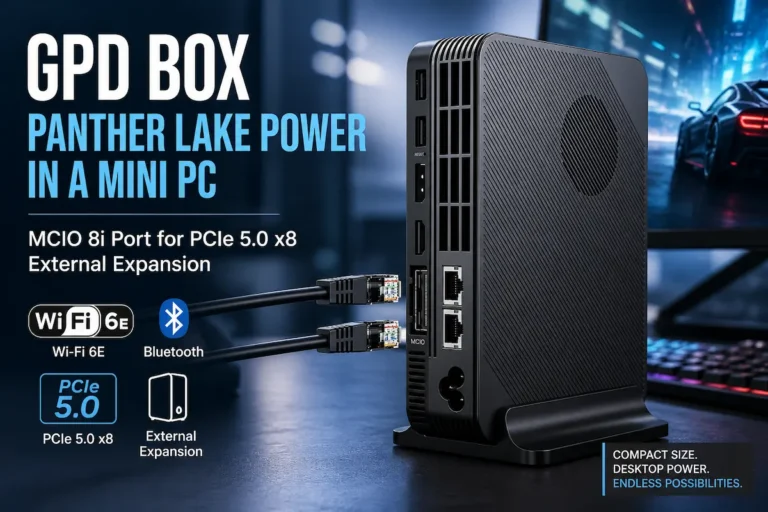
Intel’s Core Ultra X7 358H is an early example of that direction. The Panther Lake processor combines a 16-core CPU with Intel’s Arc B390 integrated graphics, giving compact-system manufacturers significantly more graphics capability without dedicating chassis volume, cooling capacity, or PCIe power to a separate graphics card.
The Arc B390 is not a replacement for a high-end discrete GPU, but that is not the comparison that matters most for SFF machines.
The more important question is whether integrated graphics can become fast enough for 1080p gaming, media work, light GPU compute, and smaller local AI workloads while leaving the entire PCIe area available for storage, networking, accelerators, or simply a smaller chassis.
If that happens, the traditional entry-level discrete GPU could become increasingly difficult to justify in compact systems.

The New Middle Ground Between Cheap Mini PCs and AI Workstations
This shift may become especially important because the other end of the small-PC market is becoming increasingly expensive.
AMD’s Strix Halo systems demonstrated what unified memory can do for local AI, with some configurations providing as much as 128GB of memory that can be allocated heavily toward GPU workloads. NVIDIA’s RTX Spark platform is pushing the same general idea from another direction, combining substantial unified memory with integrated CPU and GPU resources in compact machines.
Those systems are extremely capable, but their pricing increasingly places them outside the mainstream PC market.
Current 128GB Strix Halo systems can reach well beyond $3,000, while high-end RTX Spark machines are also targeting multi-thousand-dollar configurations. Those products make sense for developers and users running unusually large local models, but they leave a sizable gap underneath them.
That gap may be where processors such as the Core Ultra X7 358H become most interesting.
A compact system with strong integrated graphics, 32GB to 96GB of fast system memory, modern media engines, an NPU, and expansion through USB4 or PCIe does not replace a 128GB AI workstation. It does not need to.
For many users, the more useful machine may be the one capable of playing games, running smaller local models, handling productivity workloads, and sitting in a chassis smaller than many discrete graphics cards.
The Future of SFF May Not Depend on Low-Profile GPUs
That leaves the low-profile GPU market in an unusual position.
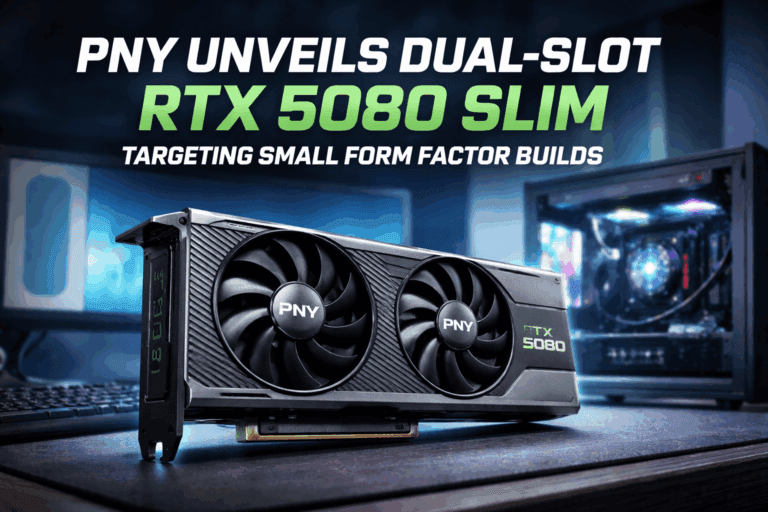
Enthusiasts building highly customized systems will continue to find uses for cards such as the RTX 5050, RTX 5060, and Arc Pro B50. PCIe risers and flexible chassis layouts mean builders have more freedom than ever to fit discrete graphics into remarkably small spaces.
But the economics are becoming difficult.
The affordable RTX 5050 Low Profile is difficult to reliably find. The RTX 5060 Low Profile carries a substantial form-factor premium. The Arc Pro B50 provides a rare 16GB, slot-powered alternative but has also become considerably more expensive than its launch positioning suggested.
Meanwhile, integrated GPUs such as Intel’s Arc B390 continue closing the gap from below.
For the next generation of small PCs, that may be the bigger story. Instead of asking how much graphics card can fit inside a 4-liter chassis, builders may increasingly ask whether they need a graphics card there at all.