The shrink-wrapped game box is not dead yet, but it is clearly being pushed toward the exit. Physical discs are becoming optional accessories, subscription libraries are replacing shelves, and SteamOS is giving the PC ecosystem a cleaner path back to the living room. The next gaming platform war may not be fought over teraflops. It may be fought over who controls your library, your login, and the button you press to start playing.
The Console War Is Moving Away From the Console
For decades, the gaming platform war was easy to understand. Sony wanted you to buy a PlayStation. Microsoft wanted you to buy an Xbox. Nintendo wanted you to buy whatever strange, brilliant, underpowered box it had invented that generation. The hardware mattered because the hardware was the gate.
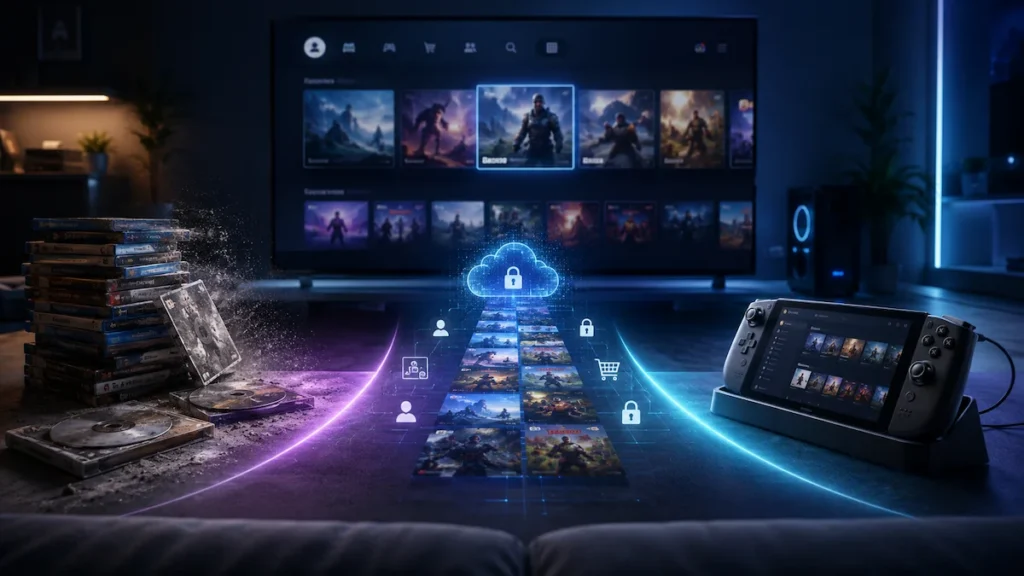
That older model is starting to crack. Not because consoles are going away tomorrow, but because the business around them is changing faster than the plastic boxes themselves. Physical media is being de-emphasized. Subscriptions are becoming central. Cloud saves, digital licenses, cross-platform releases, and account-based libraries are now more important than the machine sitting under the TV.
That shift creates a strange new reality. The console is no longer just a console. It is a storefront terminal. A subscription access point. A DRM checkpoint. A branded interface wrapped around increasingly familiar hardware.
That does not mean dedicated gaming hardware is doomed. If anything, gaming hardware may become more varied. We already have home consoles, gaming handhelds, mini PCs, Steam Deck-style devices, cloud-streaming boxes, and living-room PCs all competing for the same couch. The real question is no longer, “Which box wins?” It is, “Which ecosystem gets to own the relationship with the player?”
Physical Games Are Becoming the Premium Niche
The most obvious sign of the shift is the slow retreat of physical media. Game discs and cartridges still matter to collectors, preservationists, parents buying gifts, bandwidth-limited households, and players who want some form of resale value. But platform holders are making it increasingly clear that physical media is no longer the center of the business.
Sony’s current PlayStation hardware strategy shows the direction clearly. The PS5 Slim introduced a detachable disc drive option. The PS5 Pro pushed even harder by shipping without a built-in disc drive, leaving physical playback to a separate accessory. That is not just a design choice. It is a market signal.
The message is subtle but important: the disc drive is no longer treated as a default part of the console. It is treated as an add-on for people who still care.
That changes the psychology of ownership. A player who buys a disc-based console feels like physical games are part of the system’s identity. A player who buys a digital-first console with an optional drive is being nudged into a different relationship. The store account becomes primary. The disc becomes legacy support.
Microsoft has been moving in a similar direction from the other side. The Xbox Series S launched as a digital-only console from day one, and Xbox Game Pass has trained a large part of the audience to think less in terms of individual game purchases and more in terms of ongoing access. Even when a player still buys games outright, the behavior pattern is changing. The dashboard, the subscription, the sale rotation, and the digital library matter more than the retail shelf.
From a business perspective, this is easy to understand. Physical games require manufacturing, shipping, retail inventory, returns, shelf space, and retailer margins. Digital games keep more control inside the platform. They are easier to discount, bundle, promote, revoke, update, and monetize over time.
From a consumer perspective, the tradeoff is much messier.
The Digital Library Problem
The industry likes to describe digital games as convenient, and that part is true. Digital libraries are easier to search. They follow you between devices. They do not get scratched. They do not require a trip to the store. They work beautifully when the platform is healthy, the servers are online, and the license remains intact.
But the convenience comes with a cost: you are no longer buying a self-contained object in the same way. You are buying access inside a platform-controlled system.
That difference matters. A disc can be lent, resold, traded, preserved, or discovered years later in a box in someone’s closet. A digital license depends on the platform’s account system, storefront policy, authentication infrastructure, and long-term willingness to keep old content reachable.
This is where game preservation becomes more than a collector’s hobby. When older digital storefronts close, games can disappear from legal purchase entirely. The Video Game History Foundation has already warned that the overwhelming majority of classic games released in the United States are not commercially available in modern form. That is not just nostalgia. It is a cultural archive problem.
The uncomfortable truth is that physical media was never just about plastic. It was a consumer-rights tool. It gave players a way to hold something outside the platform’s account system. It gave used game shops a reason to exist. It gave preservationists a source copy. It gave families a way to hand games down without needing a password reset.
Digital libraries are better for convenience. Physical media is better for independence. The industry is choosing convenience because convenience is also more profitable.
Xbox Is No Longer Just Fighting the Console Race
Microsoft’s gaming strategy only makes sense if you stop looking at Xbox as a traditional console business.
For years, Xbox has struggled to match PlayStation in console unit sales. But Microsoft’s broader gaming strategy is not simply about winning the living room with a single box. The company spent $68.7 billion to acquire Activision Blizzard King because it wanted content, mobile reach, recurring engagement, and a stronger position across devices.
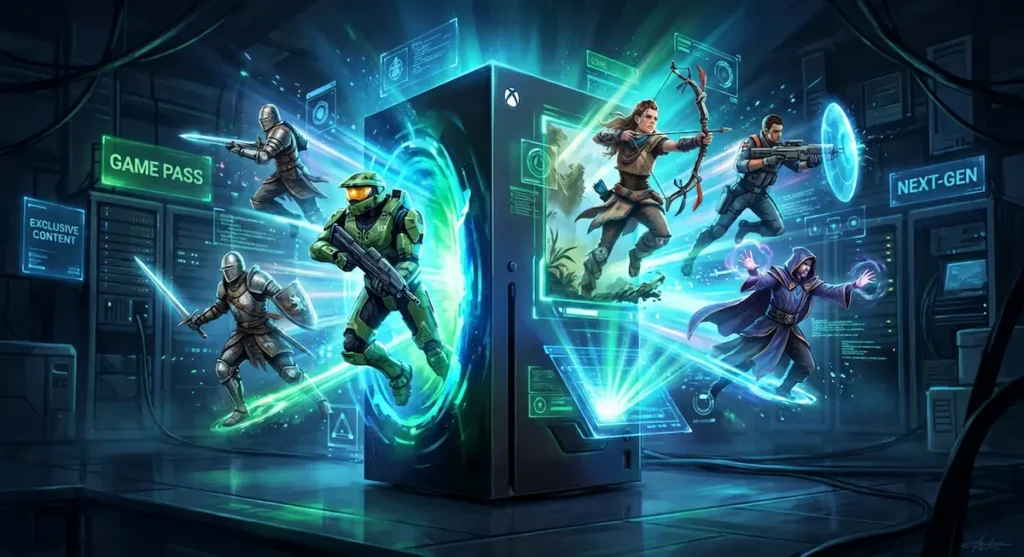
That is why the recent Xbox strategy can look confusing from the outside. Some Xbox games have moved to PlayStation and Nintendo platforms. Game Pass remains central. Microsoft continues to talk about playing across screens. The company still makes Xbox hardware, but the hardware is no longer the whole story.
This is the big philosophical break: Xbox is becoming less of a closed console tribe and more of a gaming services layer.
That strategy has advantages. Microsoft can sell games on rival platforms. It can use Windows PCs as part of the Xbox ecosystem. It can push cloud gaming where it makes sense. It can use Game Pass as a recurring revenue engine. It can treat console hardware as one access point among many instead of the only access point that matters.
But there is a real risk here too. Hardware still creates identity. A box under the TV is a billboard in the home. A physical retail presence is a reminder that the brand exists. A parent walking through a store understands a console bundle faster than a subscription strategy. If Xbox becomes too abstract, Microsoft may gain reach while losing cultural visibility.
That is the tension inside Xbox right now. The old console race was hard for Microsoft to win. The new service race may be more winnable. But players still need something simple to understand, buy, recommend, and emotionally attach to.
Game Pass Is Powerful, But It Changes the Math
Game Pass is one of the most important gaming products of the last decade because it changed what many players expect from a platform. Instead of buying one game at a time, subscribers get a rotating library. That creates obvious value for players who try many games, play across devices, or want day-one access to Microsoft-published titles.
It also changes the economics around games.
A traditional game sale is simple. A player pays for a title. The publisher receives revenue. The platform takes a cut. A subscription model is more complicated. Games become part of a larger retention machine. Their value is measured not only by copies sold, but by whether they attract subscribers, keep people subscribed, and reduce churn.
That can be great for discovery. Smaller games can find audiences they might never have reached at full price. Players may try genres they would not normally buy. The friction is lower.
But there is a ceiling problem. Subscriptions need growth, and growth gets harder as a service matures. If too many players are trained to wait for games to arrive inside a subscription, traditional sales can weaken. If subscription prices rise, the value proposition changes. If the catalog rotates too aggressively, players may feel like they are renting access to uncertainty.
That does not make Game Pass bad. It makes it a different business model with different incentives. And those incentives matter because they shape how games are funded, marketed, released, and preserved.
SteamOS Is the Quiet Countermove
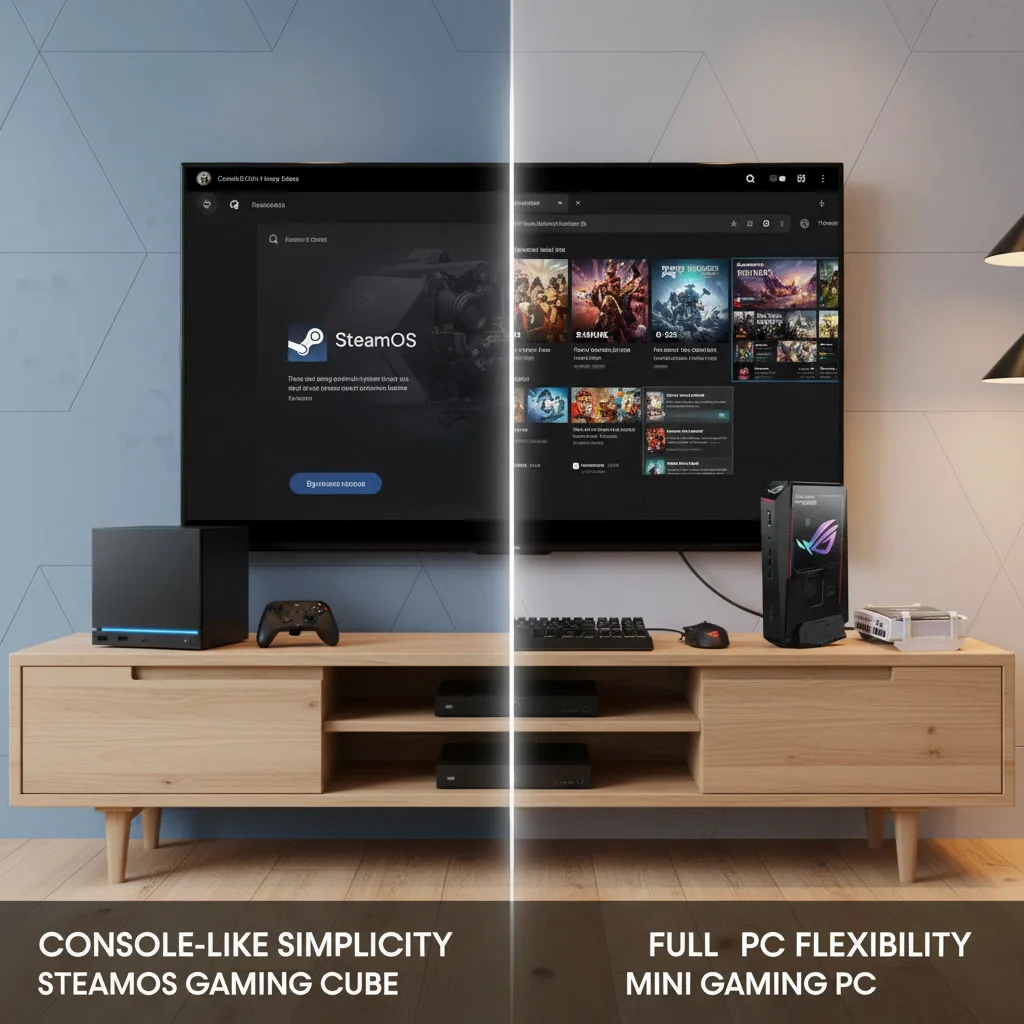
While Sony and Microsoft are pulling players deeper into closed ecosystems, Valve is attempting something different. SteamOS is not trying to recreate the console model exactly. It is trying to make PC gaming feel console-simple without fully giving up the flexibility of the PC ecosystem.
The original Steam Machines failed because they arrived too early. The idea was good: bring PC gaming to the couch with a controller-friendly interface. The execution was not ready. Linux gaming compatibility was rough, hardware partners were inconsistent, prices were all over the place, and the average player had little reason to choose a Steam Machine over a console or a Windows PC.
The Steam Deck changed the entire conversation.
Valve did not just build a handheld. It built a proof of concept for a better living-room PC experience. SteamOS became cleaner. Proton made Windows games far more practical on Linux. Shader pre-caching reduced stutter. Suspend-and-resume made PC gaming feel more like a console. The Steam store, cloud saves, controller mapping, and verified-game system all started working together as one user experience.
Now third-party SteamOS hardware is becoming real. Lenovo’s Legion Go S “Powered by SteamOS” is important not because it will outsell every console, but because it proves Valve’s software layer can move beyond Valve’s own hardware.
That is the new Steam Machine moment, except this time the “machine” may not be a tower under the TV. It may be a handheld in a dock. It may be a mini PC. It may be a living-room box from a hardware partner. It may be whatever shape AMD APUs and OEM margins make practical.
The old Steam Machine asked consumers to buy a weird Linux console before the software ecosystem was ready. The new SteamOS push asks a simpler question: what if your PC library could behave more like a console without becoming a closed console?
The AMD APU Is Becoming the Shared Console Language
One reason this convergence feels so real is that the hardware underneath many of these devices is starting to rhyme.
Modern consoles, PC handhelds, and compact gaming systems often revolve around the same broad idea: an AMD processor with integrated Radeon graphics, shared memory, and enough efficiency to fit inside a console-like power envelope. The exact chips differ, but the design philosophy is similar.
That matters because it makes the hardware less mysterious. An Xbox, a PlayStation, a SteamOS handheld, and a Windows gaming handheld are not identical, but they are no longer alien species either. They are variations on a familiar architecture: CPU cores, GPU compute, unified memory behavior, fast storage, and an operating system layer deciding what the player sees.
As that hardware foundation becomes more standardized, the platform battle moves upward. The fight is less about whether one box can technically run games and more about which interface, store, subscription, controller layer, compatibility system, and account model feels best.
In other words, the hardware is becoming the vessel. The ecosystem is becoming the product.
The real story is not that consoles are dying. It is that the console form factor is being absorbed into a larger access war. Sony wants the PlayStation Store to remain the default place for premium console gaming. Microsoft wants Xbox to become a service layer across devices. Valve wants SteamOS to make PC libraries feel natural on handhelds and TVs. The winner may not be the company with the strongest box. It may be the company that makes your library feel the least painful to leave.
Why This Matters for Regular Players
For everyday players, this shift has practical consequences.
If you mostly buy digital games, your account security matters more than ever. Your library is tied to your login, your payment history, and the platform’s long-term policies. Losing access to an account can now feel like losing a shelf full of games.
If you care about ownership, physical games still matter, but the window is narrowing. Disc drives are becoming optional. Physical runs are getting smaller. Some releases already treat the disc as a partial installer or license token rather than a complete offline archive.
If you care about value, subscriptions can be excellent, but they should not be mistaken for ownership. A Game Pass, PlayStation Plus, or Nintendo Switch Online catalog can be a great deal while still being a rental-style relationship.
If you care about flexibility, SteamOS is worth watching closely. It is not perfect, and anti-cheat compatibility can still be a problem for certain multiplayer games. But it represents one of the most serious attempts to make PC gaming work in the living room without locking the entire experience inside one console manufacturer’s store.
The Bottom Line
The old platform war was easy to explain: buy our box, play our games. The new one is more slippery. Buy our box. Or use our app. Or subscribe to our library. Or bring your account to another screen. Or dock your handheld. Or stream from the cloud. Or keep everything in one store forever because leaving would be too painful.
That is the real future of gaming hardware. The box still matters, but it matters less by itself. The library matters more. The account matters more. The operating system matters more. The storefront matters more. The subscription hook matters more.
Physical media gave players a kind of independence that digital ecosystems rarely replace. Xbox’s restructuring shows how far a major platform holder is willing to move beyond the old console identity. SteamOS shows that the PC ecosystem finally has a serious shot at the couch again.
The next console war may not be about which machine has the most power. It may be about which company gets to define what “owning a game” means.
 |
Xbox Game Pass Financial Strains Prompt Strategic ReevaluationMicrosoft’s Game Pass strategy is facing new financial pressure as rising content costs, subscription fatigue, and day-one release expectations force a closer look at the future of Xbox’s gaming model. |
 | Steam Machine vs Windows Mini Gaming PC: Which Living Room Box Makes More Sense?Valve’s Steam Machine idea still has appeal, but compact Windows gaming PCs now offer serious competition for players who want a console-like setup with more flexibility. |