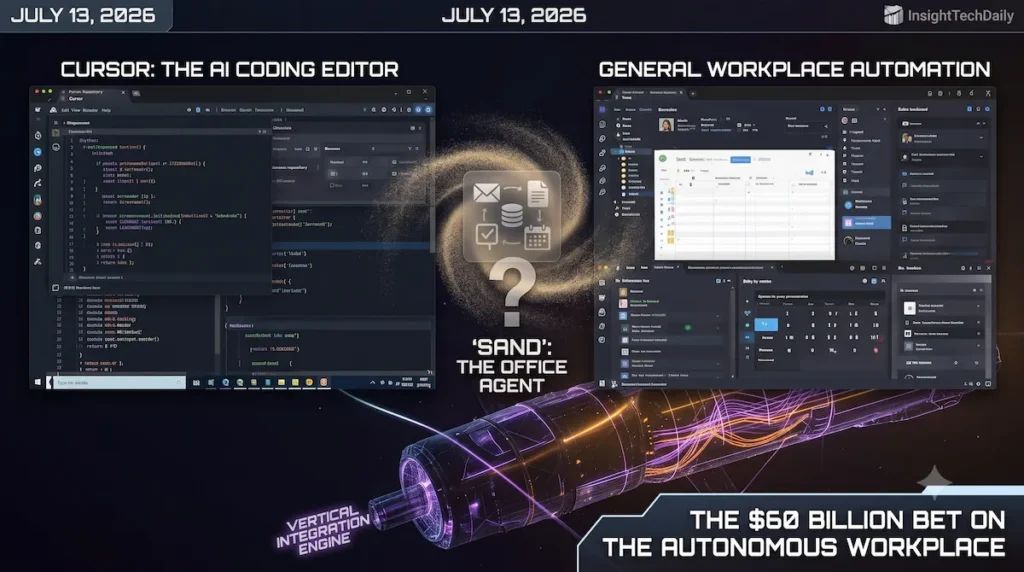
SpaceX’s agreement to acquire Anysphere, the company behind the Cursor AI coding platform, was already one of the most striking technology deals of the year. A newly reported internal project suggests the transaction could eventually reach far beyond software development.
On June 16, SpaceX announced an all-stock agreement to acquire Anysphere for approximately $60 billion. The deal is expected to close during the third quarter of 2026, subject to regulatory approval and other customary closing conditions. It follows SpaceX’s public-market debut and deepens the relationship between Cursor and the company’s expanding artificial intelligence operations.
Now, Anysphere is reportedly developing a general-purpose AI agent internally known as Sand. According to reporting from The Information, Sand is being designed as a personalized assistant that can move Cursor beyond programming and into broader forms of knowledge work. The project has not been publicly announced by Anysphere, and important details—including pricing, availability, supported platforms, and its final product name—remain unknown.
Sand should not yet be treated as a finished competitor to OpenAI or Anthropic. But its reported existence helps explain why a company rooted in rockets, satellite communications, large-scale computing, and AI models would place such an enormous value on the maker of a code editor.
SpaceX may not simply be buying Cursor’s current coding business. It may be buying an agent platform that could eventually become the interface through which people assign work to AI.
From AI Coding to AI Work
Cursor began as an AI-native development environment, combining code completion, conversational assistance, repository awareness, and increasingly autonomous software agents.
Its latest cloud agents can work on codebases remotely, operate their own computing environments, produce changes, and return completed work for human review. Cursor has also expanded those agents across desktop, web, mobile, Slack, GitHub, and command-line interfaces.
Sand appears to apply that general concept to people who do not spend their day writing software.
Reported examples include managing email, working with spreadsheets, organizing documents, and carrying out administrative or knowledge-work tasks. Instead of asking the user to open every application, move information manually, and repeatedly prompt a chatbot, an agent like Sand could potentially receive an objective and complete several connected steps on the user’s behalf.
That would place Cursor in a much larger market.
Software development has become one of the clearest early demonstrations of autonomous AI because code provides agents with unusually structured feedback. A coding agent can inspect a repository, make a change, run tests, identify an error, revise its work, and package the result for review.
Office work is less predictable. An agent may need to interpret an ambiguous email, identify the correct spreadsheet, determine which figures should be changed, preserve formatting, draft a response, and decide when human approval is required.
The opportunity is enormous, but so is the possibility of error.
Cursor Is Entering an Increasingly Crowded Workplace-Agent Race
Anysphere would not be entering this market alone.
Anthropic introduced Claude Cowork in January 2026 as an extension of the ideas behind Claude Code. Cowork allows users to assign longer tasks involving local files, cloud services, research, documents, presentations, and spreadsheets. Anthropic has positioned it as a way to hand off work and return later to a completed deliverable rather than supervise every individual prompt.
OpenAI entered the same race more directly on July 9 with ChatGPT Work, introduced alongside the GPT-5.6 model family. ChatGPT Work combines conversational AI, coding capabilities, connectors, and agentic execution to produce more complete work products across communication, research, spreadsheets, documents, and application development.
The competition is therefore shifting beyond which company has the most capable chatbot.
The more important question is becoming: Which company can build the most dependable system for turning a loosely defined objective into a completed, reviewable piece of work?
That requires more than a language model. It requires application access, file handling, memory, permissions, task planning, recovery from failure, audit trails, approval controls, and an interface that allows humans to understand what the agent changed.
This is where Cursor’s background becomes particularly relevant.
Cursor’s Real Advantage May Be Its Agent Harness
It would be premature to claim that Sand has a fundamentally superior architecture. Anysphere has not released technical documentation for the project, and no public version is available for independent testing.
However, Cursor has spent years building software around long-running agent activity rather than merely placing a chat window beside an existing application.
Cursor’s coding agents can examine project context, manipulate files, execute tools, run software, observe results, and revise their work. Its cloud agents also operate inside controlled computing environments instead of depending entirely on visual screen recognition. Cursor says its sandboxing system allows agents to work more freely within defined boundaries while requesting permission before taking actions outside those boundaries, such as accessing the internet.
That experience could matter when moving into office productivity.
A conventional AI assistant often treats a document, webpage, or spreadsheet primarily as content to read and reproduce. A deeper workspace agent must also understand the surrounding state: which file is authoritative, which version is current, where a value came from, whether a formula should be preserved, what changed during the task, and whether an external action is reversible.
Cursor already faces similar problems in software development. Its agents must understand relationships across files, account for changes made elsewhere in a project, validate results, and provide artifacts that a developer can inspect before accepting them.
The important question is not whether Sand literally treats office work as software compilation. There is no public evidence that it does. The more grounded argument is that Anysphere has already built much of the orchestration infrastructure needed to manage complex, tool-driven work.
Sand may be an attempt to make that infrastructure useful outside the codebase.
Why SpaceX Would Want an AI Workspace Platform
The reported project also changes how the $60 billion acquisition can be interpreted.
Cursor already gives SpaceX and its AI operations access to a rapidly growing developer platform, enterprise relationships, agent infrastructure, and a large volume of real-world experience involving AI-assisted software creation. Reuters reported that SpaceXAI and Cursor were preparing their first jointly developed AI model in early July, illustrating how quickly the two companies were beginning to combine their resources even before the acquisition closed.
Sand could expand the strategic value of that relationship.
An agent capable of assisting developers is valuable. An agent capable of handling work across engineering, finance, operations, communications, research, and administration could become a much broader enterprise platform.
That creates a possible vertical stack:
- SpaceXAI supplies large-scale computing infrastructure.
- xAI develops the underlying Grok model family.
- Cursor provides the agent interface and execution environment.
- Sand extends that environment from programming into general workplace activity.
Not every part of that stack has been confirmed as a final product strategy. Cursor currently supports models from multiple providers, and neither SpaceX nor Anysphere has announced that customers will be forced into an exclusively Grok-based environment.
Still, vertical integration would give SpaceX more control over the models, compute, software, distribution, and enterprise relationships surrounding its AI business.
That may be one reason Anysphere was worth dramatically more to SpaceX than its current identity as a coding-tool company might suggest.
Enterprise Customers Will Focus on Control, Not Just Capability
The biggest obstacle facing Sand may not be whether it can draft an email or update a spreadsheet. It may be whether companies are willing to grant it the permissions required to do those things autonomously.
A useful workplace agent could potentially access:
- Internal email and messaging systems
- Customer and employee information
- Financial documents
- Contracts and proprietary research
- Shared drives and cloud storage
- Calendars and meeting records
- Business applications with permission to change data
Each additional connection increases usefulness, but it also expands the security and compliance boundary.
Enterprises will therefore want clear answers about where data is processed, how long it is retained, whether it is used for model training, which models receive it, how administrator controls work, and whether every action can be reviewed or reversed.
Those questions should not be interpreted as proof that Cursor or xAI plans to train Grok on customer information. No such policy for Sand has been publicly announced.
They are, however, predictable concerns whenever an AI agent is given access to sensitive business systems—particularly after a major ownership change that could alter infrastructure, model partnerships, or product priorities.
Cursor’s historic flexibility has been part of its appeal. Customers have been able to use models from competing AI providers rather than commit entirely to one vendor. A future shift toward Grok exclusivity could create resistance among organizations that have standardized on OpenAI, Anthropic, Microsoft Azure, Amazon Web Services, or Google Cloud.
Maintaining model choice could therefore be as important to Sand’s enterprise prospects as the quality of the agent itself.
The Autonomous Desktop Is Not Fully Autonomous Yet
The phrase “autonomous desktop” makes these products sound more mature than they currently are.
Today’s agents can perform impressive work, but long-running tasks still create problems involving hallucinated assumptions, incorrect tool selections, stale information, unintended file changes, and actions taken in the wrong account or application.
Even highly capable agents need limits.
For workplace adoption, the strongest products may not be those that promise the least human involvement. They may be the ones that provide the clearest boundaries between actions that can proceed automatically and actions that require approval.
A dependable agent should be able to explain what it plans to do, show which information it used, identify what it changed, preserve previous versions, and stop before performing an irreversible action.
Cursor’s experience with code review and sandboxed execution gives it a credible foundation for approaching those problems. But Sand will have to prove that the same discipline can be applied to the far messier world of email, documents, spreadsheets, and business communication.
Sand Could Reveal the Real Purpose of the Cursor Acquisition
SpaceX’s planned acquisition of Anysphere is officially centered on one of the fastest-growing companies in AI-assisted software development. Sand suggests the long-term ambition may be considerably larger.
If the reported project reaches the market, Cursor will no longer be competing only with GitHub Copilot, Claude Code, or other developer tools. It will be competing with OpenAI, Anthropic, Microsoft, Google, and every company attempting to become the default agent layer for office work.
The winning platform will not necessarily be the one with the strongest model on a benchmark.
It will be the one businesses trust to act across their files, communications, applications, and internal workflows without creating more risk than productivity.
Cursor has already demonstrated that it can turn AI models into a compelling environment for developers. Sand appears to test whether the same formula can work for everyone else.
That possibility—not merely autocomplete, code generation, or Cursor’s existing revenue—may be the most important reason SpaceX was prepared to place a $60 billion bet on Anysphere.
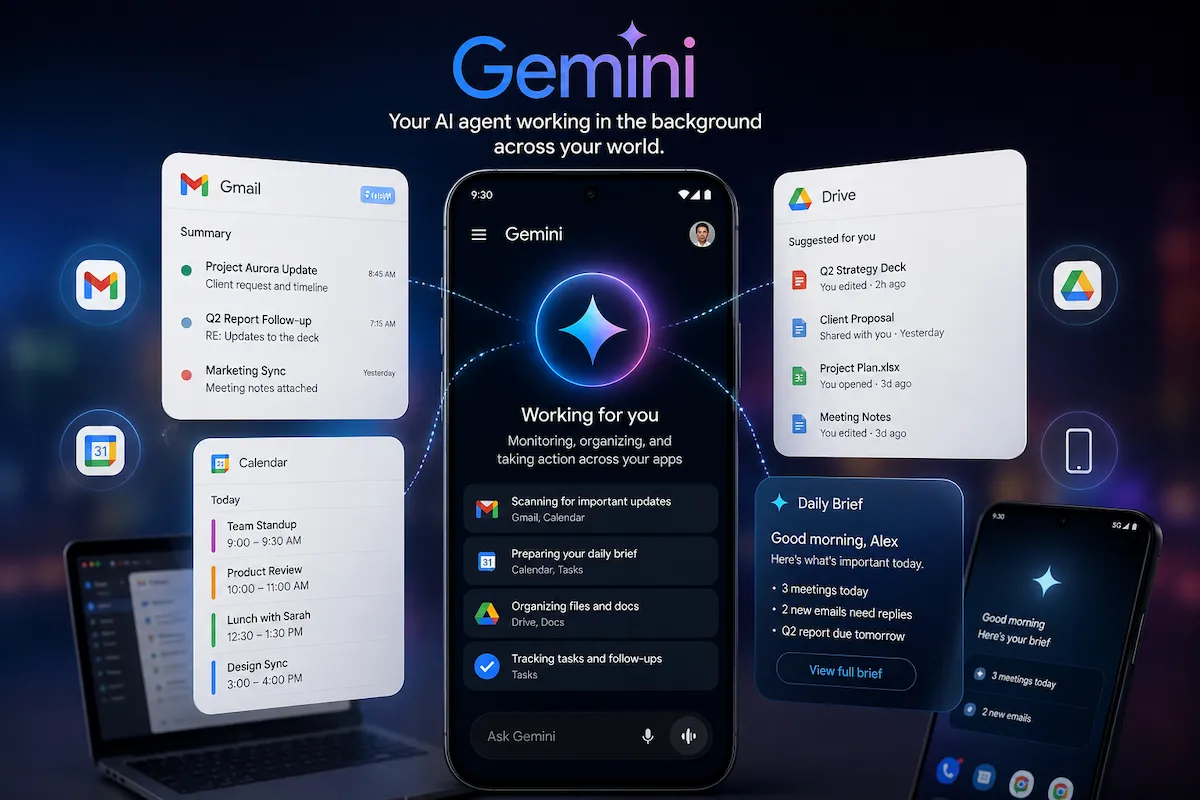 |
Google Gemini and the AI Agent Ecosystem AdvantageWhy deep ecosystem integration is giving Google a massive leg up in the race to build truly autonomous, production-ready AI agents. |
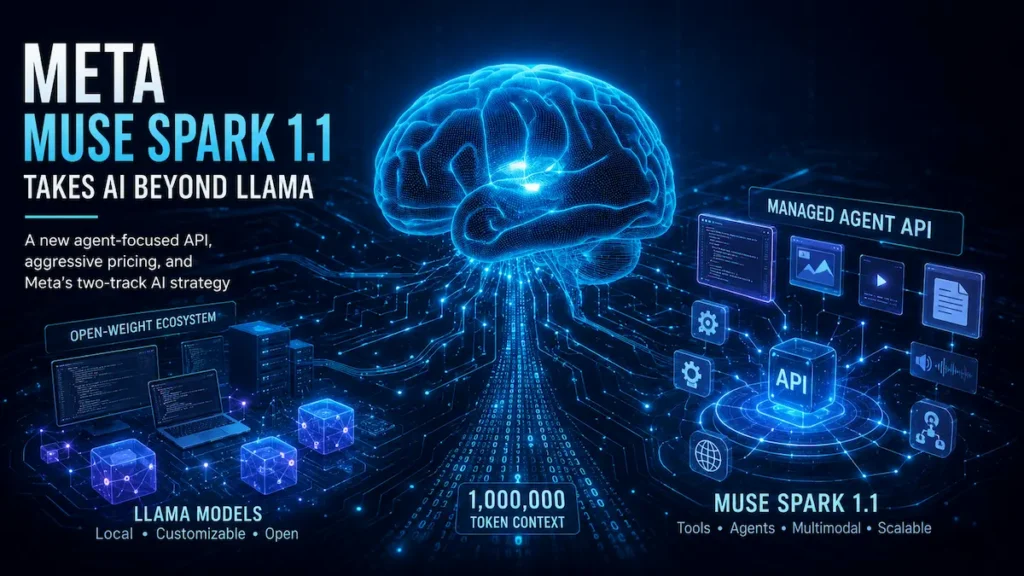 |
Meta’s Paid API Pivot: Inside Muse Spark 1.1 and the Battle for Agentic SupremacyMeta’s newest model targets coding, computer use, tool orchestration, and professional workflows—showing how quickly the AI market is shifting toward agents that can complete entire tasks. |