The days of Windows being the automatic default for prebuilt gaming PCs may finally be loosening.
If you have ever unboxed a brand-new gaming PC, you probably know the routine. You plug it in, boot it up, and immediately spend the next hour dodging setup prompts, removing trialware, avoiding Microsoft Edge nudges, and cleaning up settings before the machine feels like it belongs to you.
That has been the accepted tradeoff of buying a prebuilt gaming desktop. You get convenience on the hardware side, but you still inherit the full Windows desktop experience, good and bad.
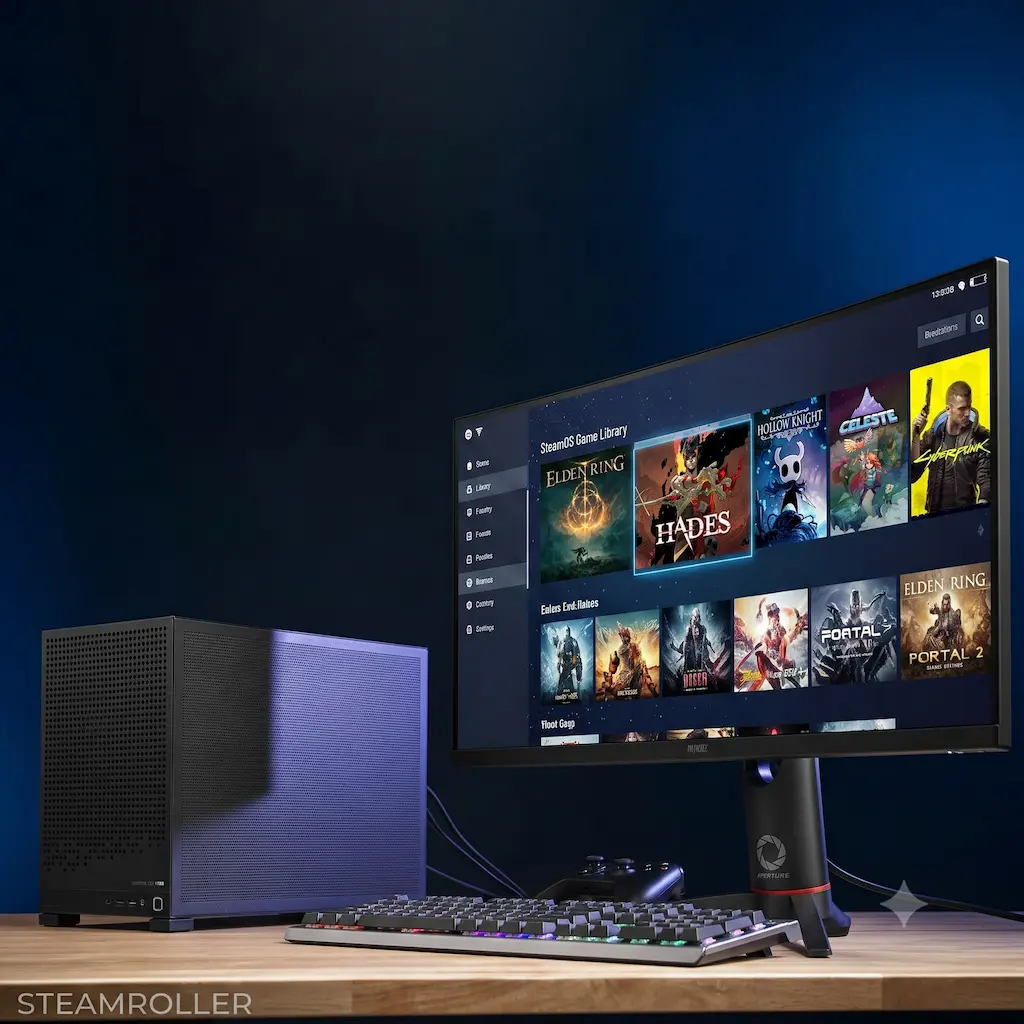
The Steamroller takes a different approach. Instead of shipping as another Windows gaming tower, it arrives with SteamOS installed natively. No Windows license. No traditional desktop-first setup. No pretending this is an office PC that also happens to have a graphics card. It is built around the idea that some buyers may want a gaming desktop that behaves more like a console from the moment they turn it on.
That does not automatically make it a great deal. At $1,299, the Steamroller has to be judged carefully against regular Windows prebuilts and DIY builds. But even if the value argument is debatable, the bigger market signal is hard to ignore: a modern prebuilt gaming desktop can now launch with SteamOS and feel like a real product instead of a hobby project.
What Is the Steamroller PC?
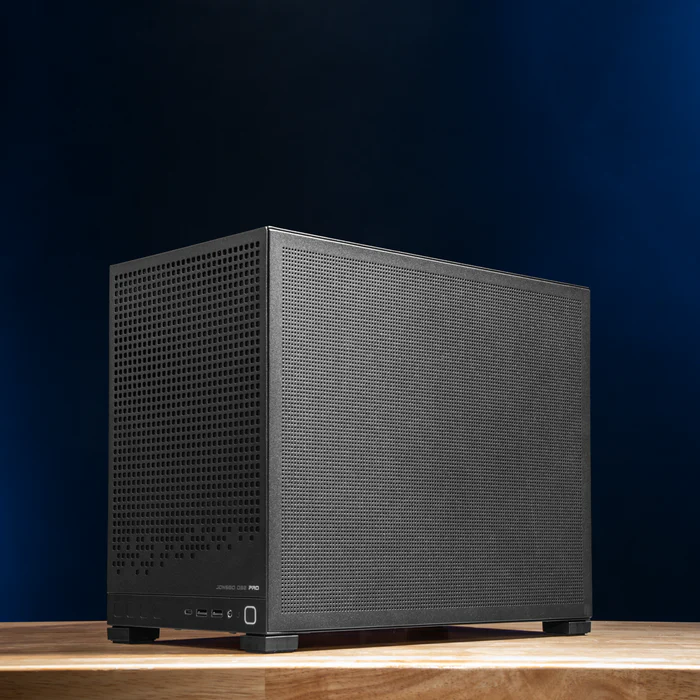
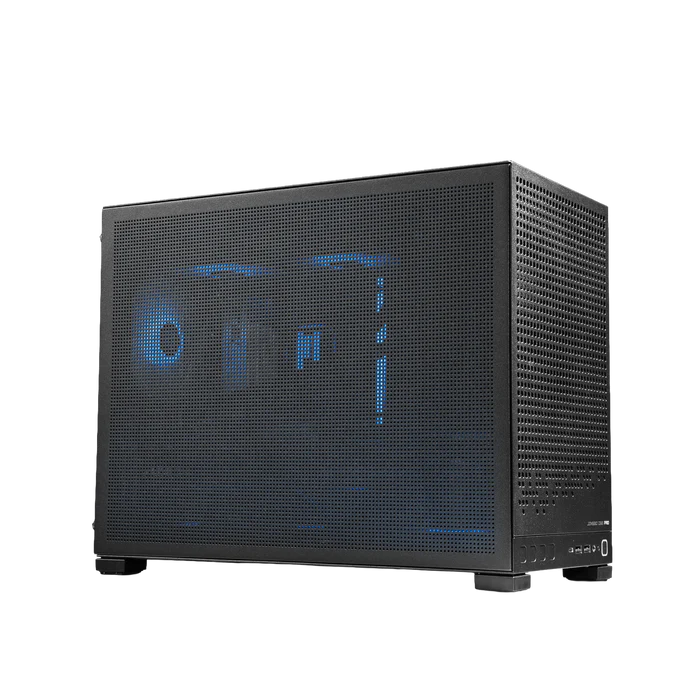
Steamroller is a prebuilt gaming desktop from META PCs that runs SteamOS, the Linux-based operating system best known for powering Valve’s Steam Deck. Instead of dropping users into a traditional Windows desktop, the system is designed around a Steam-first experience, making it feel closer to a living-room console than a normal productivity PC.
That distinction matters. Windows has been the safe default for prebuilt gaming systems because it supports the widest range of games, launchers, drivers, anti-cheat systems, accessories, and background utilities. Most buyers understand it, most builders ship it, and most troubleshooting guides assume it.
Steamroller is betting that the ground has shifted. Thanks to Valve’s ongoing work on SteamOS, Proton, and the Steam Deck ecosystem, Linux gaming is no longer just a weekend experiment for patient hobbyists. It is now polished enough that a company can sell a prebuilt gaming tower around it and reasonably argue that many players will be better served by a cleaner, gaming-first interface.
Breaking Down the Hardware
Steamroller is not trying to be a $4,000 showcase PC with custom liquid cooling and a flagship GPU. It is aimed at mainstream gaming, especially 1080p performance, living-room use, and players who want a simpler Steam-focused setup.
- Processor: AMD Ryzen 5 9600X. This is a Zen 5, 6-core, 12-thread desktop CPU with strong gaming performance and efficient power behavior. It is not exotic, but it is a sensible chip for a midrange gaming system.
- Graphics: AMD Radeon RX 7600. This is a mainstream 1080p graphics card. It is a good fit for esports titles, lighter games, and many modern releases at tuned settings, though it is not a high-end 1440p or 4K card.
- Memory: 16GB DDR5-5600. This is enough for a pure gaming-first machine today, but it is also the area many buyers may want to upgrade first.
- Storage: 1TB NVMe SSD. That is a practical starting point for Steam libraries, though modern game installs can chew through 1TB faster than people expect.
- Operating system: SteamOS. This is the real differentiator. The hardware is familiar, but the software experience is the story.
The all-AMD configuration also makes sense for SteamOS. AMD’s Linux graphics support has generally been a cleaner fit for open-source gaming stacks than NVIDIA’s more proprietary driver history. For a product trying to feel appliance-like, that matters. The less driver drama the buyer sees, the more convincing the console-style pitch becomes.
The Price Tag: $1,299
This is where the Steamroller becomes more complicated.
At $1,299, this is not a bargain-bin gaming PC. A confident DIY builder could likely put together a comparable Windows or Linux machine for less, especially when sales are available. Traditional Windows prebuilts with similar or stronger GPUs may also compete aggressively on price.
So the Steamroller should not be framed as the best raw parts-per-dollar desktop on the market. That is probably not the winning argument.
The better argument is convenience. Steamroller is selling a finished experience: standard desktop parts, SteamOS already installed, a gaming-first interface, and less of the usual Windows cleanup that many prebuilt buyers have come to expect. For someone who wants to connect a PC to a TV, grab a controller, and use their Steam library with minimal fuss, that has real value.
In other words, this is not just a hardware purchase. It is a bet that some gamers would rather pay extra for a prebuilt that behaves more like a console than spend time turning a Windows PC into something cleaner.
ITD Insight
Steamroller is not exciting because the parts list is unbeatable. It is exciting because the software assumption changed. For years, prebuilt gaming PCs competed on RGB lighting, case design, and GPU tiers while almost always shipping the same Windows foundation. SteamOS gives builders a new way to differentiate: the actual experience after the power button is pressed.
Why SteamOS on a Desktop Matters
This is not Valve’s first attempt at pushing PC gaming into the living room. The original Steam Machines tried to do something similar back in 2015, and they failed for several reasons. The hardware was inconsistent, the pricing was awkward, SteamOS was immature, and game compatibility was nowhere near where it needed to be.
The difference now is Proton.
Valve’s compatibility layer has dramatically improved Linux gaming. Many mainstream Steam games now run well without native Linux versions, and the Steam Deck proved that a Linux-based gaming device can succeed with normal buyers, not just enthusiasts.
That does not mean every game works perfectly. Anti-cheat-heavy multiplayer titles can still be a problem. Some launchers remain annoying. Certain games may need specific compatibility settings. Anyone pretending SteamOS has reached total Windows parity is getting ahead of reality.
But the gap is much smaller than it used to be. For a large number of players who mostly live inside Steam, the experience is now good enough that the old Windows-only assumption deserves to be challenged.
That is the real importance of Steamroller. It suggests the Steam Deck effect is moving beyond handhelds. If SteamOS can scale from a portable device to a living-room desktop tower, then Windows may no longer be the only practical default for every gaming PC category.
The 16GB RAM Conversation
The 16GB RAM configuration is understandable, but it is also worth watching.
For a clean SteamOS gaming box, 16GB of DDR5 is still workable. Linux is generally lighter than Windows, and a gaming-first system should have less background clutter competing for memory. That helps the Steamroller’s case.
However, modern gaming habits are not always clean. Many players keep Discord open, run a browser in the background, stream video, use game launchers, capture clips, and bounce between apps. Some newer games are also becoming less forgiving on memory.
That does not make 16GB a dealbreaker, but it does make 32GB the more comfortable long-term target. The good news is that Steamroller uses standard desktop parts, so memory upgrades should be straightforward. The bad news is that DDR5 pricing has become more volatile, so waiting to upgrade may not always save money.
Who Is Steamroller Actually For?
The Steamroller is not really for hardcore PC enthusiasts who enjoy building systems, tweaking BIOS settings, tuning memory timings, swapping launchers, and managing every detail themselves. Those buyers can probably build something cheaper, faster, or more personalized.
It is also not ideal for players who rely heavily on games with strict anti-cheat systems that still do not behave well on Linux. If your main library is built around those titles, Windows remains the safer choice.
The best audience is different: players who want the Steam library, PC game prices, desktop upgradeability, and a cleaner living-room experience without the usual Windows maintenance. It is for the person who likes the idea of a console, but does not want to give up Steam sales, modding potential, replaceable parts, or the broader PC ecosystem.
That is a narrower market than traditional Windows gaming PCs, but it is a real one. The Steam Deck helped prove that many players are willing to accept some compatibility tradeoffs in exchange for a focused, simple, game-first experience.
The Bigger Windows Question
Steamroller also lands at an interesting moment for Microsoft.
Windows is still the dominant PC gaming platform, and that will not change overnight. But the user experience around Windows has become easier to criticize. Forced account nudges, ads, background services, update interruptions, preinstalled software, and aggressive ecosystem prompts have all made some users more open to alternatives.
For years, those complaints did not matter much because there was no practical replacement for mainstream PC gaming. Linux existed, but it was not something most prebuilt buyers wanted to touch.
SteamOS changes that calculation. It does not need to beat Windows everywhere. It only needs to be good enough for a specific type of gaming machine: Steam-first, controller-friendly, living-room-ready, and simple to maintain.
If more builders follow this model, Windows will still dominate gaming desktops, but it may no longer be mandatory. That alone would be a meaningful shift.
Bottom Line
The Steamroller is not a perfect value play. At $1,299 with a Ryzen 5 9600X, Radeon RX 7600, 16GB of DDR5, and a 1TB NVMe SSD, buyers are clearly paying for more than the parts list. A DIY builder or deal hunter may find better performance for the money elsewhere.
But that does not make the product unimportant.
Steamroller matters because it turns SteamOS on a desktop from an enthusiast project into a purchasable prebuilt experience. It gives console-curious PC gamers a cleaner path into Steam gaming, and it gives system builders a way to compete on software experience instead of only chasing RGB, case airflow, and GPU tiers.
The old Steam Machines failed because the timing was wrong. The software was not ready, the hardware was inconsistent, and the value proposition was unclear.
This time, the timing looks better. Proton is stronger, the Steam Deck has normalized SteamOS, AMD hardware is a sensible fit, and plenty of users are tired of fighting their operating system before they even launch a game.
Steamroller may remain a niche product. But it points toward something bigger: the Windows gaming desktop finally has a credible alternative path, and that alone makes this little SteamOS tower worth paying attention to.
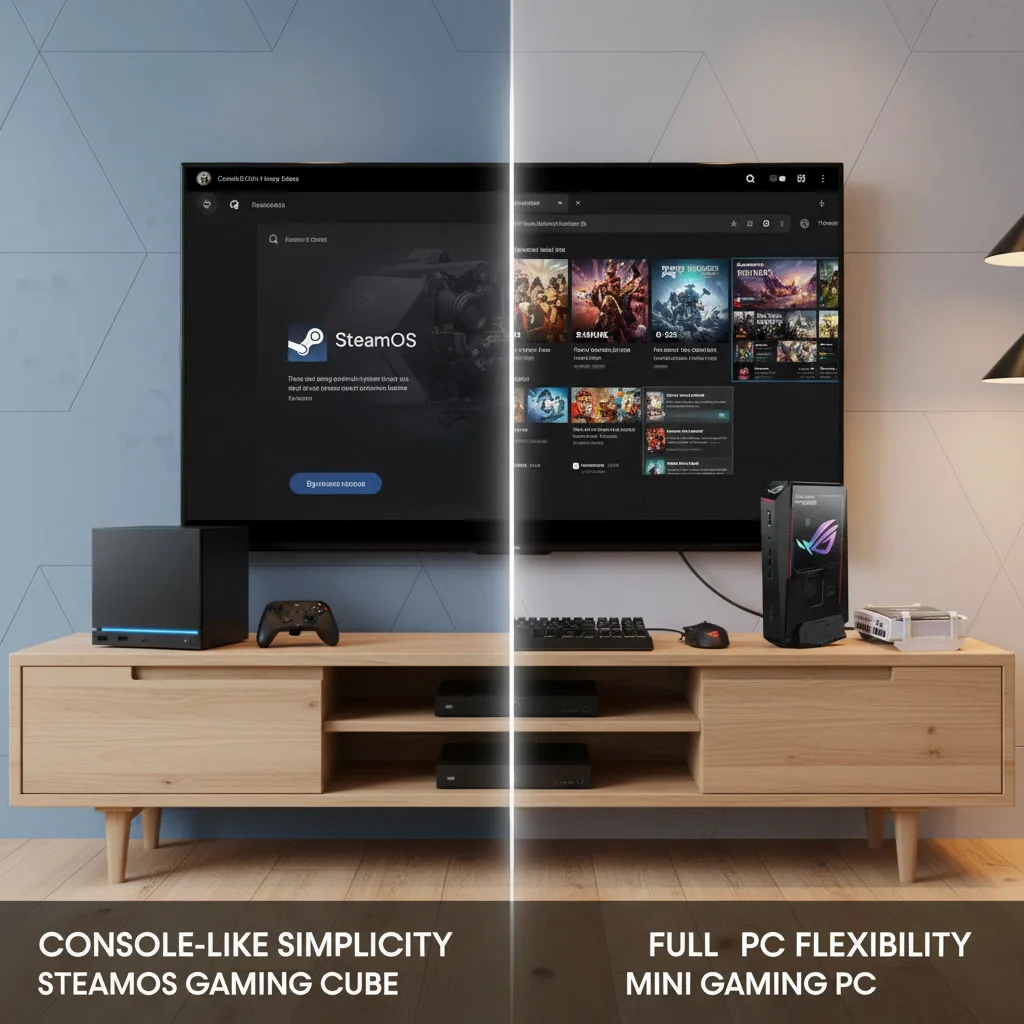 | Steam Machine vs Windows Mini Gaming PC: Which Living Room Box Makes More Sense?Valve’s Steam Machine idea still has appeal, but compact Windows gaming PCs now offer serious competition for players who want a console-like setup with more flexibility. |
 |
The Real State of Gaming PCs: Performance, Prices, and What Actually Matters in 2026Gaming PCs are still powerful, flexible, and upgradeable, but the buying math has changed. Here is what actually matters in 2026, from GPUs and CPUs to RAM, storage, pricing, and long-term value. |