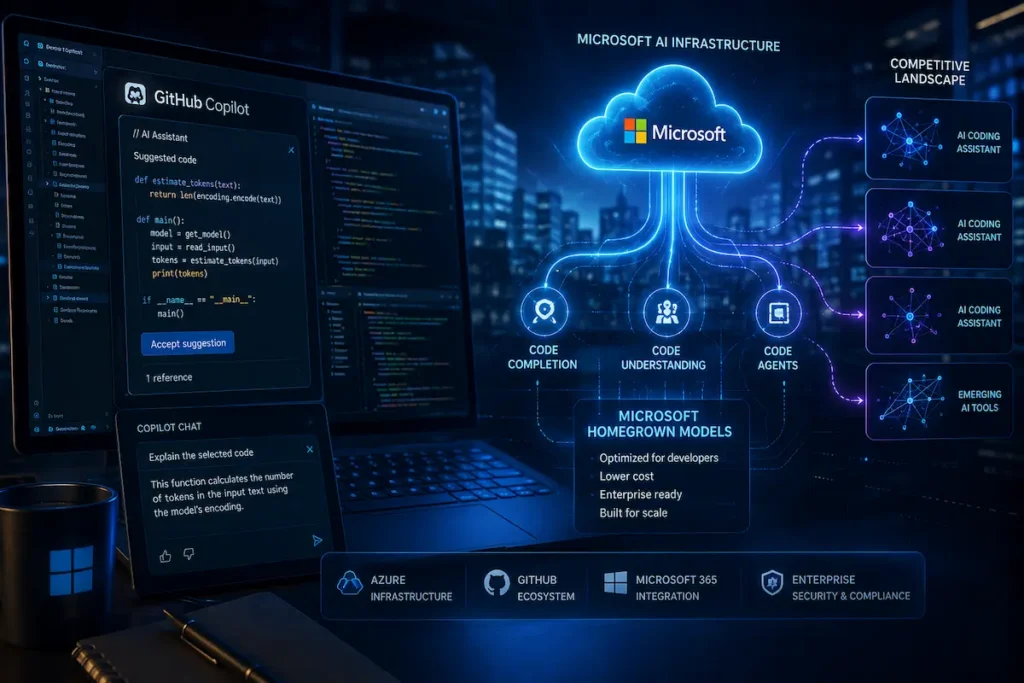
Microsoft appears poised to unveil a new generation of internally developed artificial intelligence models at its Build developer conference, signaling a strategic shift that could reshape the future of GitHub Copilot and Microsoft’s broader AI ambitions.
According to reports, the company is preparing specialized in-house AI models designed for software development tasks. While Microsoft remains one of OpenAI’s largest investors and closest partners, the move suggests the company is increasingly focused on reducing dependence on external models while improving cost efficiency across its growing portfolio of AI services.
The timing is significant. GitHub Copilot helped define the AI coding assistant market, but the competitive landscape has changed dramatically over the past year as newer developer-focused platforms have gained traction among both independent developers and enterprise engineering teams.
Microsoft Is Defending More Than GitHub Copilot
When GitHub Copilot launched, it effectively owned the AI coding assistant category.
Today, the market looks very different.
Anthropic’s Claude models have developed a strong reputation among software developers for handling large codebases and complex reasoning tasks. AI-native coding platforms such as Cursor have built dedicated developer experiences that many engineers view as more flexible than traditional IDE integrations.
At the same time, enterprises are increasingly evaluating multiple AI providers instead of standardizing on a single vendor.
For Microsoft, this creates a strategic problem.
GitHub remains one of the company’s most important developer platforms, but relying exclusively on OpenAI models means Microsoft has limited control over pricing, model development priorities, and infrastructure costs.
Building internal models gives Microsoft another option.
ITD Insight: Microsoft’s biggest challenge may not be competing with OpenAI. It may be competing with the growing perception among developers that newer coding-focused tools are moving faster than GitHub Copilot.
The Economics of AI Coding Are Changing
One of the most overlooked aspects of the AI coding market is cost.
Large frontier models deliver impressive capabilities, but they are expensive to operate at enterprise scale. Every code completion, repository analysis, pull request review, and agent workflow consumes compute resources that must ultimately be paid for somewhere.
That cost becomes particularly important when serving millions of GitHub users.
By introducing specialized internal models, Microsoft could optimize around coding-specific workloads rather than relying exclusively on larger general-purpose models.
In practical terms, that means a homegrown coding model may not need to outperform every frontier AI system. It only needs to deliver acceptable coding performance at a lower operating cost.
For enterprise customers, the resulting benefit could be lower subscription costs, more predictable pricing structures, and broader deployment opportunities across large development organizations.
Reducing OpenAI Dependency Has Become a Strategic Priority
Microsoft’s relationship with OpenAI remains one of the most important partnerships in the AI industry.
However, the incentives between the two companies are no longer perfectly aligned.
OpenAI increasingly operates as a standalone AI platform company pursuing its own enterprise customers, developer ecosystem, and productivity tools.
Meanwhile, Microsoft wants AI capabilities embedded throughout Windows, Azure, Microsoft 365, GitHub, Dynamics, Power Platform, and its broader enterprise software stack.
The result is a natural push toward diversification.
Instead of depending on a single model provider, Microsoft appears to be building a multi-model strategy where different AI systems are selected based on workload requirements, performance targets, and operating costs.
That approach mirrors how cloud providers manage infrastructure resources today: use the right tool for the right job rather than relying on one solution for everything.
Why Corporate Buyers May Welcome This Shift
Enterprise technology buyers are increasingly focused on return on investment rather than raw model capability.
The early AI race emphasized benchmark scores, model size, and reasoning performance. The next phase may be determined by deployment economics.
Companies want AI tools that can scale across thousands of employees without creating unpredictable operating expenses.
Microsoft’s ability to pair proprietary models with Azure infrastructure, GitHub workflows, Microsoft 365 integration, and existing enterprise licensing agreements could create a compelling value proposition.
For many organizations, the question is not whether an AI model is the absolute smartest available. The question is whether it delivers enough capability at a cost that makes large-scale deployment financially practical.
That calculation increasingly favors specialized models built for specific workloads.
The Build Conference Could Reveal Microsoft’s Next AI Phase
Microsoft’s first AI era was defined by its partnership with OpenAI.
The company’s next phase may be defined by how effectively it combines OpenAI technology with its own growing portfolio of internal AI models.
If reports prove accurate, Build could provide an early look at Microsoft’s long-term strategy: maintaining access to frontier models while simultaneously developing lower-cost, workload-specific alternatives optimized for GitHub Copilot and enterprise productivity platforms.
That wouldn’t represent a break from OpenAI.
Instead, it would signal that Microsoft no longer wants any single AI provider to determine the future economics of its software ecosystem.
As competition intensifies from Anthropic, Cursor, and a growing list of AI-native rivals, Microsoft appears to be preparing for a market where controlling the models may be just as important as controlling the platform.
RELATED READING:
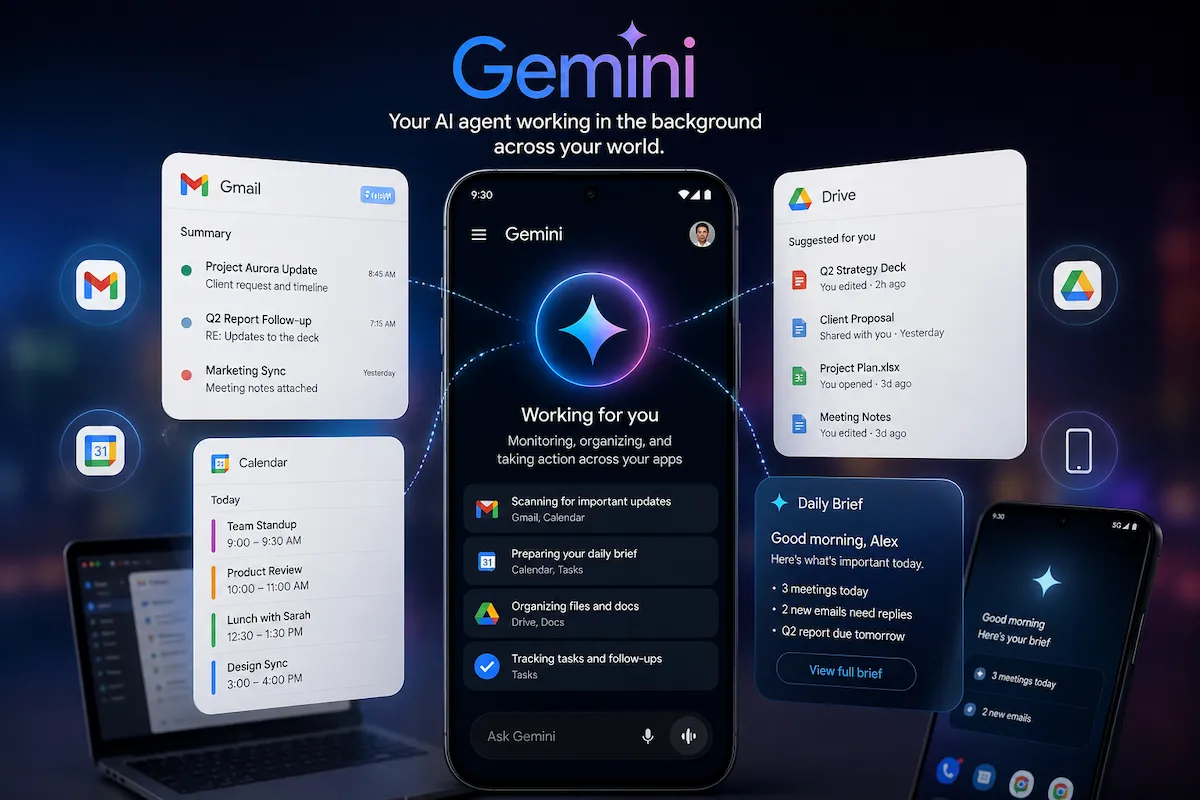 |
Google Gemini and the AI Agent Ecosystem AdvantageWhy deep ecosystem integration is giving Google a massive leg up in the race to build truly autonomous, production-ready AI agents. |
 |
Should Powerful AI Models Be Held Back? The Claude Mythos Security DebateAn analysis of the escalating industry friction surrounding open weight releases, deployment pauses, and the safety boundaries of next-tier model capabilities. |