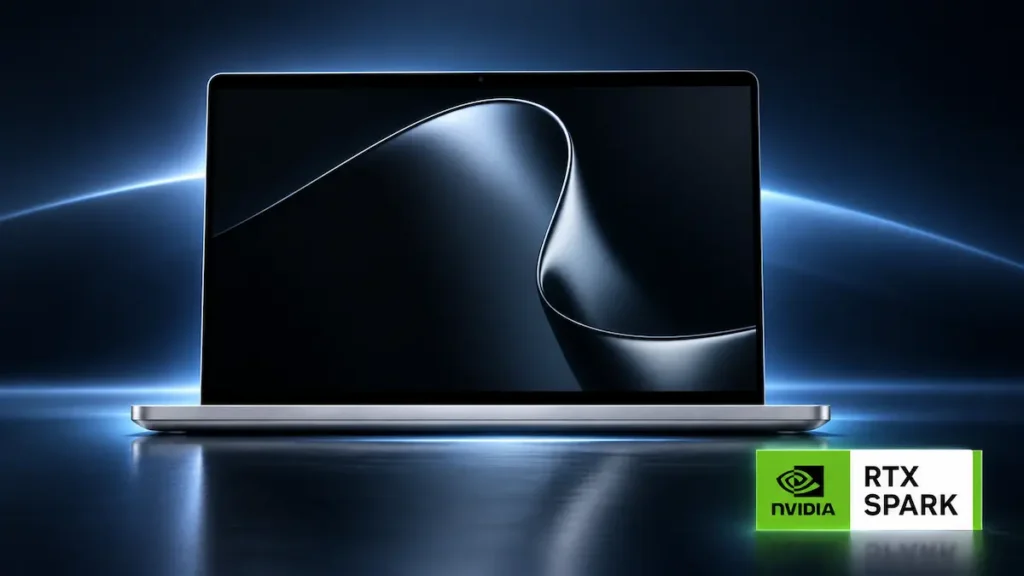
NVIDIA RTX Spark laptops are officially available for preorder, with the first systems scheduled to begin shipping October 16, 2026. Starting at $2,599, the new Windows PCs combine NVIDIA Blackwell RTX graphics, Grace CPU cores, and unified memory in hardware designed for local AI, content creation, and gaming. But the difference between entry-level and high-memory configurations could be more important than the RTX Spark branding itself.
Affiliate Disclosure
This article contains affiliate links. InsightTechDaily may earn a commission if you purchase through these links, at no additional cost to you. Affiliate partnerships do not influence our editorial coverage or recommendations. Prices and availability may change.
NVIDIA’s RTX Spark platform is moving from announcement to actual products, with Microsoft, ASUS, Dell, HP, Lenovo, and MSI introducing new laptops built around the company’s Arm-based superchip.
Leading the launch is Microsoft’s Surface Laptop Ultra, a premium 15-inch Windows laptop starting at $2,599. It is joined by the ASUS ProArt P14 and P16, Lenovo Yoga 9n, HP OmniBook Ultra 16, Dell XPS 16 Creator Edition, and other systems targeting creators, developers, and demanding PC users.
The launch marks an interesting expansion of the Windows PC market. Rather than relying on a conventional processor paired with a discrete graphics card, RTX Spark brings CPU processing, RTX graphics acceleration, and shared system memory into one platform.
That combination could make these machines particularly attractive for local artificial intelligence workloads, where memory capacity and GPU acceleration frequently determine which models can run without relying on the cloud.
However, with configurations ranging from 24GB to 128GB of unified memory, not every RTX Spark laptop will offer the same local AI capabilities.
NVIDIA RTX Spark Laptops: What Is Available?
According to Microsoft’s October 7 announcement, the first wave of RTX Spark laptops includes systems from six major manufacturers.
- Microsoft Surface Laptop Ultra: A premium 15-inch laptop focused on creative work, local AI, and high-performance Windows computing.
- ASUS ProArt P14 and P16: Creator-focused laptops combining RTX Spark acceleration with high-resolution OLED displays.
- Lenovo Yoga 9n 2-in-1: A convertible laptop offering a flexible touchscreen design for creative and professional workflows.
- HP OmniBook Ultra 16: A premium laptop emphasizing performance and thermal management.
- Dell XPS 16 Creator Edition: A 16-inch system designed around professional content creation and demanding workloads.
- MSI Prestige N16 Flip AI+: A premium convertible featuring a 16-inch Tandem OLED display and NVIDIA acceleration.
Microsoft lists October 16 as the beginning of shipments for the initial laptop lineup, although individual retailers and configurations may have different delivery dates.
Prices are firmly in premium territory. The Surface Laptop Ultra and ASUS ProArt P14 have entry configurations around $2,599, while larger displays, more memory, and higher-end RTX Spark configurations push prices considerably higher.
Microsoft Surface Laptop Ultra — Starting at $2,599
The Surface Laptop Ultra is Microsoft’s flagship entry into the RTX Spark category. Its starting configuration pairs an 18-core NVIDIA Grace CPU and Blackwell RTX graphics with 24GB of unified memory and 512GB of storage.
The laptop features a 15-inch high-resolution touchscreen and an entirely new thermal design, according to Microsoft. More expensive configurations offer additional processing resources and up to 128GB of unified memory.
For everyday creative work, development, and lighter local AI workloads, the entry configuration offers an interesting starting point. Buyers interested in running larger language models, however, should look carefully at the available memory upgrades.
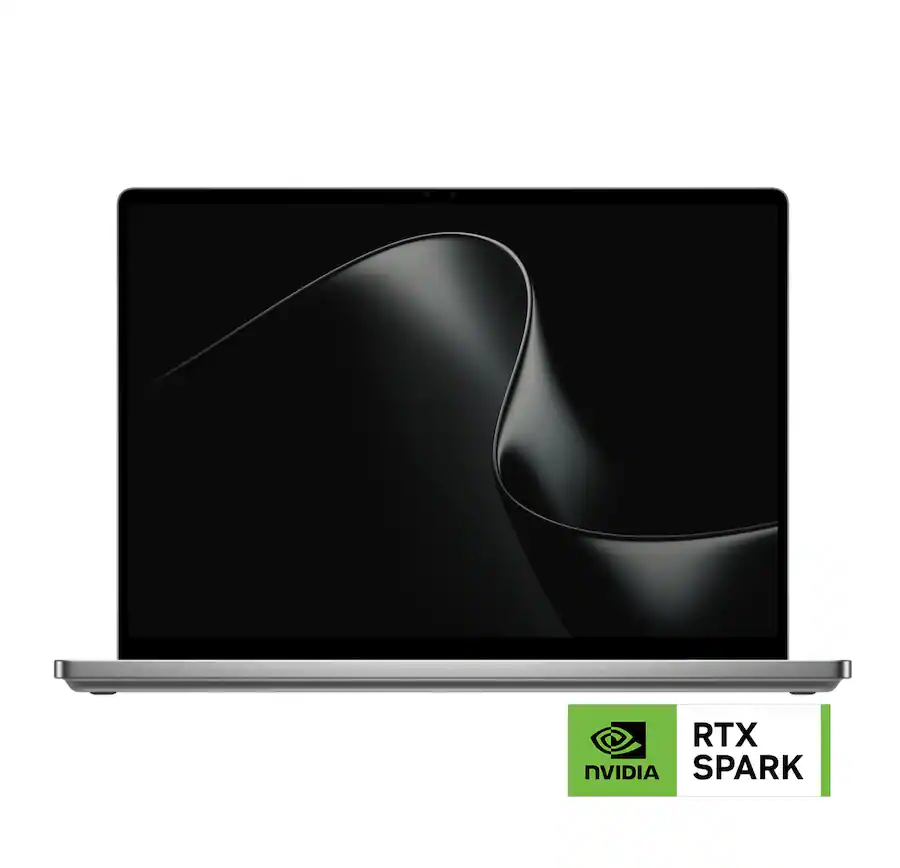
15-inch RTX Spark Windows laptop with an 18-core NVIDIA Grace CPU, Blackwell RTX graphics, 24GB unified memory, and 512GB storage.
ASUS ProArt P14 — Starting at $2,599
ASUS is approaching RTX Spark from a different direction with the ProArt lineup. The 14-inch ProArt P14 combines a compact chassis with a high-resolution OLED touchscreen, targeting creators who need strong acceleration without carrying a traditional workstation laptop.
The advertised entry configuration includes 24GB of unified memory and a 512GB SSD. ASUS also offers higher-capacity configurations within its RTX Spark family.
Its compact size and creator-oriented design could make the ProArt P14 attractive for photographers, video editors, and developers who value portability. However, memory capacity remains an important consideration for heavier AI workloads.
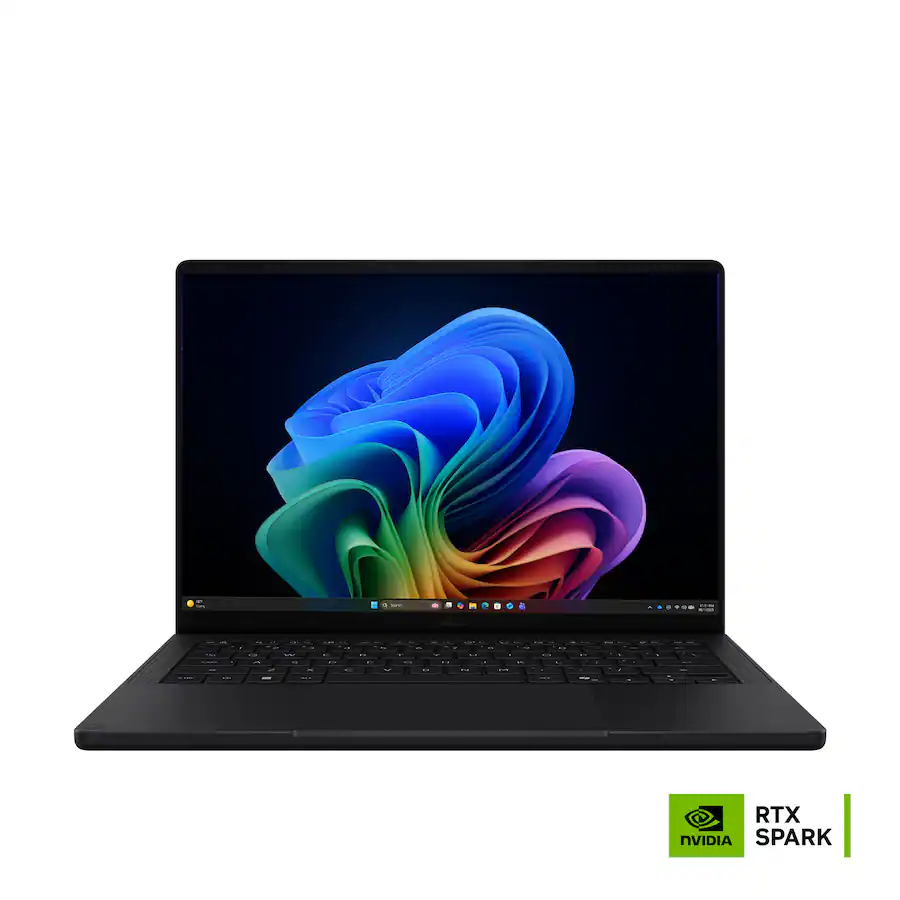
Compact 14-inch creator laptop featuring a 3K OLED touchscreen, NVIDIA RTX Spark N1X, 24GB unified memory, and 512GB storage.
Lenovo Yoga 9n 2-in-1 — Starting at $3,099
Lenovo’s Yoga 9n takes the platform into the premium convertible category. The 16-inch touchscreen and 360-degree design offer flexibility for creative professionals who want a device that functions as both a conventional laptop and a large-format tablet.
The listed configuration includes 32GB of memory and a 1TB SSD, providing more memory and storage than the entry-level Surface and ASUS systems featured here.
Its appeal will likely depend on how much buyers value the larger OLED display and convertible design compared with traditional performance-oriented laptops.
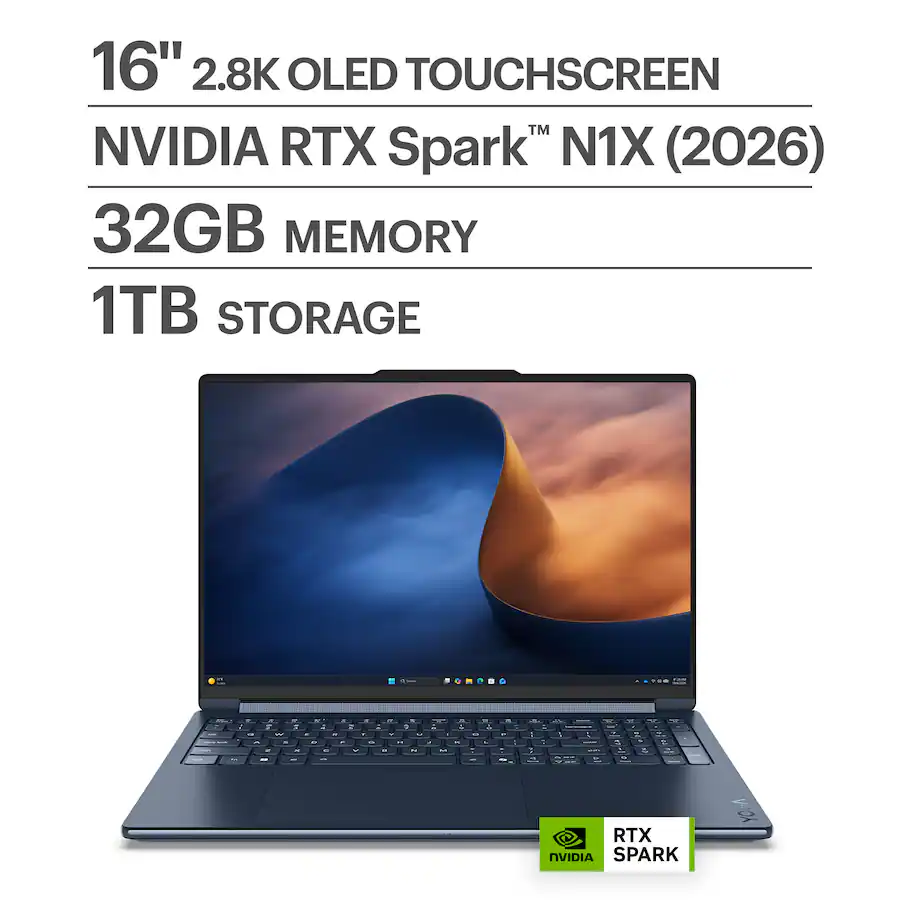
16-inch 3K OLED convertible laptop featuring NVIDIA RTX Spark N1X, 32GB memory, and 1TB storage.
HP OmniBook Ultra 16 — Starting at $3,199
HP’s OmniBook Ultra 16 pairs the higher-end 20-core RTX Spark N1X configuration with a premium 16-inch OLED touchscreen.
The listed 32GB memory and 1TB storage configuration positions it above entry-level RTX Spark models, though buyers seeking substantial memory capacity for large AI models may still need to consider higher-memory alternatives.
HP is also emphasizing thermal engineering, an important consideration for workloads involving sustained GPU acceleration in a thin laptop enclosure.
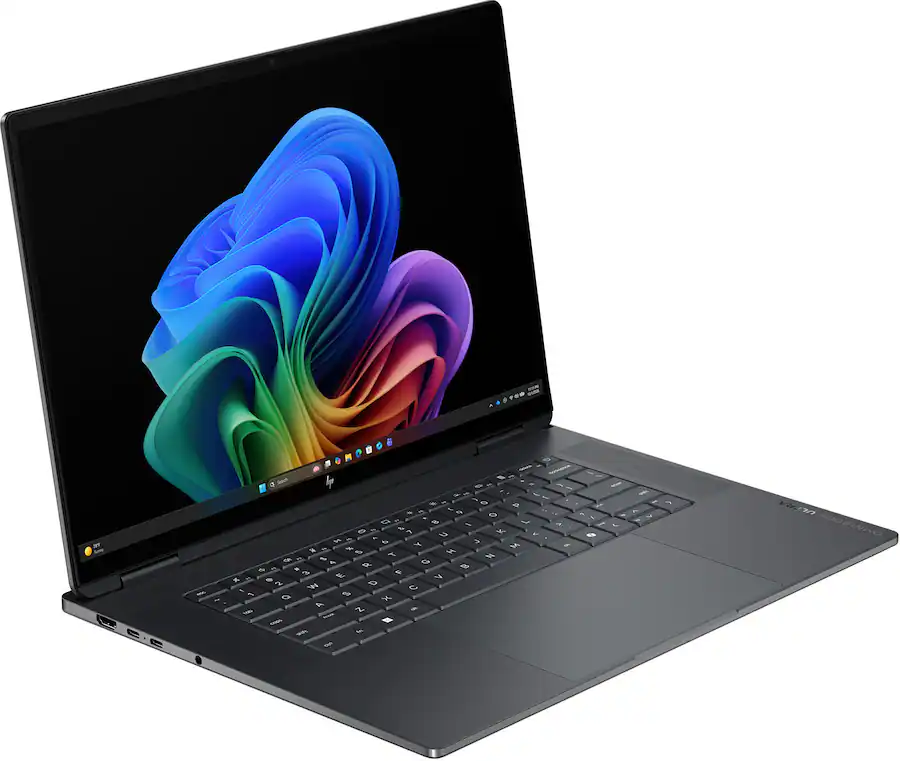
Premium 16-inch OLED laptop featuring a 20-core NVIDIA RTX Spark N1X processor, 32GB memory, and 1TB SSD.
Pricing and configurations reflect advertised preorder listings as of October 8, 2026. Availability, delivery estimates, and prices may change. The configurations above are examples of the launch lineup rather than a complete list of available RTX Spark systems.
What Makes NVIDIA RTX Spark Different?
At the center of RTX Spark is NVIDIA’s attempt to bring several capabilities traditionally associated with different types of computers into one Windows system.
The platform combines an Arm-based Grace CPU with Blackwell RTX graphics and unified LPDDR5X memory. Instead of having separate pools of system RAM and dedicated graphics memory, the CPU and GPU can work with a shared memory pool.
That distinction matters because local AI applications often need large amounts of memory to hold model weights, context data, and other working information.
NVIDIA currently lists two principal mobile RTX Spark N1X configurations:
| Specification | 18-Core N1X | 20-Core N1X |
|---|---|---|
| CPU | 18-core NVIDIA Grace | 20-core NVIDIA Grace |
| GPU | 5,120 Blackwell CUDA cores | 6,144 Blackwell CUDA cores |
| Maximum supported unified memory | 64GB | 128GB |
| Listed mobile TDP range | 45–80W | 45–80W |
| Operating system | Windows 11 | Windows 11 |
Source: NVIDIA RTX Spark official specifications. Maximum supported memory does not mean every laptop ships with that capacity. Actual configurations and power limits depend on the manufacturer.
Both configurations support NVIDIA’s CUDA ecosystem, RTX graphics features, and hardware acceleration for AI workloads. That provides a familiar software foundation for developers already working with NVIDIA GPUs.
However, buyers should not assume that a larger CPU or GPU core count automatically translates into better performance in every workload. Memory capacity, bandwidth, sustained power limits, cooling, and software optimization will all influence real-world results.
Why Unified Memory Could Be the Biggest RTX Spark Selling Point
While NVIDIA is highlighting graphics and AI acceleration, the memory architecture may be the most consequential feature for buyers interested in running artificial intelligence locally.
Traditional Windows workstations often pair system RAM with a discrete graphics card equipped with its own dedicated VRAM. That can provide excellent performance, but the amount of available graphics memory becomes an important limitation when loading larger AI models.
RTX Spark approaches the problem differently by allowing CPU and GPU workloads to share a unified memory pool.
That does not make unified memory equivalent to high-bandwidth discrete GPU memory in every application. It does, however, provide more flexibility for workloads that benefit from accessing a larger pool of memory.
24GB and 32GB: An Entry Point for Local AI
The initial RTX Spark laptops include 24GB and 32GB configurations. Those capacities can support smaller local language models, AI-assisted development tools, image generation workflows, and other accelerated applications, depending on their memory requirements.
For buyers primarily interested in creative software, everyday productivity, and occasional local AI use, these entry configurations may be sufficient.
However, a 24GB system does not have 24GB reserved exclusively for AI inference. Windows, background services, graphics workloads, and other applications all consume memory from the same pool.
64GB: A More Interesting Target for Serious Local AI
For enthusiasts and developers running larger quantized language models, multiple AI services, or more demanding local workflows, 64GB represents a substantial increase in available working memory.
It offers more room for larger models and additional application overhead without immediately moving into the highest-priced configurations.
This makes 64GB RTX Spark systems particularly interesting as the new platform develops. The key question will be how manufacturers price those configurations compared with existing discrete-GPU laptops, Apple silicon systems, and compact AI workstations.
128GB: More Capacity, but at a Significant Premium
At the top of the lineup, selected RTX Spark systems support up to 128GB of unified memory.
Microsoft and NVIDIA are promoting the ability to run AI models exceeding 120 billion parameters locally on suitably configured hardware. That is an impressive capability for a portable PC, although model quantization, context size, runtime support, and usable memory determine what can actually run.
Large memory capacity also does not guarantee fast inference. A model that fits entirely in memory may still run more slowly than expected depending on bandwidth, compute requirements, and software optimization.
For most consumers, the decision is therefore less about purchasing the maximum available memory and more about identifying the capacity their actual workloads require.
ITD Insight
RTX Spark’s most interesting feature may not be its peak AI performance claims, but the availability of NVIDIA CUDA acceleration alongside large unified memory configurations. For local AI buyers, a reasonably priced 64GB system could be more useful than an entry-level model with more limited memory, while 128GB machines will appeal to users who genuinely need the additional capacity. The challenge for NVIDIA and its partners is making that memory accessible at a competitive price.
Can RTX Spark Replace a Gaming Laptop or Workstation?
NVIDIA is positioning RTX Spark as more than an AI development platform. The company is also promoting the Blackwell RTX GPU for gaming, rendering, and professional creative applications.
Supported features include ray tracing, DLSS, NVIDIA Reflex, and acceleration through NVIDIA’s broader RTX software ecosystem.
That gives RTX Spark a wider range of potential uses than a machine intended exclusively for AI inference.
However, there are some important qualifications.
RTX Spark is an Arm-based Windows platform. While Windows on Arm continues to gain software support, compatibility with specific games, drivers, peripherals, plugins, and specialized applications must be evaluated individually.
Applications built for conventional x86 processors may depend on translation or compatibility layers, and some software may still require native support or additional development work.
For gaming specifically, buyers should also wait for independent tests comparing RTX Spark against conventional GeForce RTX laptops at similar prices.
Support for RTX features is encouraging, but it does not establish that these systems will outperform existing dedicated gaming laptops.
Local AI Versus Cloud AI: Where RTX Spark Fits
One of the larger questions surrounding RTX Spark is whether these systems can reduce reliance on cloud-based AI services.
For developers who repeatedly test models, generate images, experiment with coding assistants, or build local agents, having capable hardware on the desk can be valuable.
Potential advantages include:
- Local processing: Suitable workloads can run without sending model inputs to an external inference service.
- Predictable hardware costs: Buyers pay for the computer rather than paying a cloud provider for every supported local inference request.
- Offline capability: Compatible AI tools can operate without a continuous internet connection.
- Developer flexibility: NVIDIA’s CUDA ecosystem provides access to familiar acceleration tools and frameworks.
There are limits, however. Local processing does not automatically eliminate subscription costs, software licensing fees, electricity expenses, or the need for cloud resources.
Large training workloads and applications requiring substantially more compute than a mobile system can provide may still benefit from dedicated servers or remote infrastructure.
For businesses and professional users, the financial equation will depend on how frequently the hardware is used, which models are required, and whether those workloads can run effectively on the platform.
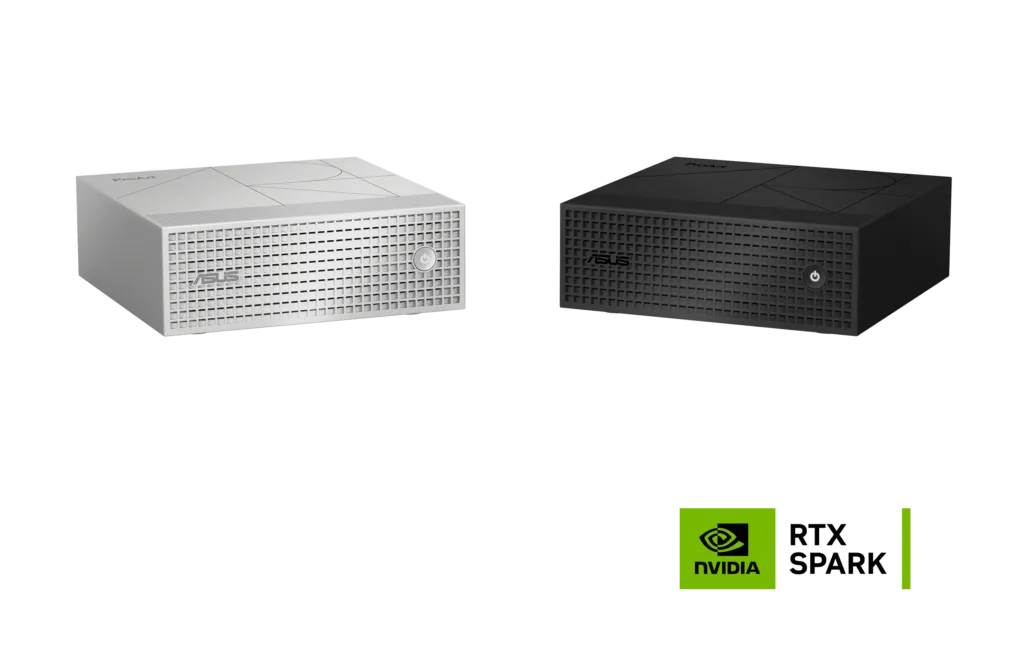
RTX Spark Mini Desktops and the Surface Dev Box Are Coming
Laptops are only the first stage of the RTX Spark rollout.
Microsoft has also announced the Surface RTX Spark Dev Box, a compact workstation built around the same NVIDIA platform. It offers up to 128GB of unified memory and is designed for local AI inference, model evaluation, and development workflows.
The Surface Dev Box is available for preorder at a starting price of $5,999, with shipments expected in the United States in November.
NVIDIA and Microsoft are also planning additional compact desktop systems from hardware partners later in 2026.
These devices could be particularly relevant for developers and homelab users who prefer a stationary system dedicated to AI workloads rather than paying for a premium laptop display, battery, keyboard, and portable enclosure.
NVIDIA lists a 140W TDP for its desktop RTX Spark N1X configuration, compared with a 45–80W range for mobile implementations. That creates the potential for different sustained performance characteristics, although actual results will depend on cooling and manufacturer designs.
Pricing, availability, and independent performance measurements will ultimately determine whether these compact desktops become attractive alternatives to conventional GPU-equipped workstations.
Should You Preorder an NVIDIA RTX Spark Laptop?
RTX Spark brings several interesting developments to the premium Windows PC market. NVIDIA’s combination of Grace CPU cores, Blackwell graphics, CUDA acceleration, and unified memory could create a useful platform for buyers who want local AI capabilities without giving up conventional laptop functionality.
Still, the first wave of products deserves careful consideration before purchasing.
- For local AI developers: Prioritize usable memory capacity, supported runtimes, and real-world inference performance over headline AI compute figures.
- For creators: Compare display quality, software compatibility, storage, and sustained performance against established workstation laptops.
- For gamers: Wait for independent gaming benchmarks and verify compatibility with the games and peripherals you actually use.
- For homelab users: Consider whether an upcoming compact RTX Spark desktop might deliver better value for continuous AI workloads.
- For everyday users: A $2,599 starting price is difficult to justify unless the platform offers capabilities you will regularly use.
Bottom Line: RTX Spark Opens Another Front in the Local AI PC Market
The arrival of NVIDIA RTX Spark laptops gives Windows buyers a new hardware option at a time when local AI capability is becoming a meaningful differentiator among premium computers.
Microsoft, ASUS, Lenovo, HP, Dell, and MSI are bringing a broad selection of devices to market, but the initial prices make it clear that RTX Spark is targeting enthusiasts, developers, and professional users rather than the mainstream laptop market.
The platform’s shared memory architecture may prove especially significant. With configurations ranging from 24GB to 128GB, buyers will have several options, but the amount of memory installed could make a substantial difference in the types of AI models these machines can run.
For now, the most interesting question is not whether RTX Spark can run local AI. It is how much useful AI performance buyers will receive for their money.
That answer will become clearer as the first systems arrive on October 16 and independent benchmarks begin comparing them with established RTX gaming laptops, Apple silicon computers, and dedicated AI workstations.