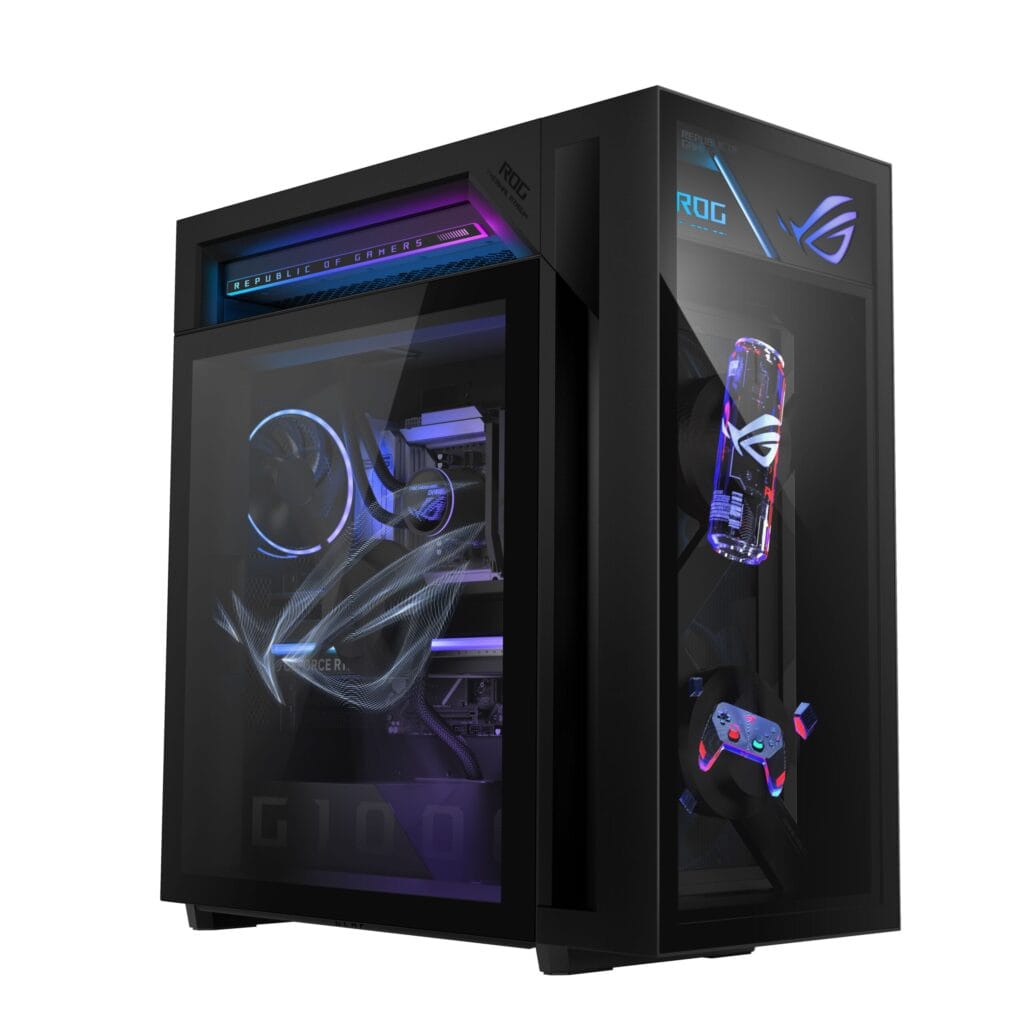
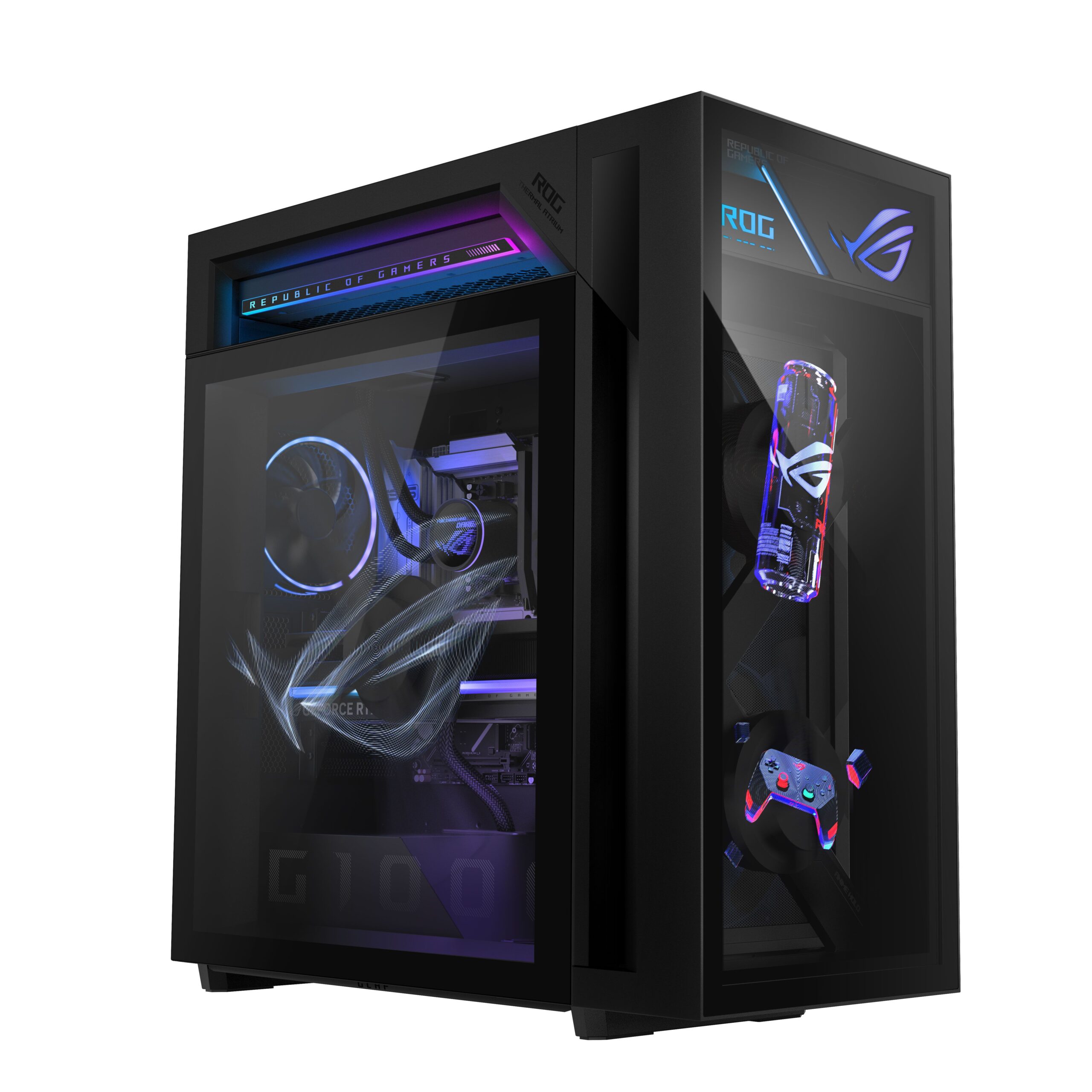
ASUS revealed its ROG G1000 “Holo-Tower” desktop during CES 2026, showcasing an experimental high-end gaming system that blends extreme thermal engineering with unconventional visual design. The system introduces a holographic fan display system dubbed “AniMe Holo” alongside a compartmentalized cooling layout designed to manage the growing thermal demands of next-generation flagship PC hardware.
High-end configurations are expected to scale up to components such as AMD’s Ryzen 9 9950X3D and Nvidia’s RTX 5090 graphics, positioning the G1000 as one of the most power-dense prebuilt desktop systems announced for the 2026 cycle. The rise of ultra-high-power desktops comes at a time when AI-focused PCs and traditional consumer systems are beginning to diverge, creating new performance expectations across the industry.
A Concept-Driven Showcase for High-End Desktop Design
The ROG G1000 represents ASUS’ latest attempt to push premium gaming desktops beyond traditional RGB-focused aesthetics. Instead of conventional lighting effects, the system centers around its “AniMe Holo” feature — a spinning LED projection system capable of displaying customizable holographic visuals through the case’s tempered glass panels.
While primarily a visual feature, the technology highlights how high-end desktop manufacturers are increasingly experimenting with ways to differentiate flagship systems in a crowded enthusiast market.
AniMe Holo: From RGB Lighting to Dynamic Projection
According to ASUS, the AniMe Holo system uses rapidly spinning LED fan blades to project layered visual effects that appear as floating 3D holograms within the chassis. The implementation moves beyond static lighting and into animated projection, creating a dynamic exterior designed to make the system itself a visual centerpiece.
The long-term durability of high-speed LED fan projection systems operating continuously inside a high-temperature PC environment remains an open question. However, the approach signals a broader shift toward blending functional cooling components with visual customization.
Engineering Around the 700W Desktop Era
Beyond aesthetics, the ROG G1000 is designed to address a growing challenge in enthusiast desktop design: thermal management for systems capable of drawing 700 watts or more under sustained load.
Flagship CPUs and GPUs continue to increase in power consumption, forcing prebuilt manufacturers to rethink internal airflow and cooling architecture. ASUS’ response is a compartmentalized internal layout that separates major heat sources into dedicated cooling zones. These evolving hardware demands are also reshaping how users think about performance, storage, and memory speed and capacity requirements in modern PCs.
The “Thermal Atrium” and Tri-Zone Airflow Design
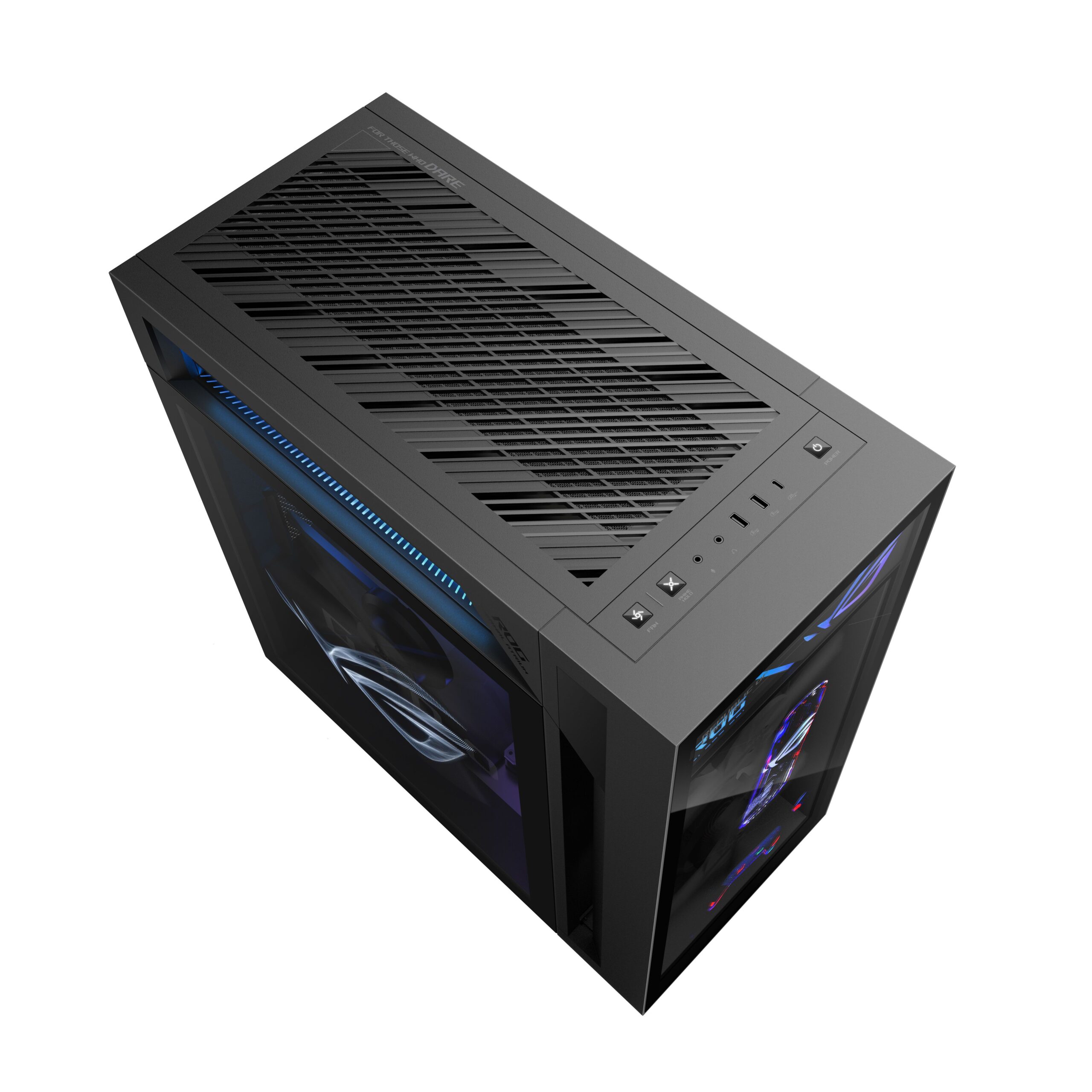
Central to the system’s thermal strategy is what ASUS calls a “Thermal Atrium” — an isolated chamber designed to house a 420mm all-in-one liquid cooler. By separating the CPU cooling loop from other internal components, ASUS claims the design can reduce processor temperatures by as much as 16°C under certain conditions.
The chassis also incorporates a tri-zone airflow structure intended to independently cool the CPU, GPU, and power delivery zones. This approach mirrors techniques commonly seen in workstation and server environments, where isolating heat sources helps maintain consistent performance under sustained load.
Real-world testing will ultimately determine how effective these strategies are once final production systems reach reviewers and consumers.
High-End Configurations Target Next-Gen Hardware
ASUS indicates that the ROG G1000 will support top-tier component configurations, with options expected to scale up to AMD’s Ryzen 9 9950X3D and GPUs up to Nvidia’s RTX 5090. Exact configuration tiers, pricing, and regional availability have not yet been finalized.
The emphasis on supporting flagship-class hardware underscores how prebuilt desktop systems are evolving to handle increasingly demanding power and cooling requirements previously associated with custom enthusiast builds. Microsoft’s expanding AI ecosystem may further influence future hardware expectations as the company continues its broader push toward AI-enhanced Windows PCs and new performance baselines.
Why Designs Like the G1000 Matter
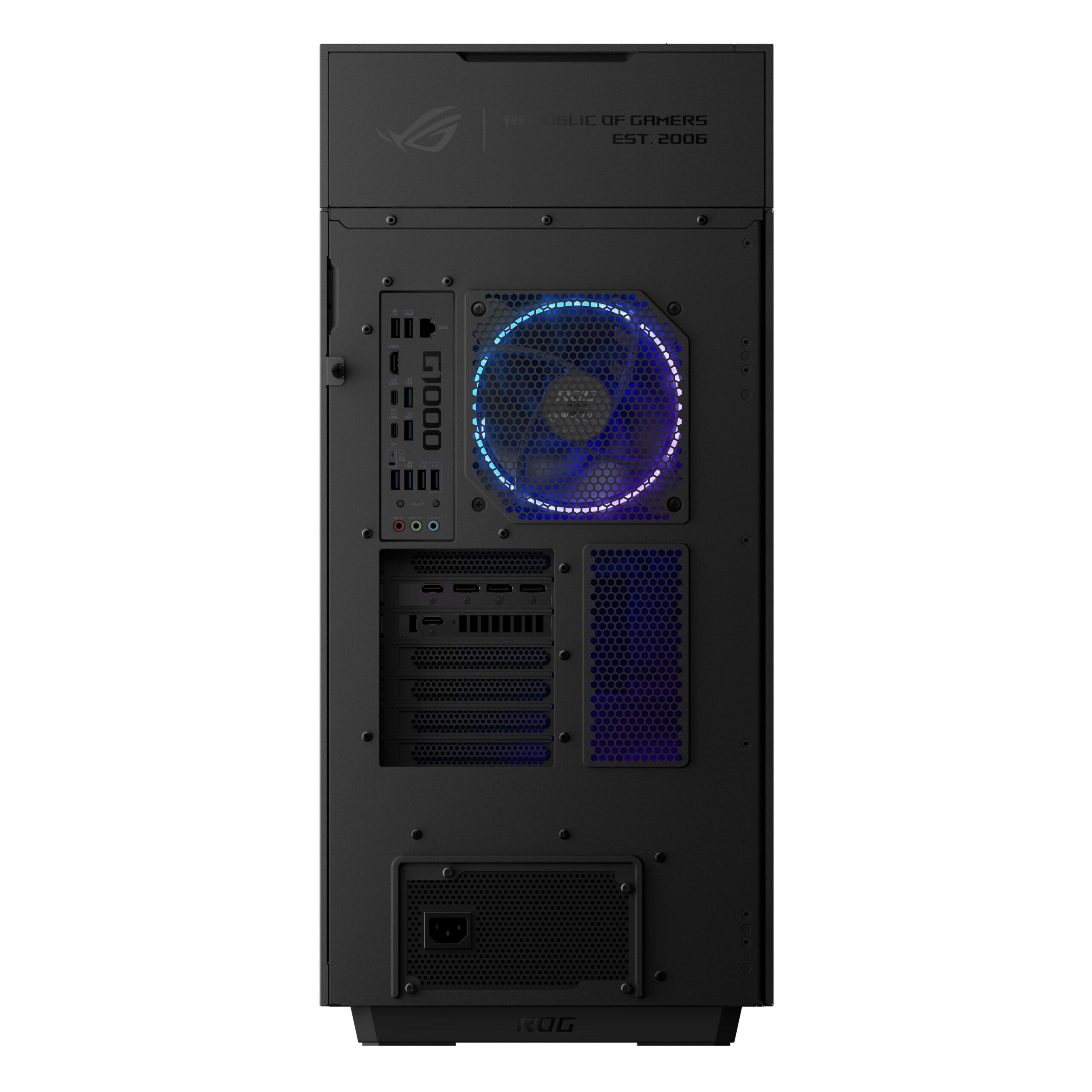
High-end desktop systems are rapidly approaching workstation-class power consumption, with flagship GPUs alone capable of drawing several hundred watts under load. Designs like the G1000 suggest prebuilt manufacturers are beginning to adopt compartmentalized airflow zones, oversized liquid cooling, and dedicated thermal chambers to manage total system loads that can exceed 700 watts.
This shift reflects a broader industry trend toward server-style cooling strategies entering enthusiast consumer PCs. As performance demands continue to climb, thermal engineering — rather than raw component specifications alone — is increasingly becoming the defining factor in next-generation desktop design.
What to Watch Ahead of Launch
ASUS is targeting a 2026 release window for the ROG G1000, though final specifications and pricing remain unannounced. Key details to watch include real-world cooling performance, long-term reliability of the holographic fan system, and how configurable the platform will be across different performance tiers.
As high-power desktop hardware continues to evolve, systems like the G1000 offer an early look at how manufacturers may balance extreme performance, thermal constraints, and visual design in the next phase of enthusiast PCs.
Source: ASUS ROG official product page and CES 2026 coverage via Tom’s Hardware.