
For much of the past decade, network-attached storage lived quietly in the background of home and small-office setups. It wasn’t flashy, it wasn’t aspirational, and it rarely made headlines. In 2026, that’s starting to change.
Rising hardware costs, shifting cloud economics, and growing awareness around data control are pushing more users to reconsider where their files actually live. For many, the answer isn’t a high-end enterprise server or a complex DIY build — it’s a simple, entry-level NAS.
Devices like the DH2300 represent this quiet shift. They aren’t designed to replace data centers or power-user homelabs. Instead, they aim to offer something increasingly valuable in 2026 a dependable, low-maintenance alternative to full cloud dependence.
The Changing Economics of Storage in 2026
Storage has long been one of the more predictable areas of consumer technology. Cloud plans were cheap, local drives were plentiful, and capacity steadily increased while prices fell.
That balance is becoming less certain.
Across the hardware industry, rising component costs — from memory to controllers to manufacturing — are pushing up baseline prices. At the same time, cloud providers face their own pressures: expanding infrastructure demands, higher energy costs, and growing use of storage-heavy AI services.
While cloud storage remains convenient, many users are beginning to question whether today’s pricing will hold indefinitely. Even modest increases, applied over years, can turn “cheap” subscriptions into long-term expenses that rival the cost of owning hardware outright.
Against that backdrop, local storage is starting to look less like a legacy choice and more like a hedge.
The Return of the Entry-Level NAS
High-end NAS systems have always existed for enthusiasts and professionals, but what’s notable in 2026 is renewed interest at the lower end of the market.
Entry-level NAS devices focus on a narrow mission:
- Reliable, always-on storage
- Simple setup and management
- Reasonable power consumption
- Flexibility without deep technical overhead
This makes them appealing not just to power users, but to everyday households and small teams that want an alternative to putting everything in the cloud.
Where the UGREEN DH2300 Fits In
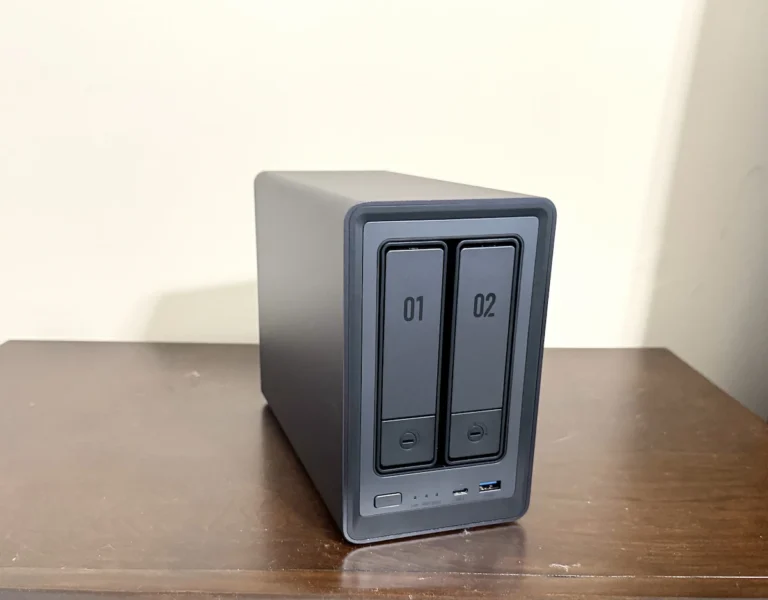
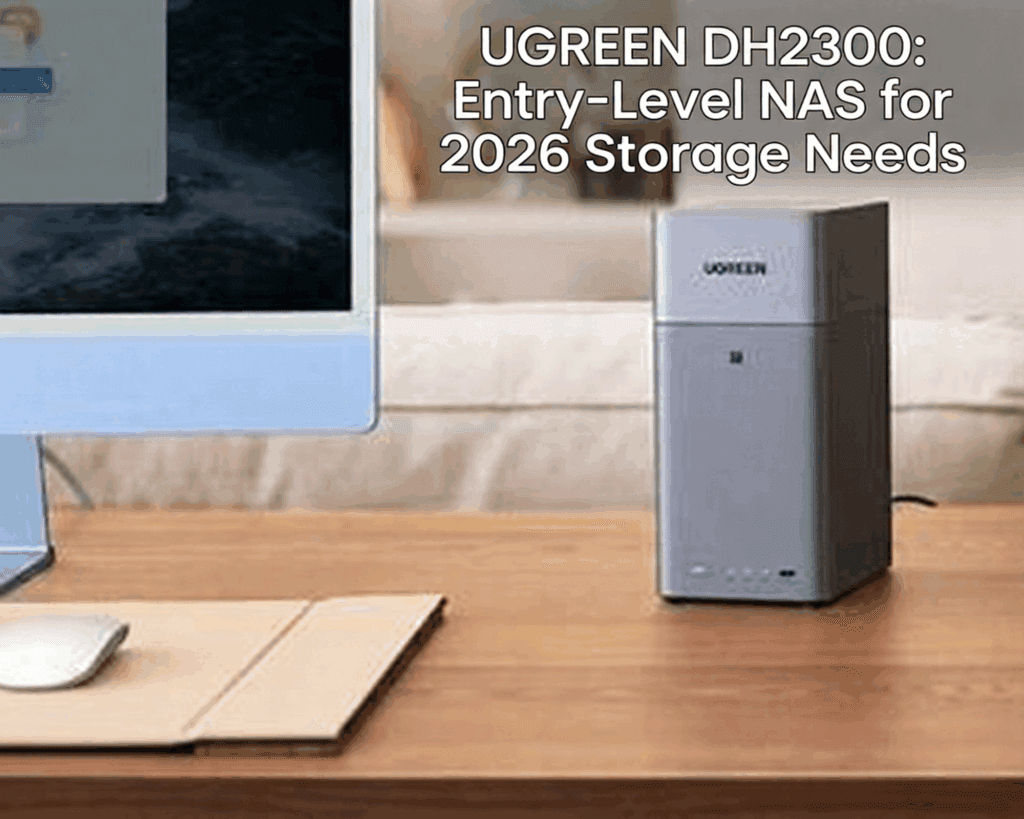
The UGREEN DH2300 is positioned squarely in this entry-level category. Rather than competing on raw performance or advanced enterprise features, its appeal lies in approachability and restraint.
It targets users who want:
- A centralized place for backups
- Local access to photos, videos, and documents
- A personal cloud-style experience without ongoing fees
- Basic expandability without ecosystem lock-in anxiety
This positioning matters, especially as some established NAS vendors face criticism for tightening hardware compatibility rules or steering users toward approved components. In contrast, newer or more consumer-focused entrants are attracting attention simply by staying flexible.
Setup Simplicity as a Feature
For first-time NAS buyers, setup experience can be more important than raw specifications.
Entry-level systems like the DH2300 succeed or fail based on how quickly a user can go from “out of the box” to “usable.” Drive installation, network discovery, and initial configuration all shape whether the device feels empowering or intimidating.
In 2026, simplicity is no longer a “nice-to-have.” It’s a competitive advantage.
Power Efficiency and the Always-On Reality
A NAS is most useful when it’s always available. That makes power efficiency a practical concern, not just a spec-sheet bullet.
Compared to repurposed desktop PCs or DIY servers, entry-level NAS devices are typically designed for continuous operation with modest energy draw. Over the course of a year, that difference can matter — especially as energy prices fluctuate.
For many households, a low-power NAS quietly running in the background is easier to justify than a full PC left on 24/7.

Everyday Use Cases Are Driving Adoption
The renewed relevance of entry-level NAS devices isn’t about exotic workloads. It’s about ordinary ones.
Backup and Data Safety
Automatic backups for laptops, desktops, and mobile devices remain the most common use case. As local storage fills up and cloud tiers become more fragmented, having a single, user-controlled backup target becomes appealing again.
Media and Personal Archives
Photos and videos accumulate faster than ever. A NAS provides a way to store large personal libraries without constantly managing subscriptions or pruning content to stay within cloud limits.
AI-Adjacent Storage
Even for users experimenting with local AI tools, an entry-level NAS can play a supporting role. Training data, backups of AI projects, and versioned datasets don’t require high-performance compute — they require reliable, organized storage.
In that sense, NAS devices are becoming quiet companions to AI PCs, not competitors.
Software Maturity Matters More Than Features
For entry-level NAS buyers, software polish isn’t about having dozens of apps. It’s about stability, clarity, and updates that don’t break workflows.
A restrained software ecosystem — one that focuses on core tasks rather than aggressive upselling or forced integrations — can be more valuable than an expansive but complex one.
As buyers grow more cautious about vendor lock-in, this balance becomes increasingly important.
A Hedge Against a More Expensive Cloud
None of this suggests that cloud storage is disappearing. Convenience, offsite redundancy, and accessibility still make it essential for many users.
What’s changing is the mindset.
In an environment where hardware costs are rising and cloud pricing may eventually follow, owning a portion of your storage infrastructure feels less like overkill and more like risk management.
An entry-level NAS doesn’t replace the cloud — it complements it.
Quietly Essential, Not Trendy
The resurgence of interest in entry-level NAS devices isn’t driven by hype. It’s driven by pragmatism.
As consumer technology becomes more abstract and subscription-driven, tangible infrastructure is regaining value. Devices like the UGREEN DH2300 aren’t exciting in the traditional sense — and that may be exactly why they’re finding a place again.
In 2026, owning where your data lives is starting to feel less optional. Entry-level NAS devices aren’t chasing trends. They’re quietly meeting a need that never really went away.