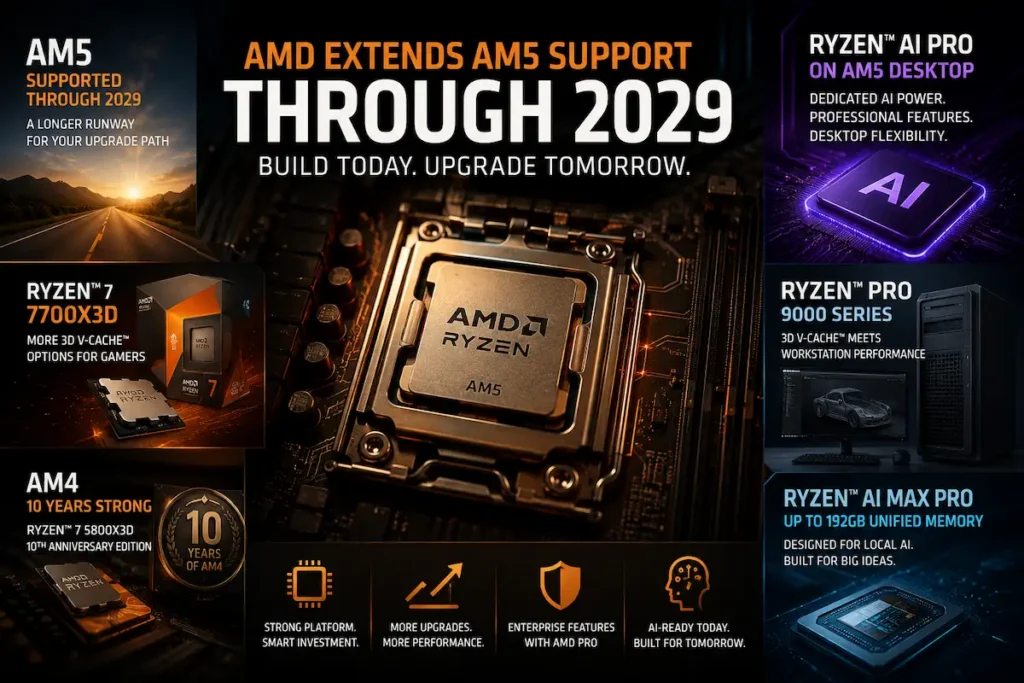
AMD’s latest desktop story is not just about faster CPUs. It is about giving PC builders something they do not always get in this market: a reason to believe their platform still has a future.
At Computex 2026, AMD leaned hard into one of its strongest consumer arguments. Socket AM5 is now officially supported through 2029, AM4 is getting a 10th anniversary victory lap, new X3D chips are expanding upgrade options, and Ryzen AI PRO is bringing dedicated AI hardware into AM5 desktops.
That may not sound as flashy as a brand-new architecture reveal, but for actual PC buyers, it might matter more. A great CPU is nice. A great CPU on a platform that does not force you into a new motherboard, new memory kit, and a full rebuild every few years is better.
In other words, AMD is not just selling silicon here. It is selling continuity.
AMD’s Best Consumer Feature Right Now Might Be Patience
AMD has formally extended Socket AM5 support through 2029, giving desktop buyers a much longer runway for Ryzen upgrades. That matters because the modern PC market has gotten expensive in all the places that hurt: DDR5 memory, motherboards, cooling, power supplies, and graphics cards.
For a lot of builders, the CPU is no longer the only cost that matters. The real pain comes when a new processor also means replacing the board, replacing the RAM, reinstalling everything, and hoping the budget survives the trip.
AMD’s AM5 commitment pushes back against that cycle. A buyer who builds an AM5 system today is not being asked to treat the motherboard as disposable. Instead, AMD is telling users that the platform should remain relevant for years, with future Ryzen CPUs still planned for the socket.
There are still practical limits. BIOS updates, motherboard vendor support, power delivery, chipset features, and specific CPU compatibility will all matter. Not every AM5 board will necessarily be the perfect home for every future Ryzen chip. But at the platform level, this is still a big nod to consumers.
It says: your build is not a dead end.
ITD Insight: AMD’s strongest desktop argument right now may not be one benchmark chart. It is the idea that buying Ryzen gives users a foundation they can keep improving instead of replacing. In a high-cost PC market, socket longevity has become a real feature.
AM4 Earned the Victory Lap
The AM5 promise lands harder because AMD has already proven the concept with AM4. Socket AM4 became one of the most consumer-friendly desktop platforms in modern PC history, supporting multiple Ryzen generations and giving millions of users meaningful upgrade paths without requiring a new motherboard every cycle.
That is why the Ryzen 7 5800X3D 10th Anniversary Edition is more than a nostalgia product. It is AMD pointing at AM4 and saying, “This is what we mean when we talk about platform longevity.”
The Ryzen 7 5800X3D itself became a kind of folk hero for PC builders. It gave older AM4 systems a massive gaming upgrade without forcing users to move to a new socket. The anniversary edition continues that story and gives AMD a clean way to connect AM4’s past success with AM5’s future promise.
That matters because platform trust is earned. AMD can now argue that AM5 through 2029 is not just marketing language. It is the sequel to a playbook that already worked.
Ryzen 7 7700X3D Gives AM5 Another Drop-In Gaming Option
AMD is also adding the Ryzen 7 7700X3D to the AM5 lineup, giving builders another 3D V-Cache option below the company’s most expensive gaming CPUs.
This is not the kind of chip that resets the entire desktop market overnight. It is more practical than that. The Ryzen 7 7700X3D gives AM5 users another way to extend the life of an existing build, especially if they want stronger gaming performance without buying into the highest-end tier.
That fits perfectly with the larger message. AMD is not only promising future support in abstract terms. It is continuing to fill the socket with useful options at different price points.
For consumers, that is the part that matters. A platform is only valuable if there are good chips to upgrade into. AM5 is starting to look less like a short-term DDR5 transition socket and more like AMD’s next long-running desktop home.
Ryzen AI PRO on AM5 Puts AMD in a Unique Desktop Position
The other piece of AMD’s strategy deserves more attention: Ryzen AI PRO on AM5 desktops.
AMD’s Ryzen AI PRO 400 Series brings dedicated AI acceleration, Zen 5 CPU cores, RDNA 3.5 graphics, and enterprise-focused PRO features into AM5 desktop systems. That puts AMD in an interesting place. While much of the AI PC conversation has centered on laptops, AMD is also pushing AI-capable silicon into traditional desktop form factors.
That is a smart move because desktops still matter. Businesses, developers, creators, schools, labs, and power users often want systems that are easier to service, easier to cool, and easier to integrate into existing fleets. A Ryzen AI PRO AM5 desktop gives OEMs a way to build AI-capable commercial PCs without abandoning the familiar desktop upgrade model.
It also gives AMD a clean answer to a market that is about to get more crowded.
Nvidia is expected to make a major push into Arm-based Windows laptops with its N1 and N1X platforms, and Microsoft, Nvidia, and Arm have already teased a “new era of PC” around Computex. Lenovo has also been tied to recent N1X-related leaks. That does not mean Nvidia’s laptop push directly replaces what AMD is doing on desktops, but it absolutely changes the competitive backdrop.
If Nvidia brings serious GPU and AI performance into premium Windows laptops, AMD needs to make sure its own PC platform story is not just “we have good laptop chips too.” Ryzen AI PRO on AM5 gives AMD a different weapon: AI-capable desktop hardware on a long-lived x86 platform.
That is a very AMD-shaped answer. Nvidia may be preparing to shake up laptops. AMD is trying to make the desktop feel durable, upgradeable, and AI-ready at the same time.
Ryzen PRO X3D Brings the Gaming Secret Sauce to Workstations
AMD is also expanding Ryzen PRO into more serious workstation territory with Ryzen 9000 PRO chips that include 3D V-Cache technology. That is notable because 3D V-Cache has been best known as a gaming advantage, but larger cache can also matter in certain professional workloads.
As we covered in our earlier report on AMD’s Ryzen 9000 PRO lineup expansion with 3D V-Cache, this move is about more than core counts. It brings AMD’s cache-heavy desktop strategy into managed commercial systems where buyers also care about security, stability, deployment, and OEM support.
The flagship Ryzen PRO X3D parts also move into higher-power workstation territory, giving OEMs more room to build systems for sustained professional workloads. That matters for tasks such as simulation, rendering, software development, data analysis, and real-time visualization.
Not every workstation workload will benefit equally. Some applications love cache. Others care more about GPU acceleration, memory bandwidth, storage speed, software certification, or driver support. But AMD’s direction is clear: it wants Ryzen PRO to cover more of the space between ordinary office desktops and expensive high-end workstation platforms.
Ryzen AI Max PRO Pushes the Local AI Workstation Angle
Then there is Ryzen AI Max PRO, which is AMD’s more aggressive local AI and compact workstation play.
The headline number is up to 192GB of unified memory, with AMD positioning Ryzen AI Max PRO systems for local AI, professional graphics workloads, and compact workstation designs. That is a different pitch from a normal AI PC. This is not just about running lightweight assistant features or checking a Copilot+ box.
This is about giving developers, creators, researchers, and enterprise users enough memory headroom to work with larger local models and heavier professional projects.
That was the central point in our earlier coverage of the Ryzen AI Max+ PRO 495 and its 192GB unified memory story. The most interesting part is not simply that AMD has another fast chip. It is that AMD is trying to make local AI workstations more practical by combining CPU, GPU, AI acceleration, and a large shared memory pool.
That gives AMD a different kind of workstation argument. Nvidia still dominates many AI workflows with discrete GPUs and CUDA. Apple has made unified memory central to the Mac workstation pitch. AMD is trying to offer a Windows and Linux-friendly alternative built around x86 compatibility, Radeon graphics, and large unified-memory designs.
The promise is strong. The proof will depend on real systems, thermals, software support, drivers, model performance, and whether developers can actually get the most out of the hardware.
The Bigger Story: AMD Is Building Around Trust
What makes all of this interesting is how connected the pieces are.
AM5 support through 2029 keeps enthusiasts and gamers inside the Ryzen ecosystem. The AM4 anniversary chip reminds buyers that AMD has already delivered long socket life before. Ryzen 7 7700X3D gives AM5 users another practical gaming upgrade. Ryzen AI PRO brings AI acceleration into AM5 desktops. Ryzen PRO X3D pushes commercial workstations harder. Ryzen AI Max PRO stretches toward local AI systems with much larger memory pools.
That is not a random set of announcements. It is a platform strategy.
AMD is trying to make Ryzen feel like a family that can scale from a gaming desktop to a business PC to a workstation to a local AI development box. More importantly, it is trying to make buyers feel like the platform they choose today will still be useful tomorrow.
That is a powerful message in 2026 because consumers are tired of churn. Nobody wants to buy a new motherboard just because the next CPU generation moved the goalposts. Nobody wants to rebuild an entire PC because one part aged out. Nobody wants “future-ready” to mean “replace everything soon.”
AMD is giving buyers a simpler pitch: build once, upgrade longer, and stay on the platform.
What Still Needs to Be Proven
There are still questions.
First, AM5 support through 2029 does not automatically mean every older AM5 motherboard will be ideal for every future Ryzen processor. Board vendors, BIOS updates, power delivery, chipset limitations, and OEM support will still determine how smooth the upgrade path really feels.
Second, pricing will matter. A long-lived socket helps only if the upgrade options remain attractive. If future CPUs, motherboards, or memory kits become too expensive, the platform story weakens.
Third, Ryzen AI PRO desktops need software that actually uses the NPU in meaningful ways. Dedicated AI hardware is useful only when applications, enterprise tools, and Windows features can take advantage of it consistently.
Fourth, Ryzen AI Max PRO needs real-world local AI testing. Large unified memory is exciting, but buyers will want to see token throughput, model compatibility, thermal behavior, and workstation reliability before treating these systems as true alternatives to Nvidia-heavy AI rigs or Apple’s Mac Studio class.
Bottom Line
AMD’s latest CPU moves feel unusually consumer-friendly for the current PC market. Socket AM5 support through 2029 gives desktop buyers a stronger reason to trust the platform. AM4’s 10-year milestone gives AMD credibility. New X3D options keep gamers interested. Ryzen AI PRO on AM5 brings AI acceleration into desktop systems. Ryzen PRO X3D and Ryzen AI Max PRO push AMD deeper into workstation and local AI territory.
The result is a broader and more confident AMD story. This is not just about chasing Intel in desktops, Apple in unified memory, or Nvidia in AI hardware. It is about making Ryzen feel like a long-term platform instead of a one-generation purchase.
For consumers, that is the real win. AMD is not only giving us strong CPUs. It is giving us a platform that feels like it respects the money already sitting inside our PCs.
RELATED READING:
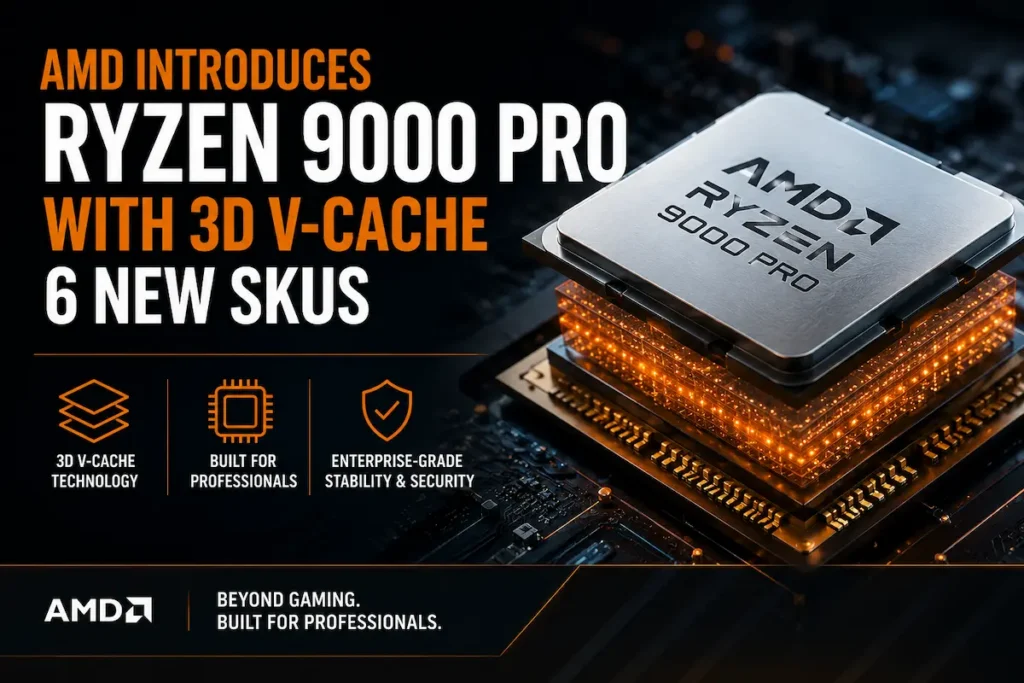 |
AMD’s Ryzen 9000 Pro Lineup Expands With 3D V-Cache TechnologyAnalyzing AMD’s expansion of six new workstation processors and how stacked L3 cache structures affect high-throughput development pipelines. |
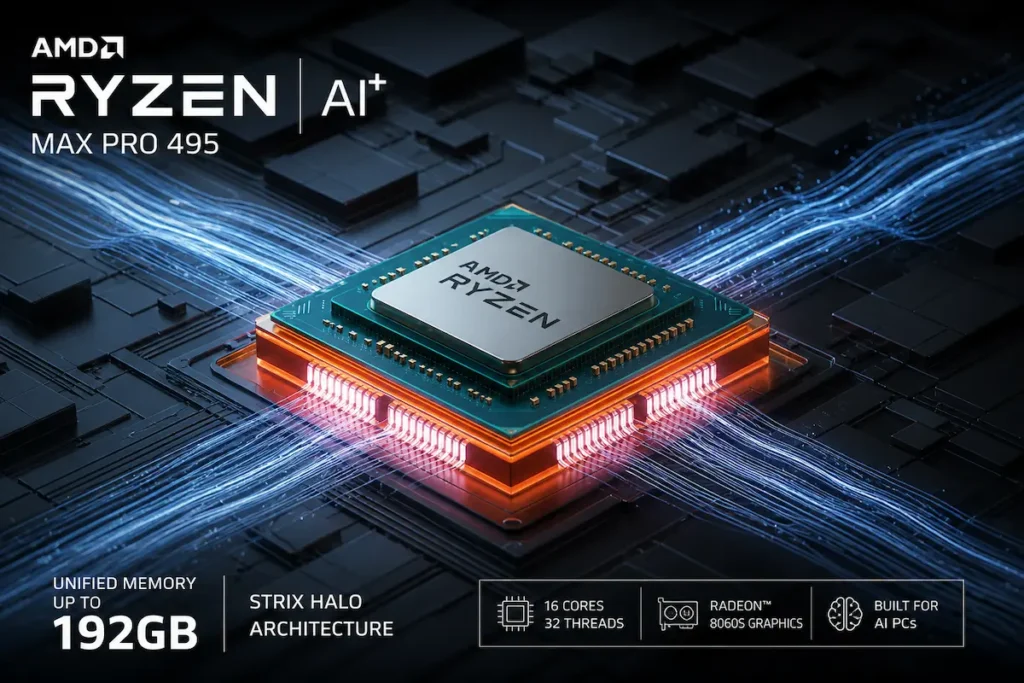 |
AMD Ryzen AI Max Pro 495 and the 192GB Unified Memory ShiftAn in-depth look at AMD’s massive 192GB unified memory configuration and how it challenges traditional enterprise AI processing paradigms. |
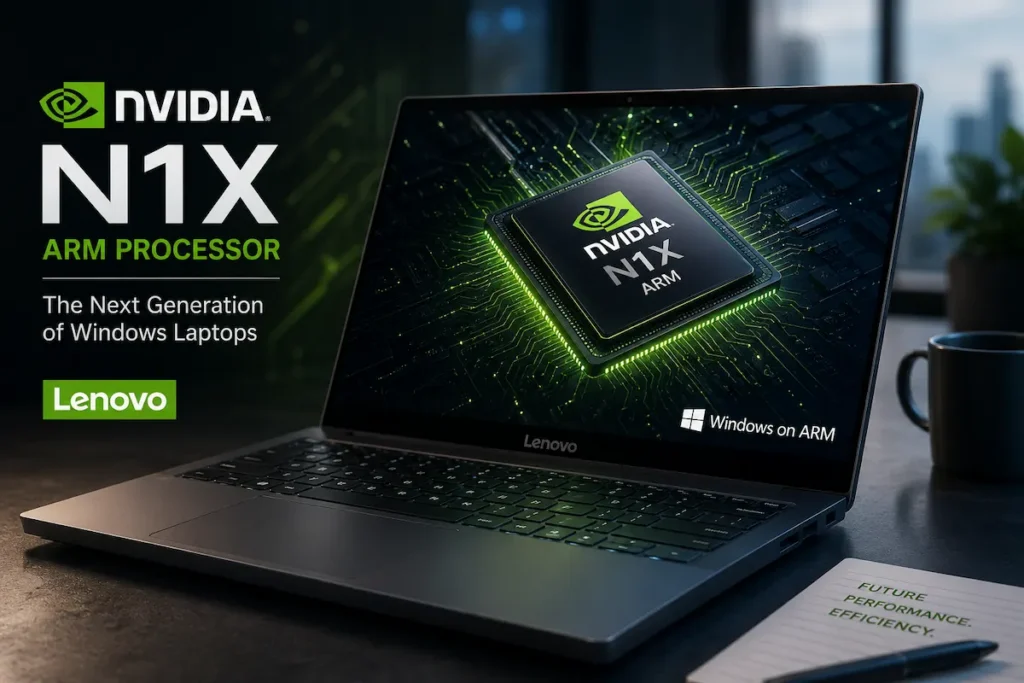 |
Lenovo NVIDIA N1X ARM Laptop Leak Points to a New Windows AI PC PushUnpacking the leaked hardware manifests behind Lenovo’s upcoming custom ARM clamshell and its implications for desktop-tier AI power limits. |