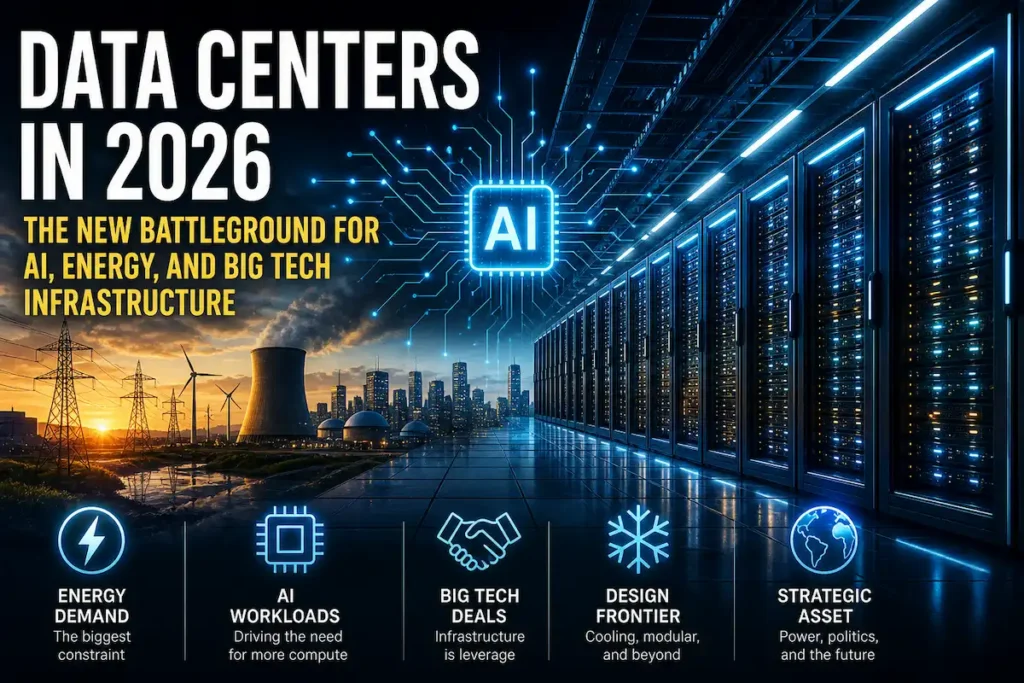
Data centers used to be the invisible backend of the internet. In 2026, they are becoming one of the most valuable resources in technology.
Every AI assistant, cloud gaming session, streaming service, enterprise workload, and connected device depends on physical infrastructure somewhere. That means the next phase of the tech industry may not be decided only by who has the best app, model, or chip. It may be decided by who can secure enough power, cooling, land, hardware, and data center capacity to run it all.
That makes data centers more than buildings full of servers. They are becoming strategic assets—part energy project, part computing platform, part corporate leverage point.
The AI boom is not just a software story. It is an infrastructure story. Every new AI feature eventually becomes a demand for power, cooling, chips, networking, and physical data center capacity.
Hyperscale Growth Is Still Accelerating
Over the past decade, data center capacity has expanded rapidly as cloud providers, streaming platforms, and enterprise software companies moved more of the digital economy into centralized infrastructure.
That growth is now being pushed into a new phase by AI. Traditional cloud workloads were already demanding, but AI training and inference require dense clusters of specialized processors, high-speed networking, large memory pools, and advanced thermal management.
In practical terms, the data center is becoming the factory floor of the AI economy. Instead of producing cars or appliances, these facilities produce intelligence, recommendations, search results, generated images, enterprise automation, and increasingly, agentic AI workflows.
Data Centers Are Becoming the New Energy Battleground
The biggest constraint may not be chips alone. It may be electricity.
The International Energy Agency reported that electricity demand from data centers rose sharply in 2025, with AI-focused facilities growing even faster than the broader sector. In the United States, data centers have also become a major driver of new electricity demand, with estimates showing that their share of power usage could climb significantly by 2030.
That changes the conversation around AI. The race is no longer just about building better models. It is about securing the energy infrastructure needed to run them.
Large tech companies are already responding by signing long-term power agreements, investing in renewable energy, exploring nuclear and geothermal partnerships, and considering on-site power generation for massive AI campuses.
The next AI winners may not simply be the companies with the best models. They may be the companies that locked up the best combination of chips, power contracts, cooling systems, and data center sites before everyone else realized those were the scarce resources.
Big Tech Is Cutting Deals for Compute Capacity
This is why infrastructure deals are becoming so important. AI companies and hyperscalers are not just buying servers—they are trying to secure position in the next computing cycle.
Meta’s reported deal involving Amazon’s AI CPUs is a good example of how the race is widening beyond GPUs. CPUs, accelerators, memory, networking, and data center design all matter when companies are trying to support agentic AI at scale.
That also helps explain why the chip war, memory market, and cloud gaming market are all connected to the data center story. Infrastructure decisions upstream eventually shape what consumers experience downstream.
The Bigger Picture: Infrastructure Is Reshaping the Tech Stack
Data centers now sit at the center of several major InsightTechDaily coverage areas: AI infrastructure, gaming platforms, memory bottlenecks, and the future of consumer computing.
- Meta’s AI CPU Deal with Amazon Signals a New Phase of Infrastructure Competition
- Micron’s 3GB GDDR7 Shift: A Small Change That Could Help Fix a Larger VRAM Problem
- The Five-Way Chip War for AI PCs in 2026
Cloud gaming needs latency-sensitive infrastructure. AI PCs need efficient local silicon but still depend on cloud-scale training and services. Memory upgrades help feed larger models and gaming workloads. And corporate AI deals increasingly depend on whether companies can actually deploy the compute they promise.
Cooling Is Becoming a Competitive Advantage
Power is only one side of the problem. Heat is the other.
Modern AI clusters generate enormous thermal loads, especially when packed with GPUs, accelerators, and high-performance networking equipment. Traditional air cooling is not disappearing, but it is being stretched by the density of new AI workloads.
That is why liquid cooling, direct-to-chip cooling, and immersion cooling are becoming more important. These systems can remove heat more efficiently and allow companies to pack more compute into less space.
For consumers, that may sound distant, but it matters. If cooling limits how fast companies can scale AI services, then it can affect availability, subscription pricing, cloud performance, and the speed at which new tools roll out.
Edge Computing Is Changing Where Data Lives
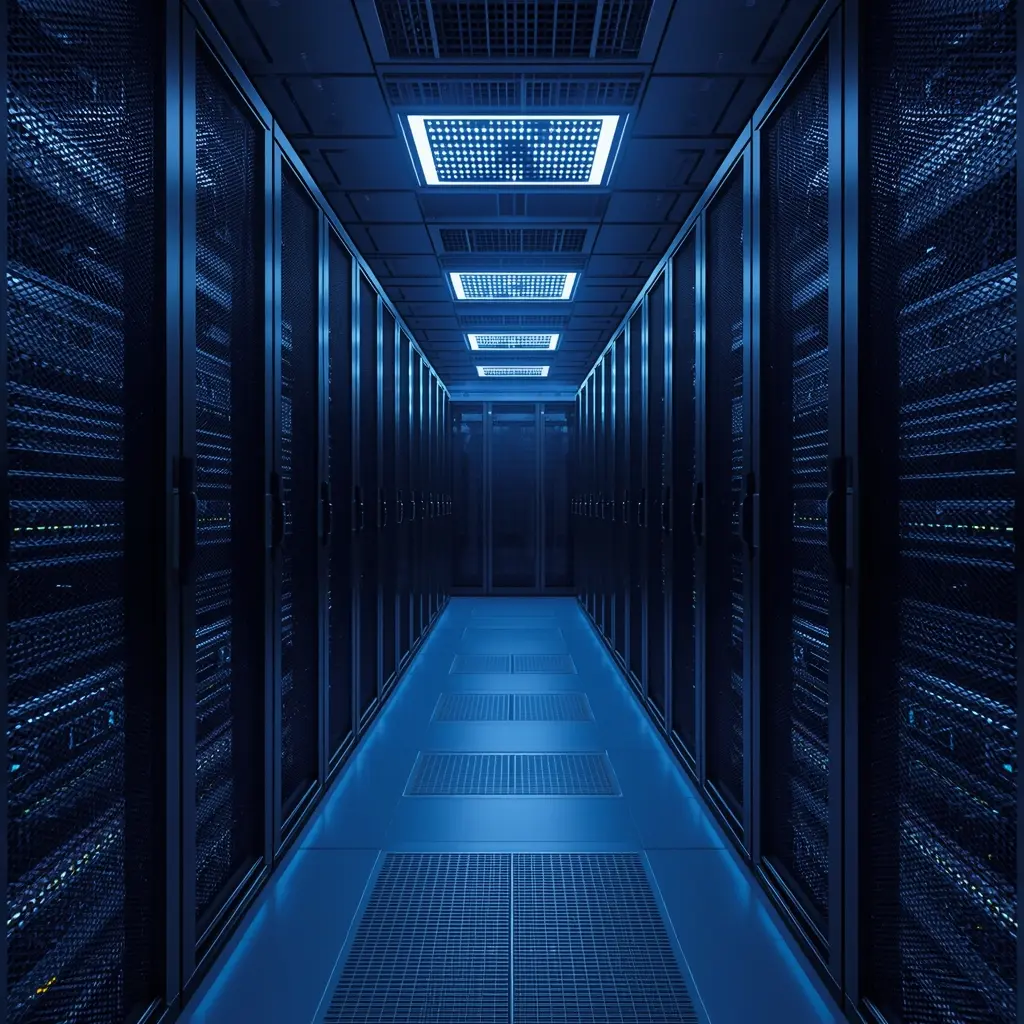
The old model of a few massive centralized facilities is not going away, but it is being joined by a more distributed architecture.
Edge data centers bring compute closer to users, reducing latency for applications like real-time analytics, autonomous systems, augmented reality, industrial automation, and cloud gaming.
This creates a hybrid future: giant hyperscale campuses for massive AI and cloud workloads, smaller regional facilities for latency-sensitive services, and possibly micro data centers deployed closer to homes, factories, hospitals, and telecom networks.
The future data center may not be one thing. It may be a layered network of hyperscale AI factories, regional edge nodes, and specialized facilities built around power availability.
Data Center Design May Be Entering a New Frontier
The way data centers are built today may not be the way they are built in the future.
Current designs are running into real-world constraints: power availability, land use, water usage, cooling limits, grid capacity, construction timelines, and community pushback. As AI workloads grow, these constraints become harder to ignore.
That is pushing companies to rethink the data center itself.
- Facilities co-located with power plants or renewable energy sources
- Modular data centers that can be deployed faster
- Liquid-cooled AI campuses designed around dense accelerator clusters
- Underwater data center experiments using natural cooling
- Smaller edge facilities placed closer to users
- Longer-term concepts involving orbital or space-based infrastructure
Some of those ideas are practical today. Others are still experimental. But the direction is clear: data center design is no longer settled.
Security and Data Sovereignty Add Another Layer
As data centers become more important, they also become more sensitive.
Physical security already includes biometric access, surveillance systems, restricted areas, and layered facility controls. But the larger issue is data sovereignty: where data is stored, who controls it, and which government rules apply.
That is pushing cloud providers to build more regional infrastructure and giving countries a stronger interest in where critical data center capacity is located.
In other words, data centers are not just business assets. They are becoming part of national infrastructure.
AI Is Both the Workload and the Operator
AI is not only driving data center demand. It is also being used to manage data centers more efficiently.
Machine learning systems can help optimize cooling, predict equipment failures, balance workloads, and improve energy usage. That creates an interesting loop: AI increases the need for data centers, while AI also helps those data centers operate more efficiently.
Over time, this could make data centers more autonomous, with software continuously adjusting power, cooling, and compute allocation based on real-time demand.
What This Means for Consumers
Most people will never walk into a hyperscale data center, but they will feel the impact.
Data center constraints can affect cloud subscription prices, AI usage limits, gaming latency, streaming quality, enterprise software costs, and even local electricity planning. As AI services become more common, the infrastructure behind them becomes part of the consumer technology experience.
This is also why local AI hardware, AI PCs, and efficient edge devices matter. Not every workload should go to the cloud forever. The future may involve a smarter split between local processing and centralized data center compute.
Bottom Line
Data centers are becoming one of the defining technology battlegrounds of 2026.
They sit at the intersection of AI, energy, chips, cloud gaming, memory, networking, and national infrastructure. Big companies are cutting deals not just for hardware, but for position. Energy is becoming a strategic resource. Cooling is becoming a design frontier. And the traditional data center model may be due for major change.
The next era of computing will not be built only in apps, laptops, or AI models. It will be built in the physical infrastructure that powers them.
To understand where AI and cloud computing are going next, follow the data centers. They are where software ambition meets the physical limits of power, cooling, land, and hardware.
Related Coverage
- Meta’s AI CPU Deal with Amazon Signals a New Phase of Infrastructure Competition
- Micron’s 3GB GDDR7 Explained: Why VRAM Design Is Changing
- The 2026 AI PC Chip War: Intel vs AMD vs Apple vs Qualcomm vs NVIDIA
Source and attribution: This article was developed from InsightTechDaily editorial notes and industry context, including recent reporting from the International Energy Agency and U.S. Department of Energy on data center electricity demand.