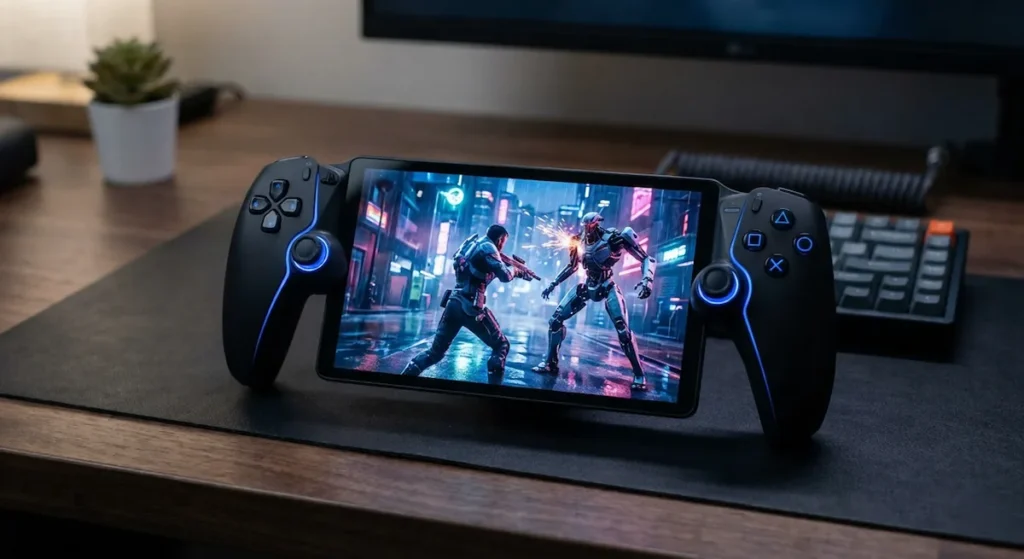
Sony’s handheld problem was never the hardware.
Rumors about a future PlayStation handheld keep resurfacing, with multiple reports over the past year suggesting Sony is at least exploring a portable system to accompany its next-generation console plans. Sony has not officially announced such a device, and the more detailed claims circulating online still come from leaks and speculation rather than confirmed product plans. That means any conversation about a so-called PS6 handheld should be treated as cautious analysis, not product confirmation.
Still, the bigger idea is not hard to understand. Sony has reportedly explored a portable console capable of playing PlayStation 5 games, which is enough to make the broader discussion feel credible even if the specifics remain unsettled. More importantly, it opens the door to a more interesting question: if Sony really is thinking seriously about handheld gaming again, what would it need to get right this time?
The PSP proved Sony could make a handheld people wanted
It’s easy to forget in 2026 that Sony already had one major handheld success. The PlayStation Portable sold more than 76 million units worldwide, according to Sony’s own business data. That does not put it ahead of Nintendo’s most dominant portable systems, but it absolutely proves Sony was capable of building a handheld with real mainstream traction.
The PSP worked because it felt distinct. It delivered a premium PlayStation-style experience in a portable format, but it still understood what people wanted from gaming on the go. It had identity, it had games people cared about, and it arrived before the market fully fragmented around smartphones, hybrid consoles, and handheld PCs.
That history matters now because the conversation around a future handheld is not starting from zero. Sony is not trying to invent the idea of portable PlayStation gaming. It is trying to revisit a category where it has already shown flashes of real success.
The Vita was not bad hardware. It was a bad long-term plan.
The PlayStation Vita is still one of the easiest handhelds to admire in hindsight. It had strong industrial design, dual analog sticks, a sharp display, and hardware that looked advanced for its time. But strong hardware did not translate into long-term momentum.
Former PlayStation executive Shuhei Yoshida said in a 2025 interview that one of Vita’s biggest problems was that Sony did not have the internal resources to fully support both PS4 and Vita at the same time, according to Video Games Chronicle. That explanation rings true because it gets to the heart of the issue: Sony did not lose handheld gaming because it forgot how to design good devices. It lost because strategy, software support, and timing worked against the hardware.
Then there were the avoidable friction points. Sony’s proprietary Vita memory cards became one of the clearest examples of how a premium device can make itself harder to love. Sony defended that decision at the time on security and performance grounds, but for many buyers it added cost and inconvenience to an already expensive system.
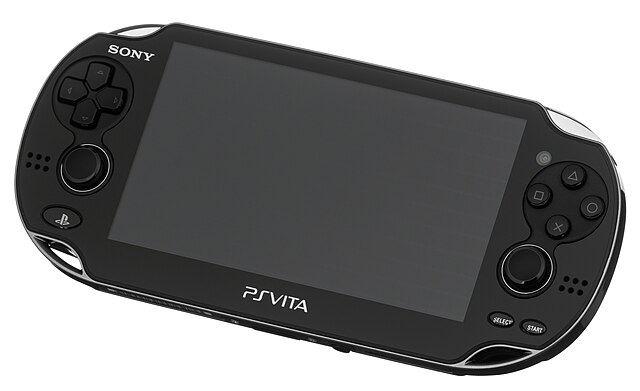
That is why the Vita still matters to this story. It was not a joke product. It was a genuinely impressive piece of hardware that arrived with the wrong long-term support model. In some ways, that makes the nostalgia around it even stronger today. Players do not just remember what the Vita was. They remember what it could have been.
Nostalgia is part of why people are paying attention
There is also a less technical factor shaping the conversation around a potential PlayStation handheld: nostalgia. For many players, the PSP and Vita represent a specific era of gaming that felt more personal and portable. Long before cloud gaming and remote play became common talking points, these systems offered a version of console-style gaming that could travel with you.
That nostalgia does not drive Sony’s hardware strategy, but it does help explain why these rumors generate so much attention. People are not just reacting because they want a new device. They are reacting because Sony’s previous handhelds still feel like unfinished stories. The PSP was a clear success. The Vita was an admired near-miss.
Put those two outcomes together, and the idea of another attempt becomes more compelling. Part of the excitement is emotional. Players remember what made those devices feel ambitious and different, and they are curious whether Sony could finally deliver a version of that experience that aligns with today’s market.
The future of handheld gaming is not about raw power
That formula also looks very different now than it did in the Vita era. The future of portable gaming is not really about chasing raw computing power for its own sake. It is about delivering the right balance of good hardware, good battery life, and games that are genuinely fun to play on the move.
That is one reason Nintendo’s hybrid strategy landed so effectively. The Switch was not the most powerful machine in the room, but it made portable gaming feel easy, convenient, and enjoyable. More recent handheld PCs have taken a different path, proving there is demand for heavier portable gaming too, but even there the real conversation usually comes back to battery life, thermals, comfort, and whether people actually want to use the device every day.
That broader shift is why Sony’s rumored return to handheld gaming is more plausible now than it would have been several years ago. The market no longer treats handhelds like side projects or toys. Portable gaming is a real pillar of the mainstream ecosystem again.
There is a useful comparison here with the wider platform convergence happening elsewhere in gaming. We are already seeing how companies are rethinking device boundaries and ecosystems, which is part of what makes a possible Sony handheld feel timely instead of random. If you want the broader context on where gaming platforms may be heading, our look at Microsoft’s Project Helix and the Xbox-PC gaming crossover is worth reading.
Why timing may be better for Sony now
If Sony really is preparing for another handheld push, the timing may be far better than it was during the Vita era. Today’s market has already validated the idea that players want multiple ways to access the same gaming ecosystem. Remote play, hybrid gaming, and handheld-first sessions all feel much more normal now than they did a decade ago.
There is also a consumer hardware angle here that should not be ignored. Gaming hardware is becoming more expensive across the board, from memory and storage to full consoles and PCs. That does not automatically make a future handheld cheap, but it does make efficiency, portability, and value feel more important. We explored that broader pricing pressure in our article on how memory prices are reshaping gaming hardware in 2026, and it is part of the reason handheld strategy matters more than ever.
A well-positioned PlayStation handheld would not necessarily need to beat every rival on horsepower. It would need to feel smart, efficient, and worth carrying. In 2026, that may be the more realistic definition of premium portable gaming anyway.

The real question is whether Sony understands the assignment this time
Nintendo did not win the modern handheld race just by offering first-party games on weaker hardware. It won by simplifying the pitch. One machine. One ecosystem. One easy reason to care. Sony’s challenge, if the rumors prove accurate, will be whether it can build a handheld strategy that feels equally coherent.
That also ties into Sony’s broader platform identity. The company has spent years leaning on major exclusives, remakes, premium hardware positioning, and ecosystem control. A future handheld would need to fit into that strategy without becoming another side device that feels interesting in theory but secondary in practice. For more on how Sony’s broader direction has been evolving, our analysis of the PS5 roadmap, remakes, and Sony’s current strategy adds useful context.
The interesting part of this rumor cycle is not just whether Sony can fit enough AMD horsepower into a portable thermal envelope. It is whether the company has finally learned that handheld success is not about making a smaller home console. It is about building a product, software roadmap, and identity that make sense for gaming on the move.
What readers should believe right now
Right now, the safest position is cautious interest. Sony has not announced a new handheld. The bolder claims about launch windows, performance targets, and exact architecture should still be treated as rumor, not roadmap.
But the bigger idea is credible enough to watch. Sony has a real handheld legacy, the market is more receptive to portable gaming than it was during the Vita years, and nostalgia around the PSP and Vita gives the story an emotional charge that many hardware rumors simply do not have.
If Sony does make another serious handheld, it will not be trying to prove it can build one. It already did that years ago. The real challenge will be proving it finally knows how to support one.