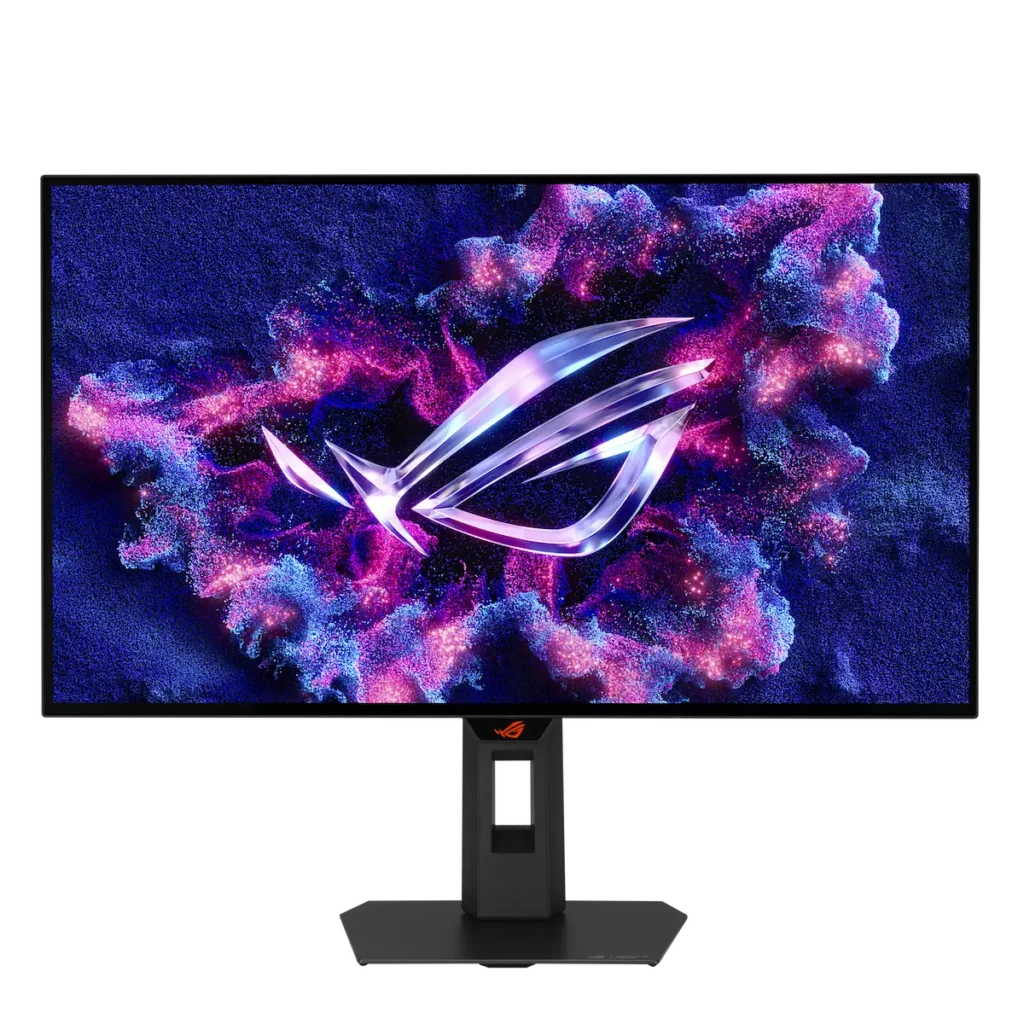
Featured image: Asus ROG Strix OLED XG27AQDMG Gen2 gaming monitor. Image credit: Asus.
That is the company line, naturally. But on paper, the launch does show a fairly deliberate attempt to cover multiple segments of the 1440p OLED market: a glossy WOLED option for buyers chasing punchier contrast, a faster 280Hz QD-OLED model for competitive players, and a lower-priced QD-OLED variant for shoppers who mainly want the OLED badge without completely torching their wallet.
Three monitors, one strategy
All three monitors share a common foundation. They are 27-inch displays with 2560 × 1440 resolution, 0.03ms gray-to-gray response times, and OLED protection features including Asus OLED Care Pro and a Neo Proximity sensor designed to dim the screen when the user steps away to reduce burn-in risk.
Asus says each model includes a three-year warranty, factory pre-calibration, and support through its DisplayWidget Center software.
That shared baseline matters because Asus is not presenting these as “budget” monitors in the traditional sense. Instead, the company is segmenting by panel type, refresh rate, brightness, and connectivity.
ROG Strix OLED XG27AQDMG Gen2
The XG27AQDMG Gen2 uses a TrueBlack Glossy WOLED panel and runs at 240Hz. Asus rates it for up to 1,300 nits peak brightness and highlights its anti-reflective stack and zero-haze optical layer as features intended to improve contrast and highlight intensity.
Connectivity includes:
- DisplayPort 1.4 with DSC
- Two HDMI 2.1 ports
- USB hub
The monitor carries a $649 MSRP.
ROG Strix OLED XG27ACDMS
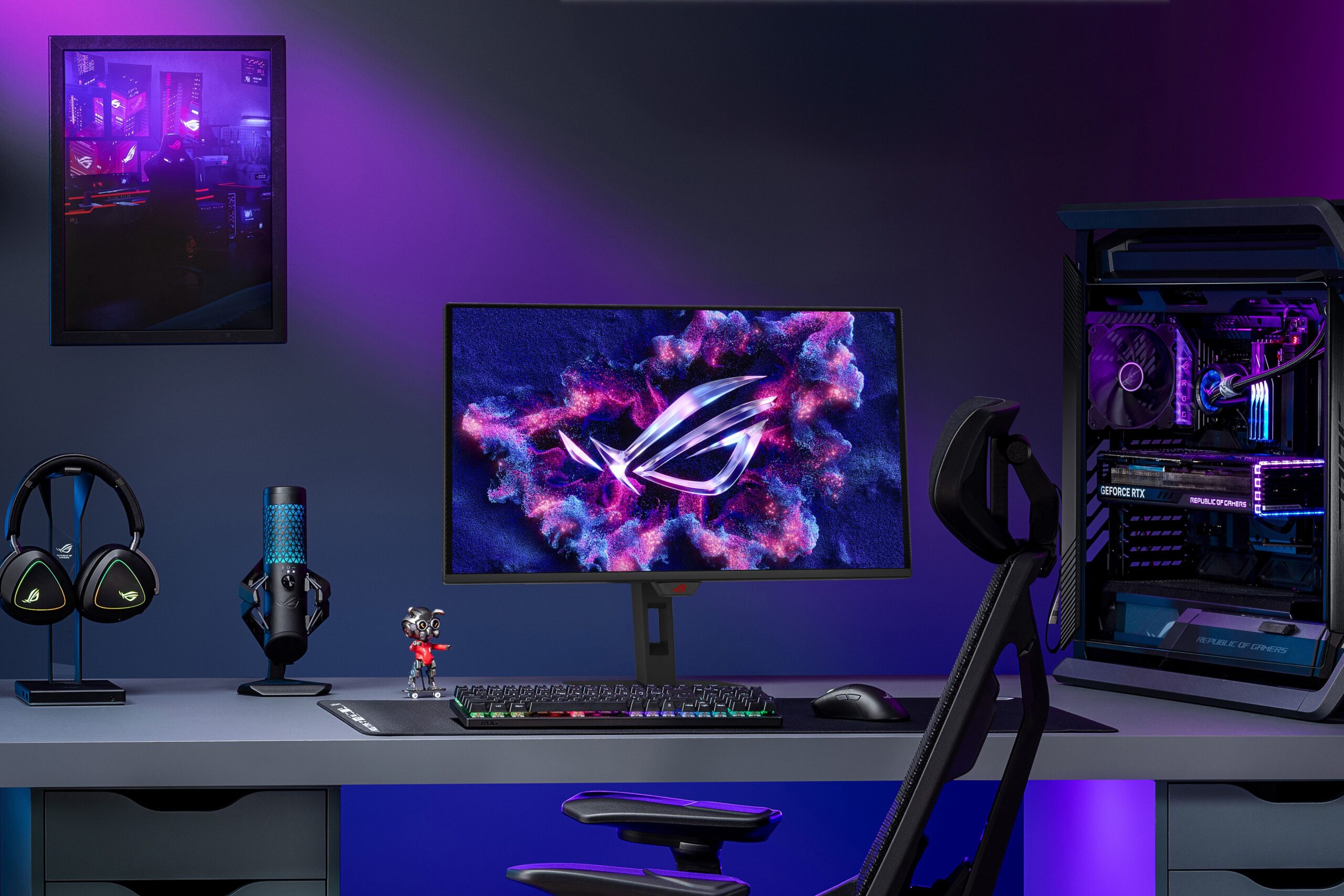
The XG27ACDMS shifts to a semi-glossy QD-OLED panel and pushes the refresh rate to 280Hz, making it the fastest model in the lineup.
Asus lists 1,000 nits peak brightness, along with connectivity that includes:
- DisplayPort 1.4
- HDMI 2.1
- USB-C with 15W power delivery
That port mix makes it the most flexible option in the group for users connecting laptops or simplifying cable setups. The monitor is priced at $699 MSRP.
ROG Strix OLED XG27AQDMES
The XG27AQDMES is the most affordable model in the trio at $599 MSRP. It also uses a semi-glossy QD-OLED panel, but runs at 240Hz and is rated for around 400 nits peak brightness.
Connectivity includes:
- DisplayPort 1.4 with DSC
- Two HDMI 2.1 ports
Asus frames this model as a value-focused gateway into QD-OLED gaming monitors, aiming at buyers who want OLED performance at a lower entry price.
WOLED versus QD-OLED is doing the real work
The interesting part of this launch is less about three more gaming monitors arriving and more about how Asus is using panel technology to define buyer profiles.
The WOLED-based XG27AQDMG Gen2 targets users who prefer glossy panels, stronger perceived contrast, and higher HDR brightness. Its 1,300-nit peak brightness rating is the most aggressive specification in the stack.
Meanwhile, the two QD-OLED models lean toward competitive gaming and color performance. Asus also notes true 10-bit color support on the XG27AQDMES and 99% DCI-P3 color coverage across the lineup.
In practical terms, the message is simple: buyers now choose between different OLED panel characteristics rather than just picking the single available model.
Burn-in mitigation remains central
As with nearly every OLED monitor announcement, burn-in protection gets its own spotlight.
Asus says the displays include:
- Custom internal heatsinks
- The OLED Care Pro protection suite
- Neo Proximity sensor dimming when users step away
The detection distance for the proximity sensor is customizable, according to the company.
This is significant because OLED monitor adoption still depends heavily on buyer confidence. While the technology offers exceptional contrast and response times, many desktop users remain cautious about long-term durability when static UI elements are involved.
The three-year warranty helps reinforce that message, though regional warranty terms and burn-in coverage details will ultimately depend on local retail policies.
Gaming features stay front and center
Beyond panel technology, Asus is leaning heavily on gaming features to justify the ROG Strix branding.
According to the company, the monitors support:
- Extreme Low Motion Blur
- Aspect ratio control for formats such as 24.5 inches
- OLED Anti-Flicker
- Dynamic Shadow Boost
- Dynamic Crosshair overlay tools
The XG27AQDMG Gen2 specifically also supports G-Sync Compatible and FreeSync Premium Pro.
In practice, refresh rate, response time, adaptive sync, and panel quality will likely matter most for buyers. The additional AI-assisted visual tools remain common extras in modern gaming monitors.
Pricing suggests Asus wants volume
The most important detail may be pricing. Asus lists US MSRPs of:
ROG Strix OLED Monitor Lineup (2026)
- XG27AQDMG Gen2 — 27″ WOLED, 240Hz, up to 1300 nits, $649
- XG27ACDMS — 27″ QD-OLED, 280Hz, up to 1000 nits, USB-C, $699
- XG27AQDMES — 27″ QD-OLED, 240Hz, 400 nits, $599
Those numbers position the lineup below the company’s highest-end OLED monitors while still maintaining premium ROG branding.
In effect, Asus is lowering the entry barrier to OLED gaming while leaving enough specification differences to encourage buyers to move up the stack.
What this launch means
Taken together, the new ROG Strix OLED models appear to be a deliberate attempt to make 27-inch QHD OLED gaming monitors feel more mainstream.
Asus is not reinventing the segment, but it is refining its approach: offer multiple panel technologies, maintain extremely fast response times, add burn-in safeguards, and keep prices low enough to attract new buyers.
Whether the strategy succeeds will depend on real-world testing, street pricing, and how these models compare against increasingly competitive OLED offerings from other display manufacturers.
For now, the announcement expands Asus’s presence in one of the fastest-moving categories in gaming displays.