
Most consumer AI features depend on the cloud. That model is not going away, but the economics are starting to change. As AI becomes a normal part of phones, laptops, desktops, apps, and operating systems, more of the work is being pushed directly onto local hardware.
Local AI Is Becoming a Hardware Ownership Story
Local AI is usually framed as a speed or privacy upgrade. That is true, but it misses part of the bigger picture.
The more interesting shift is ownership.
Instead of every AI task running somewhere inside a remote data center, more of that intelligence can run on devices people actually own: laptops, desktops, phones, mini PCs, workstations, and eventually more smart home and edge devices. That matters because it changes the balance of power in the AI ecosystem.
If useful AI can run locally, consumers are not always dependent on a subscription service. Developers are not always tied to an expensive cloud API. Hardware companies have a real reason to build and sell better machines. Cloud providers get relief from handling every small request. And users get more control over where their data goes and how much of their AI experience depends on someone else’s server.
That does not mean cloud AI is going away. The largest models will still need massive infrastructure. But local AI gives the industry a healthier balance. Some tasks belong in the cloud. Some tasks should happen on the device in front of you.
That balance may become one of the most important hardware stories of the next few years.
The Cloud AI Cost Problem
Cloud-based AI became popular because it made powerful models available to almost anyone with an internet connection. A phone, laptop, or browser could access large language models, image generators, coding assistants, and productivity tools without needing expensive local hardware.
That model works, but it has a cost problem.
Every AI request sent to a remote server consumes compute, memory, storage, networking, electricity, cooling, and data-center capacity. For a small number of premium AI features, that may be manageable. For AI built into every search box, document editor, photo app, operating system, customer-service tool, and voice assistant, the math gets much harder.
That pressure eventually shows up somewhere:
- Subscription prices can rise as companies try to recover infrastructure costs.
- Free tiers can become more limited because even “free” AI requests cost money to process.
- Latency can become noticeable when every task needs a network round trip.
- Privacy concerns increase when files, photos, voice recordings, or personal data leave the device.
- Cloud capacity becomes a bottleneck when demand grows faster than data centers can scale.
This is why local AI is not just a technical trend. It is an economic pressure valve. If devices can handle more routine AI work themselves, the cloud can be reserved for the jobs that truly need large-scale infrastructure.
What Local AI Actually Means
Local AI processing means running AI workloads directly on the device instead of sending every request to a remote server.
That device might be a smartphone, laptop, desktop PC, workstation, mini PC, smart camera, industrial machine, or edge server. The important part is that the AI work happens close to the user, often using the device’s own CPU, GPU, NPU, or dedicated AI accelerator.
That creates three major advantages:
- Lower recurring cost: Once the hardware exists, many AI tasks can run without a per-request cloud bill.
- Lower latency: Local processing can respond faster because it does not wait on a remote server.
- Better privacy: Sensitive data can stay on the device instead of being transmitted elsewhere.
For everyday users, this may not feel dramatic at first. It may show up as a photo app that organizes images faster, a laptop that transcribes audio offline, a search feature that understands local files, or a voice assistant that handles simple commands without needing the cloud.
The best local AI features may not feel like “AI features” at all. They may simply feel like software that reacts instantly.
Why NPUs Became the New Hardware Talking Point
The reason local AI is becoming more realistic is that modern chips are being redesigned around AI acceleration.
Traditional CPUs are flexible. GPUs are excellent for large parallel workloads. But many everyday AI tasks need something more efficient, especially on battery-powered devices. That is where the NPU, or neural processing unit, comes in.
An NPU is designed to run machine-learning workloads efficiently. It does not replace the CPU or GPU. Instead, it gives the system another engine for AI tasks that need to happen often, quickly, and with less power draw.
That is why AI hardware has become a major part of the PC and mobile conversation:
- Apple has built Neural Engine hardware into its chips for years, making on-device AI part of the Mac, iPad, and iPhone ecosystem.
- Microsoft has used Copilot+ PCs to push a new class of Windows machines built around dedicated AI acceleration.
- Qualcomm has made NPU performance a centerpiece of its Snapdragon X platform for Windows laptops.
- AMD and Intel are adding NPUs into modern laptop processors while also leaning on CPUs and GPUs for broader AI workloads.
- NVIDIA remains central to heavier local AI work because discrete GPUs can run larger models and creative workloads that are beyond most laptop NPUs.
The important point is that local AI is not one chip, one brand, or one marketing label. It is a system-level shift. CPUs, GPUs, NPUs, memory capacity, storage, software frameworks, and operating systems all have to work together.
Local AI Can Reduce Cloud Pressure, But It Does Not Eliminate It
It is tempting to describe local AI as a replacement for cloud AI: buy the hardware once, run AI forever, and stop paying for remote compute.
That is too simple.
Local AI can reduce cloud pressure, but only for the right workloads. A small local model can handle document search, transcription, smart replies, image tagging, background blur, noise removal, simple summarization, or offline assistant tasks. It cannot fully replace the largest cloud models for deep reasoning, advanced coding, complex image generation, enterprise data analysis, or frontier-level AI research.
The better way to think about this is workload routing.
Simple, frequent, personal tasks should run locally whenever possible. Expensive, complex, or collaborative tasks can still go to the cloud. That gives companies a way to reduce infrastructure strain without giving up the power of large remote models.
For consumers, this could eventually mean faster and more private AI features that do not always require a premium subscription. For businesses, it could mean lower operational costs and better control over sensitive data. For developers, it could open the door to apps that work offline, respond instantly, and do not depend on a cloud API for every interaction.
That is the real promise. Not cloud versus local. Cloud plus local, with the right job going to the right hardware.
The Supply Chain Problem: Local AI Still Has to Be Built
There is one major catch in the local AI story: moving more AI onto personal devices does not magically escape the semiconductor supply chain.
Cloud AI and local AI may run in different places, but they still compete for many of the same ingredients. Data centers need advanced GPUs, high-bandwidth memory, advanced packaging, networking hardware, NAND storage, power infrastructure, and massive manufacturing capacity. Local AI devices need efficient CPUs, GPUs, NPUs, DRAM, SSDs, motherboards, batteries, and modern process-node access.
That means the industry is trying to solve two problems at once. It wants enormous cloud AI clusters for the largest models, while also pushing AI capability into laptops, desktops, phones, mini PCs, workstations, and edge devices. Both goals are valid. Both are useful. But both pull from a semiconductor supply chain that is already under pressure.
This is where local AI becomes more complicated than a simple “cloud versus device” debate. In the long run, local AI can reduce cloud inference demand by handling more routine tasks on the hardware people already own. In the short run, however, that hardware still has to be manufactured, shipped, and sold at prices consumers can actually accept.
That matters because the same AI boom feeding data-center growth can also make consumer hardware more expensive. If memory, storage, packaging, and advanced chip capacity are absorbed too aggressively by cloud infrastructure, the price of PCs, SSDs, RAM, GPUs, and AI-capable devices can rise at the exact moment the industry is asking people to upgrade.
That is the bottleneck hiding inside the local AI opportunity.
People may want to own their own AI hardware. Hardware companies may want to sell them that hardware. Developers may want a larger installed base of AI-capable machines. But the ecosystem still needs enough supply to make that ownership practical.
If the supply chain scales well, local AI could become a healthy expansion of the consumer hardware market. If it does not, local AI risks becoming another premium feature locked behind expensive upgrade cycles.
Why Hardware Ownership Matters
The ownership angle is important because it separates local AI from another subscription-only software trend.
When users own capable hardware, they have more control. A local AI PC, workstation, or phone can perform useful tasks even when a service changes pricing, limits access, loses connectivity, or moves a feature behind a paywall. That does not make the user completely independent from the cloud, but it gives them more leverage.
It also helps the broader hardware ecosystem.
If local AI becomes useful, then companies have a reason to compete on better devices instead of only selling access to remote services. AMD, Intel, Qualcomm, Apple, NVIDIA, memory makers, SSD vendors, motherboard manufacturers, mini PC builders, laptop brands, and workstation companies all have a role to play.
That is healthier than a world where every useful AI interaction flows through a small number of cloud platforms. Local AI gives more of the ecosystem a reason to build, sell, improve, and support real hardware.
For consumers, that could mean more choice. For developers, it means more target devices. For hardware makers, it creates a new upgrade cycle that is based on actual capability rather than just thinner designs or slightly faster benchmark scores.
The key is making that hardware affordable enough to matter.
Where Local AI Still Falls Short
For all its advantages, local AI is not magic. The limits are real.
- Device hardware still matters: Older laptops and phones may not have enough memory, storage, NPU performance, or GPU power for newer local AI features.
- Battery life is a balancing act: Running AI locally can reduce cloud usage, but it still consumes power on the device.
- Model size is limited: Smaller local models are improving quickly, but they usually cannot match the full capability of the largest cloud models.
- Software support is uneven: Developers need reliable frameworks, APIs, drivers, and operating-system support to target local AI hardware effectively.
- Hardware pricing could become a barrier: If AI demand keeps pressuring memory, storage, and chip supply, capable local AI devices may stay too expensive for mainstream buyers.
- User expectations are high: If a local assistant feels weak compared with a cloud assistant, most people will not care that it is cheaper to run.
This is why hybrid AI is still the most realistic path. The device handles the fast, private, repetitive work. The cloud handles the heavy lifting when the local system reaches its limits.
Why Big Tech Wants More AI on the Device
The push toward local AI is not only about helping users. It also gives major platform companies more control over their ecosystems.
If Apple can process more assistant requests on-device, it can improve responsiveness while keeping more user data inside its own hardware and software stack. If Microsoft can make Windows AI features run locally across more PCs, it can make the operating system feel more useful without sending every task to the cloud. If Qualcomm, AMD, Intel, and NVIDIA can make local AI performance a normal buying consideration, they gain a new reason for users to upgrade hardware.
That is the strategic layer behind the AI PC race. Local AI gives hardware makers a fresh upgrade story, software companies a way to manage cloud costs, and platform owners a way to make their ecosystems stickier.
It also changes the buying conversation. A few years ago, most consumers compared laptops by CPU, RAM, storage, display quality, battery life, and price. Those still matter. But now AI performance, memory capacity, and local acceleration are becoming part of the long-term value equation, especially for people who plan to keep a machine for several years.
The question is not just whether a device can run AI. The better question is whether it can run enough AI locally to remain useful as software becomes more dependent on these features.
What This Means for Consumers
For everyday users, the shift to local AI should bring practical benefits over time:
- More offline features: Translation, transcription, search, and media tools can work without a reliable connection.
- Faster everyday interactions: Simple AI tasks can respond without waiting on a remote server.
- Better privacy options: More personal data can remain on the device.
- More ownership: Useful AI features can be tied to hardware the user owns, not only to a remote subscription.
- Potentially lower service pressure: If companies can reduce cloud usage, they may have more room to offer AI features without putting everything behind a premium tier.
That last point is not guaranteed. Companies do not always pass infrastructure savings directly to customers. But local AI at least gives the industry a way to make AI less expensive to operate, which matters as AI becomes less of a novelty and more of a normal software layer.
The risk is that hardware prices move in the other direction. If memory, SSDs, GPUs, and AI-capable processors become more expensive because of data-center demand, consumers may see the benefits of local AI while also facing higher upgrade costs.
That makes supply one of the biggest consumer issues in the AI hardware era.
What This Means for Developers
For developers, local AI opens a different kind of opportunity.
Cloud APIs made AI development easier because they gave small teams access to powerful models without building infrastructure themselves. Local AI changes the equation again by making it possible to build features that are faster, more private, and less dependent on external service costs.
That could matter for:
- Creative apps that need quick previews, masking, tagging, or enhancement tools.
- Productivity apps that can summarize, search, or organize local files.
- Accessibility tools that need real-time transcription, captioning, or voice support.
- Gaming and AR experiences where latency can make or break the user experience.
- Business software that handles sensitive documents and cannot send everything to the cloud.
- Home lab and enthusiast tools that let users experiment with local models on hardware they already own.
The challenge is fragmentation. Developers have to think about Apple’s frameworks, Windows AI APIs, Qualcomm’s tools, AMD and Intel hardware, NVIDIA GPUs, and the different capabilities of each device. Local AI is powerful, but it is not always simple.
The best software will hide that complexity. Users should not need to know whether a task ran on the NPU, GPU, CPU, or cloud. They should only know that it worked quickly, privately, and reliably.
The Hybrid AI Future Is the One That Makes Sense
The most likely future is not local AI versus cloud AI. It is local AI plus cloud AI.
A smart hybrid system could decide where each task should run based on privacy, speed, cost, model size, battery life, hardware capability, and internet availability. A simple command might stay on the device. A private document search might use a local model. A complex research request might go to the cloud. A creative workflow might use the GPU for local previews and the cloud for final generation.
That kind of routing is where AI could become much more practical. Instead of treating every request the same way, future systems can decide which engine makes the most sense.
This is also where the PC gets interesting again. Desktops with discrete GPUs, laptops with NPUs, mini PCs with efficient chips, and workstations with large memory pools could all serve different parts of the local AI market.
The winner may not be the device with the biggest AI number on the box. It may be the system that makes AI useful without forcing the user to think about where the processing happens.
ITD Insight:
Local AI is not about replacing the cloud outright. It is about giving more people ownership over useful AI compute while letting the cloud focus on the jobs that truly need massive scale. That is good for consumers, good for hardware makers, and healthier for the broader ecosystem. The challenge is supply: the same memory, storage, packaging, and manufacturing constraints feeding the AI data-center boom also affect the PCs and devices needed for local AI. The winner will not simply be the company with the biggest cloud. It may be the company that can make capable local AI hardware affordable, available, and useful enough for everyday people to actually own.
Bottom Line
Local AI processing is one of the most important shifts happening underneath the surface of modern computing. It gives companies a way to reduce cloud pressure, gives users faster and more private features, and gives hardware makers a new reason to rethink what a modern PC, phone, or workstation should be built to do.
But the best version of this future is not purely local. It is hybrid. Small, personal, time-sensitive tasks should run on the device. Larger, more complex work should still use the cloud when needed.
The supply chain will decide how quickly that future becomes mainstream. If AI-capable hardware can scale into normal consumer price bands, local AI could become a major win for users and the broader tech ecosystem. If memory, storage, packaging, and chip capacity remain too tight, the local AI future could arrive unevenly, with the best features stuck inside premium devices.
That may sound less dramatic than saying local AI will kill cloud AI, but it is much more realistic. The future of AI computing is not one giant brain in the data center or one tiny model on your laptop. It is a smarter balance between both.
And for consumers, that balance could be the difference between AI that feels expensive and distant — and AI that feels like part of the machine they already own.
RELATED READING:
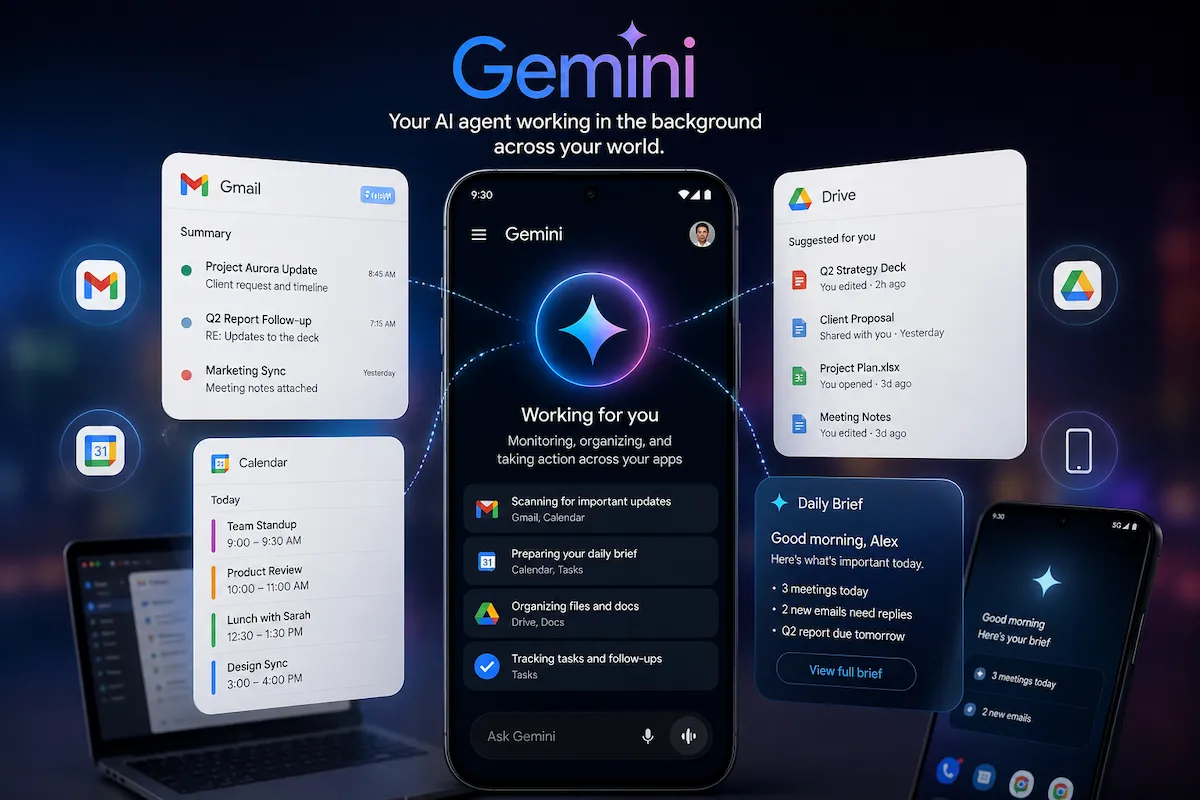 |
Google Gemini and the AI Agent Ecosystem AdvantageWhy deep ecosystem integration is giving Google a massive leg up in the race to build truly autonomous, production-ready AI agents. |
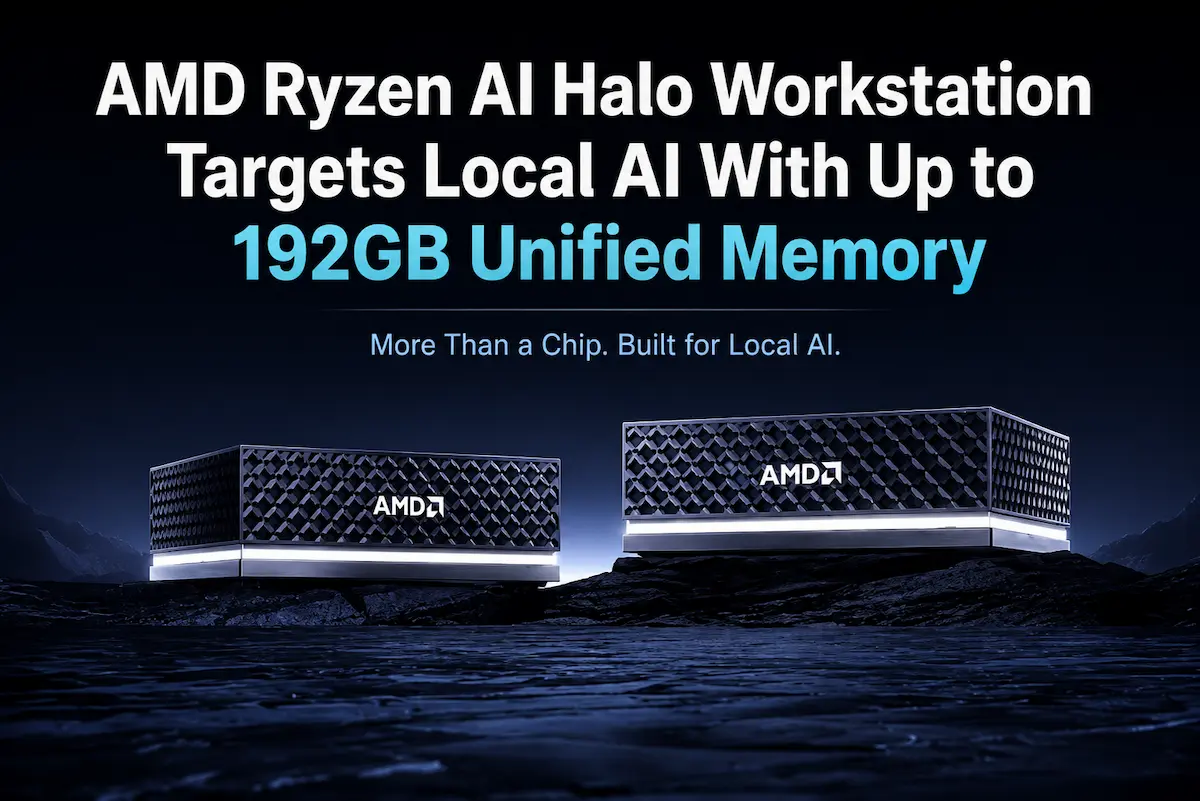 |
AMD Ryzen AI Halo and the Local AI Workstation ShiftBreaking down Strix Halo’s massive unified memory architecture and how it’s democratizing heavy LLM inferencing without the desktop footprint. |