Intel’s Big Grab for the GPU Market: What’s Improved, and How Arc Stacks Up Now
Intel’s discrete GPUs have come a long way since launch. Below we recap recent driver gains, where Arc performs best today, and how the current generation compares with Nvidia and AMD in the mid-range.
Quick Takeaways
- Arc software has matured: More frequent driver drops, better stability, and steady “Game On” optimizations for new releases.
- Upscaling & frame-gen push: Intel’s XeSS direction emphasizes broad hardware support and openness.
- Value play: Current mid-range Arc cards are compelling at 1080p/1440p—especially where extra VRAM helps modern textures.
What’s Actually Better Since Launch?
1) Drivers That Pull Their Weight
- Stability & bug-fixing cadence: Regular releases smoothing out stutters, shader compilation hiccups, and edge-case crashes.
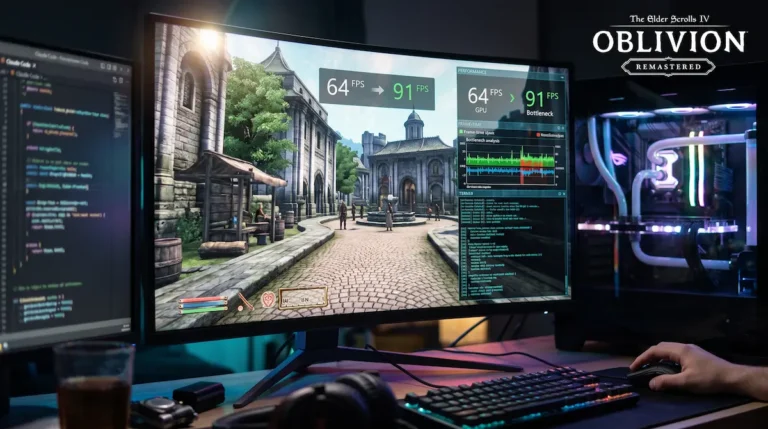
- Real-world uplift: Recent builds target CPU-overhead and 1%/0.1% low frame times—noticeable in open-world and DX12 titles.
- Day-one “Game On” support: New game profiles land closer to launch for more consistent performance.
- Laptop perks: On supported systems, features that flex shared memory and power behavior help thin-and-light gaming.
2) Upscaling & Frame Generation That Are Less Locked-Down
- XeSS focus: Super-resolution that runs across vendors where supported, reducing the “you must own X card” problem.
- Frame-gen roadmap: Intel’s multi-frame approach aims to broaden compatibility while chasing latency control.
How Intel’s Current Cards Stack Up vs. Nvidia & AMD
Positioning: The fiercest fight is the mainstream 1080p/1440p tier—where price, VRAM, and driver consistency matter more than raw halo performance.
| GPU (Current Gen, Mid-Range) | Typical VRAM | Raster Focus | RT & Upscaling Notes | Best Use Case |
|---|---|---|---|---|
| Intel Arc (mid-range class) | 12 GB (varies by model) | Competitive at 1080p; increasingly solid at 1440p in tuned titles | XeSS works broadly; frame-gen roadmap emphasizes openness | Value builds, texture-heavy games that benefit from VRAM |
| Nvidia GeForce xx60-class | 8–12 GB (model dependent) | Strong efficiency; very mature game support | DLSS SR + Frame Gen + Reflex ecosystem depth | Latency-sensitive and creator + gaming hybrids |
| AMD Radeon x600-class | 8–12 GB (model dependent) | Excellent raster value | FSR SR/FG (vendor-agnostic), solid driver cadence | Pure raster value at mainstream resolutions |
Watch-outs: On older CPUs, Arc can still be more sensitive to driver overhead in select engines; recent drivers target this specifically. For all vendors, VRAM needs and frame-gen quality vary by game—verify with the titles you play.
The Last 6 Months of Driver Progress (At a Glance)
- Stability rounds: Frequent crash fixes and shader-compile improvements for new releases.
- Performance tuning: Focus on 99th-percentile lows and CPU-bound scenarios; measurable smoother frametimes in supported titles.
- Handheld & laptop attention: Better default power behavior and memory handling on supported mobile Arc platforms.
- Game coverage: Ongoing “Game On” profiles to tighten day-one performance.
Tip: Always clean-install GPU drivers when switching vendors, and consider per-game profiles for frame-gen and upscaling to balance image quality and latency.
Outlook: Can Intel Turn Value Into Market Share?
Short term, Intel’s recipe—aggressive pricing, ample VRAM in mainstream SKUs, rapid driver cadence, and open upscaling—resonates with budget-to-mid buyers. Long term, sustained day-one stability, less CPU-overhead sensitivity on legacy hardware, and a steady cadence of competitive SKUs will determine how much share they can wrestle from Nvidia and AMD.
Sources & Further Reading
- Intel Arc Graphics Driver release notes and support pages.
- Independent reviews & retests of current-gen mid-range GPUs (Arc vs. GeForce xx60 vs. Radeon x600).
- Coverage of XeSS updates and frame-generation across vendors.
- Market context from quarterly GPU shipment reports.