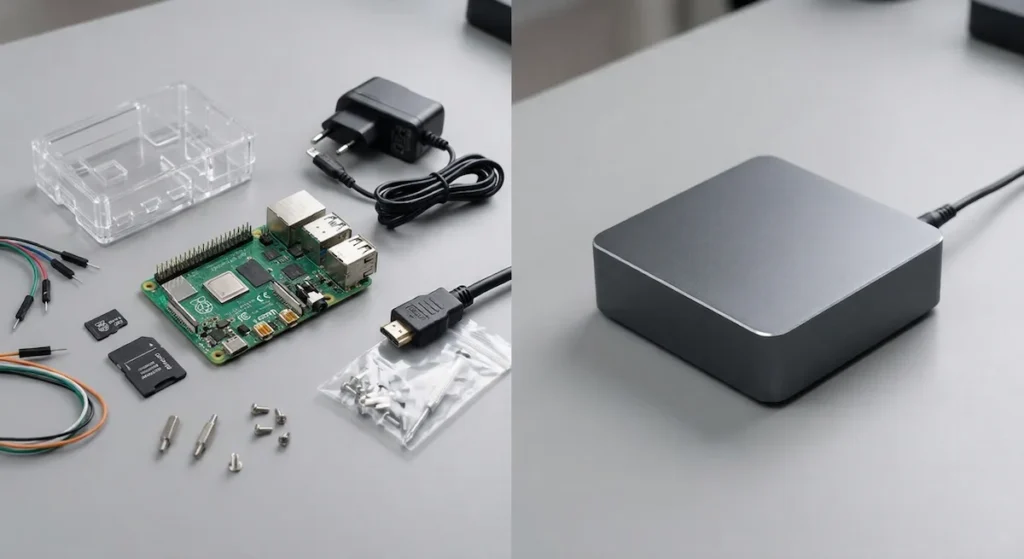
Raspberry Pi made its name by being the cheap, flexible little computer that could. For years, that formula was simple: buy a small board, add a few accessories, and suddenly you had a home lab toy, retro gaming box, DIY server, or classroom computer for not much money. In 2026, though, that equation is getting harder to defend.
Rising memory costs are putting fresh pressure on Raspberry Pi pricing and, by extension, the broader single-board computer market. That matters because the Pi’s greatest strength was never raw performance. It was value. And once that value edge starts to narrow, buyers naturally begin looking at another category that has quietly improved over the last few years: the budget mini PC.
That does not mean Raspberry Pi is suddenly a bad product. It does mean more buyers should stop treating it as the automatic low-cost answer for every small computing project.
Why This Debate Matters More in 2026
Recent reporting suggests rising RAM prices are making life harder for the Raspberry Pi ecosystem, especially at the higher-memory end of the product stack. On its own, that may sound like a niche supply chain story. In practice, it hits the heart of what made Raspberry Pi so appealing to hobbyists, educators, and DIY tinkerers in the first place.
A Raspberry Pi has traditionally been easy to justify because the board itself felt inexpensive enough to build around. But once the board price rises, the rest of the math starts to matter more. You still need storage. You may need a case, power supply, cooling, HDMI adapters, or a microSD card. If you want a cleaner desktop-style setup, the all-in cost can climb faster than many buyers expect.
What Raspberry Pi Still Does Better
To be fair, Raspberry Pi still offers things a typical mini PC does not. GPIO support remains a major advantage for robotics, sensors, electronics projects, industrial tinkering, and embedded experiments. The platform is also compact, efficient, well-documented, and supported by a massive community. For classrooms, makerspaces, and people who specifically want to learn on an ARM-based single-board platform, that still matters.
There is also a philosophical side to Raspberry Pi’s appeal. It feels hackable in a way many mini PCs do not. It invites experimentation. You are not just buying a small computer. You are buying into a hardware culture built around building, breaking, and learning.
That is why Raspberry Pi is unlikely to disappear from serious DIY conversations anytime soon. But being valuable and being the best value are not always the same thing.
Where the Mini PC Starts to Win
This is where the conversation gets uncomfortable for longtime Pi fans.
Budget mini PCs, especially low-power Intel N100 class systems and entry-level AMD boxes, have become much more compelling. They often arrive with RAM, SSD storage, a case, proper cooling, multiple USB ports, full-size display outputs, and a ready-to-use desktop operating system. Even bare-bones units tend to start closer to a complete PC than a Raspberry Pi board does.
For buyers who want a small Plex box, lightweight home server, basic office system, thin client, retro emulation machine, or quiet living room PC, a mini PC can now look like the simpler purchase. You are paying for a finished device instead of assembling a project around a board.
That distinction matters. Raspberry Pi shines when the project itself is part of the fun. A mini PC often wins when you simply want the result.
The Hidden Cost Problem
One reason this comparison is gaining steam is that Raspberry Pi pricing is easy to underestimate. Buyers often compare a bare board price against a full mini PC listing and assume the Pi is still dramatically cheaper. Sometimes it is. Often, after accessories, it is not.
A realistic Raspberry Pi setup may include:
- the board itself
- a power supply
- a microSD card or external storage
- a case
- active cooling for sustained loads
- micro HDMI accessories or other adapters
By the time that list is complete, the cost gap with an entry-level mini PC can narrow more than expected. And once that happens, the mini PC’s advantages become harder to ignore: x86 software compatibility, easier storage expansion, better multitasking headroom, and a more familiar plug-and-play experience.
For the average buyer, this becomes less of a maker question and more of a practical one: am I buying a board because it is the right tool, or because I still think it is the cheapest tool?
Performance Is Not the Whole Story, But It Still Matters
Raspberry Pi 5 is far more capable than older generations and is powerful enough for many real-world tasks. For lightweight Linux desktop use, simple servers, coding practice, automation, retro gaming, and media experimentation, it can still be excellent. But mini PCs generally offer a wider comfort zone once workloads become heavier or more conventional.
That includes things like:
- running multiple desktop applications at once
- handling larger local storage needs
- using standard PC software without workarounds
- setting up virtualization or more advanced home lab tasks
If your goal is general-purpose computing in a tiny form factor, the mini PC category is simply stronger than it used to be. And in 2026, that matters because buyers are becoming more sensitive to total platform value, not just the entry price of a board.
Who Should Still Buy a Raspberry Pi in 2026?
Raspberry Pi still makes sense for several groups of users.
- Makers who need GPIO for electronics, automation, or robotics
- Educators teaching hardware and Linux fundamentals
- DIY users building highly specific low-power edge devices
- Hobbyists who enjoy the process of building around the board itself
If that describes your use case, the Pi remains special. A mini PC is not a drop-in replacement for a hardware tinkering platform.
But if your real need is a cheap, compact, low-power computer for everyday workloads, home lab services, media duty, or light office use, the mini PC is becoming much harder to dismiss.
The Bigger Meaning for the DIY Hardware Market
What makes this shift interesting is that it reflects a broader change in consumer tech. Rising component costs do not just affect flagship GPUs, AI servers, or premium laptops. They also hit the low end, where every extra dollar matters more. That is where product categories can quietly lose their identity.
Raspberry Pi’s identity was built around accessibility. If memory pricing and broader component pressure keep pushing board costs upward, the platform risks being valued more for its niche strengths than its universal affordability. That is still a viable future, but it is a different one.
In other words, Raspberry Pi may remain the DIY king in spirit while losing some of the value edge that made it the default recommendation for everyone else.
Bottom Line
Raspberry Pi is not losing relevance in 2026. It is losing its automatic win status.
That is an important distinction. For makers, educators, embedded builders, and electronics-focused projects, it still offers something unique. But for buyers who just want a small, affordable computer, rising RAM costs are making the Raspberry Pi vs mini PC question more legitimate than it used to be.
The real takeaway is simple: in 2026, you should not buy a Raspberry Pi just because it is a Raspberry Pi. You should buy it because your project specifically benefits from what it does better than a mini PC.
And if it does not, the smarter value play may be sitting in a much more traditional little box.
Related Reading: