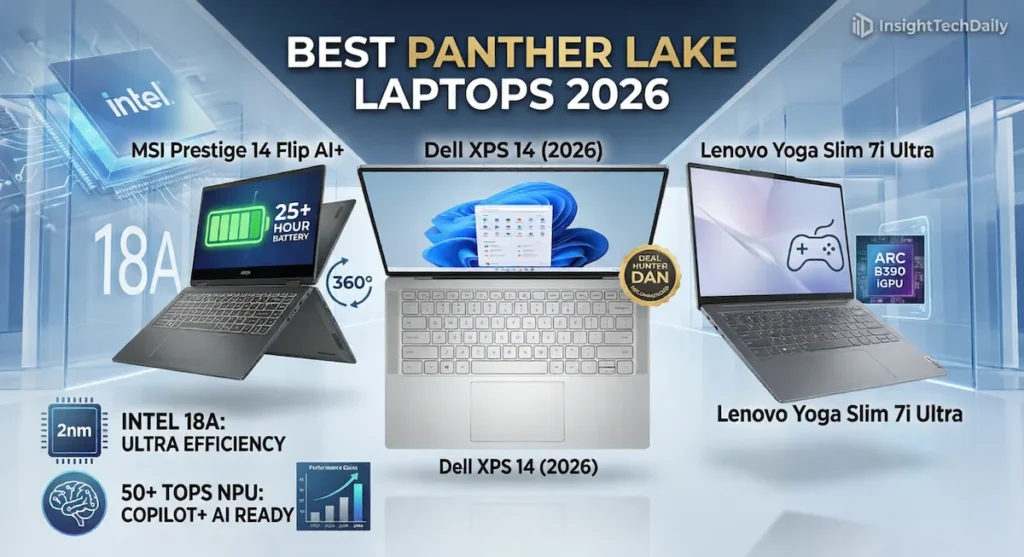
Intel Panther Lake is here, but don’t let the marketing fluff empty your wallet.
Look, I get it. Every time Intel rolls out a new chip family, the pitch sounds like a sci-fi trailer: more power, better battery life, smarter AI, thinner laptops, happier humans. This time, though, Panther Lake and the new Intel Core Ultra Series 3 machines actually feel like a real inflection point for Windows laptops.
The big reason is Intel’s 18A process, which appears to have closed a meaningful chunk of the efficiency gap that made Apple Silicon such a problem for the Windows side of the aisle. On paper, and in early reported testing, Panther Lake systems are pairing stronger battery life with surprisingly capable integrated graphics and modern AI acceleration.
But here’s the cold, hard truth: a great chip does not automatically make every laptop around it a great buy. Some early 2026 Panther Lake laptops look like genuinely smart upgrades. Others feel more like expensive spec sheets with premium price tags.
So let’s break down which Panther Lake laptops actually deserve your money.
This breakdown is based on early hands-on impressions, manufacturer data, and cross-referenced testing from multiple industry reviews.
Best Overall: Dell XPS 14 (2026)
Best Battery: MSI Prestige 14 Flip AI+
Best Value: HP OmniBook X 16
Wait: Prices likely drop within 60–90 days

🏆 Deal Hunter Dan’s Picks
| Category | My Recommendation | The Quick Why |
|---|---|---|
| Best Overall | Dell XPS 14 (2026) | A cleaner design direction, more practical input choices, and premium Windows ultrabook appeal. |
| Best Battery | MSI Prestige 14 Flip AI+ | Reported battery life is the headline feature, and it may be one of the most efficient x86 laptops yet. |
| Best Value | HP OmniBook X 16 | A more affordable path into Panther Lake without immediately jumping into flagship pricing. |
| Best for Power Users | Lenovo Yoga Slim 7i Ultra | High-end Panther Lake silicon in an ultra-light chassis is a serious flex. |
| Skip / Wait | Last-gen Arrow Lake closeouts | Unless pricing gets aggressive, Panther Lake makes many 2025 premium laptops look much less compelling. |
Why Panther Lake Actually Matters
If you are wondering whether you should buy a Panther Lake laptop now or keep waiting, these are the three upgrades that matter most in the real world.
The 18A Leap
This is the biggest reason Panther Lake matters. Intel’s 18A process is being positioned as a major efficiency step forward, and that matters more than flashy keynote language. Better efficiency means longer battery life, cooler operation, and less fan noise in thin-and-light designs.
Arc B390 Integrated Graphics
Integrated graphics are no longer just there to open Chrome and survive Zoom calls. Panther Lake’s Arc B390-class iGPU appears to push well beyond the old “good enough for office work” ceiling. In plain English: thin-and-light laptops may no longer need a weak entry-level dedicated GPU to handle casual gaming and light creative work.
50+ TOPS NPU
Every brand wants to slap “AI PC” on a box in 2026, but Panther Lake’s NPU at least gives that label some practical footing. A 50+ TOPS NPU should make these systems fully competitive for the current wave of Copilot+ and on-device AI features in Windows 11, while also taking some of that workload off the CPU and GPU.
If you’ve been following the broader shift toward AI-focused PCs, this is part of a much bigger trend. We recently broke down how next-gen chips are reshaping personal computing in our AI PC deep dive.
The Best Panther Lake Laptops Right Now
1. MSI Prestige 14 Flip AI+
The Efficiency King.
Quick Specs: Core Ultra X7 358H, 14-inch 2.8K OLED, 32GB RAM
What it does best: Battery life is the story here. Early coverage has pointed to exceptional endurance, with some outlets reporting battery numbers that put it in rare territory for an x86 Windows laptop.
What it doesn’t do well: The webcam and speakers do not appear to be the headline features, and buyers focused on media creation may want stronger AV hardware.
Who should buy it: Students, travelers, remote workers, and anyone who values battery life over raw bragging rights.
Who should skip it: Buyers who care more about premium speakers, creator-focused webcam quality, or maximum GPU-heavy workflow performance.
2. Dell XPS 14 (2026)
The Design Comeback.
Quick Specs: Core Ultra X9 388H, 14.5-inch 3K Tandem OLED, revised keyboard and function row
What it does best: Dell appears to have corrected some of the design decisions that made recent XPS models feel over-styled and under-practical. The return to more tactile, user-friendly inputs is a big deal.
What it doesn’t do well: Price. This is still very much a premium machine, and the XPS name continues to carry a luxury tax.
Who should buy it: Professionals and creatives who want a polished, premium Windows laptop with MacBook-adjacent appeal.
Who should skip it: Shoppers who want maximum value per dollar and do not care about design prestige.
3. Lenovo Yoga Slim 7i Ultra
The Ultra-Light Performance Monster.
Quick Specs: Core Ultra X9 388H, 14-inch 120Hz OLED, approximately 0.98kg
What it does best: It packs flagship-level Panther Lake ambitions into a chassis that is startlingly light. That combination alone makes it one of the most interesting systems in this category.
What it doesn’t do well: Port selection looks limited, which may frustrate anyone still living in a world full of USB-A accessories, external displays, and dongle fatigue.
Who should buy it: Frequent travelers, consultants, developers, and power users who want serious performance without dragging around a brick.
Who should skip it: Anyone who needs broad built-in connectivity and hates living the dongle life.
4. HP OmniBook X 16
The Best Value Panther Lake Pick.
Quick Specs: Core Ultra X5 325H, 16-inch IPS 165Hz display, 16GB RAM
What it does best: It looks like one of the more accessible entry points into Panther Lake, especially for buyers who want a larger screen without immediately jumping to flagship pricing.
What it doesn’t do well: The materials and display stack do not appear to scream “premium,” especially compared with OLED-equipped rivals.
Who should buy it: Mainstream buyers, office users, and families who want a big-screen laptop with modern efficiency and solid everyday usability.
Who should skip it: Gamers, OLED chasers, and buyers who want the best possible integrated graphics configuration.
What Surprised Us Most About Panther Lake
The most interesting part of Panther Lake may be the integrated graphics story. For years, iGPUs were the thing you tolerated until you could afford something better. Panther Lake changes that conversation.
Based on early reporting around systems like the refreshed ASUS Zenbook Duo, Intel’s latest Arc graphics are starting to make thin-and-light laptops viable for much more than casual use. That does not mean every Panther Lake laptop is suddenly a gaming machine, but it does mean the old “integrated graphics = automatic compromise” assumption is getting weaker.
That matters, because it could let more buyers skip bulky entry-level gaming laptops entirely and still get a machine that feels modern, efficient, and versatile.
Direct Comparison: Which One Wins?
| Feature | MSI Prestige 14 Flip AI+ | Dell XPS 14 (2026) | Lenovo Yoga Slim 7i Ultra | HP OmniBook X 16 |
|---|---|---|---|---|
| Battery Life | Best-in-class potential | Strong | Good | Good to very good |
| Portability | Good | Premium portable | Excellent / under 1kg | Lower |
| Performance Focus | Efficiency | Balanced premium | High-end ultralight power | Mainstream value |
| Value | Good | Lower | Mid-range to premium | Best value |
| Best For | Battery-first buyers | Premium Windows shoppers | Traveling power users | Big-screen practical buyers |
Should You Buy a Panther Lake Laptop Now or Wait?
Buy now if: your current laptop is from 2023 or older, especially if you are tired of weak battery life, loud fans, or thin-and-light machines that still feel compromised. Panther Lake looks like the kind of platform shift that can actually be felt in day-to-day use.
Wait if: you already bought a late-2025 Arrow Lake system or you are shopping with strict budget discipline. Panther Lake may be better, but not every early launch model will be priced well. If history repeats, some of the better value plays could look even better once holiday and back-to-school pricing hits later in the cycle.
For deal-focused buyers, the smartest move may be to watch early pricing carefully. The HP and Lenovo options in particular feel like the most likely candidates for meaningful discounts once the first wave of launch buzz cools off.
Final Verdict From Deal Hunter Dan
If you want the most polished all-around Panther Lake laptop right now, the Dell XPS 14 (2026) looks like the safest premium pick. It appears to fix some of the usability issues that made recent XPS models feel too clever for their own good.
If battery life is your religion, the MSI Prestige 14 Flip AI+ is the one to watch. Early signs suggest it could be one of the most efficient Windows laptops of this generation.
If you want the smartest value play, the HP OmniBook X 16 may be the sleeper choice. And if you want a machine that feels absurdly overqualified for its size, the Lenovo Yoga Slim 7i Ultra is the flex pick.
My bigger takeaway is simple: be very careful with “discounted” 2025 laptops right now. Unless the pricing is aggressive, Panther Lake may have moved the goalposts enough to make some of those older machines feel outdated much faster than expected.